Drain flies appear suddenly, usually around a kitchen, bathroom, or floor drain, and the first question is almost always the same: are they dangerous? The short answer is that the flies themselves are mostly a nuisance. The more important answer is what their presence tells you about the drain they came from.
This article covers whether drain flies are dangerous, whether they carry disease, why they keep coming back, and how to remove them at the source. It is written for facility managers, restaurant operators, and anyone dealing with a recurring drain fly problem.
Are drain flies dangerous?
Drain flies do not bite, sting, or spread disease directly to people, so they are not dangerous the way a mosquito or a stinging insect is. They are classified as a nuisance pest. The real concern is indirect: a drain fly infestation is a reliable sign that an organic biofilm reservoir has built up inside the drain.
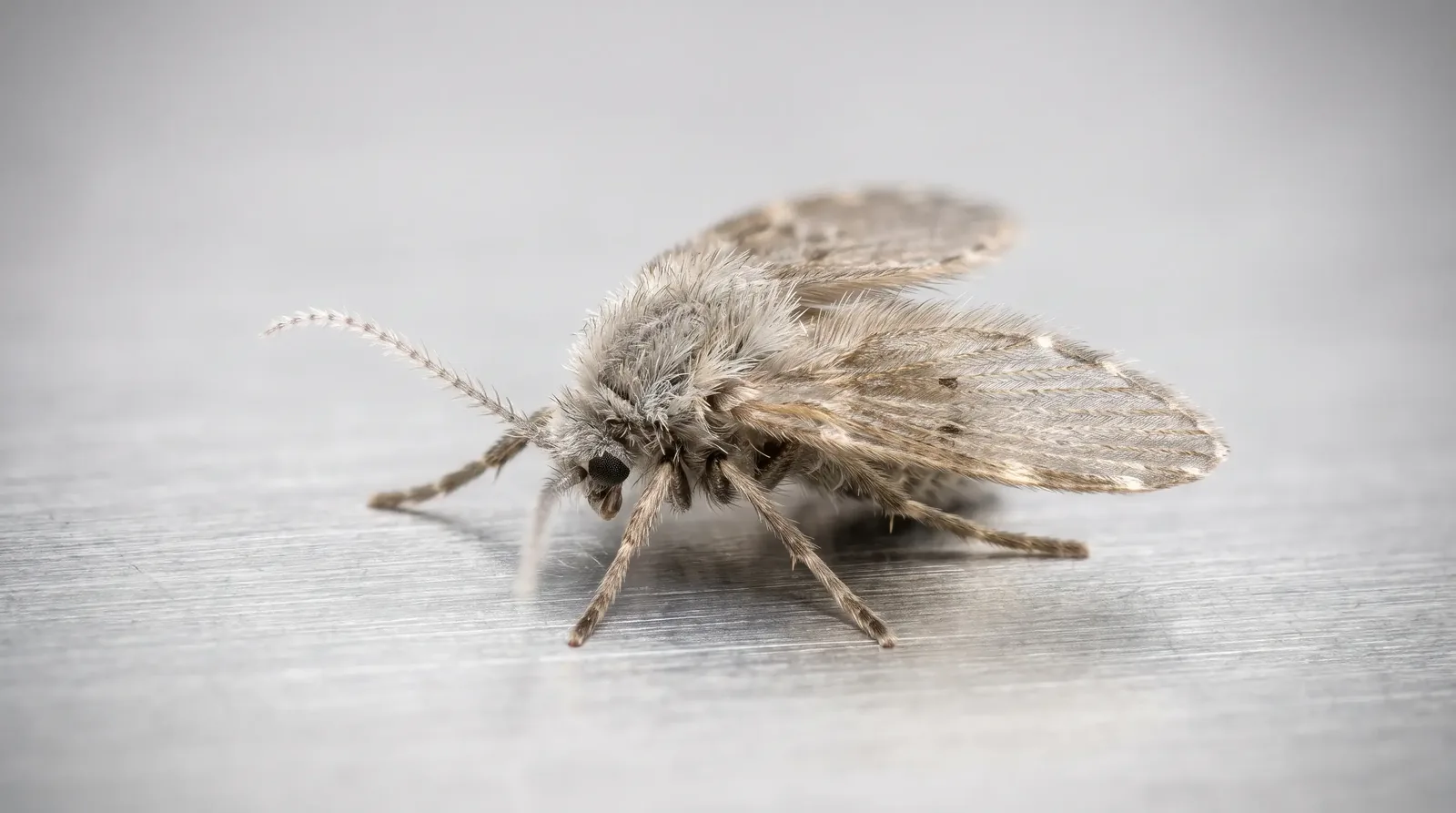
Drain flies (family Psychodidae), also called moth flies or sewer gnats, are weak fliers that stay close to where they breed. They do not transmit disease through bites the way mosquitoes do. For most homes and businesses, the direct health risk from the adult flies is low.
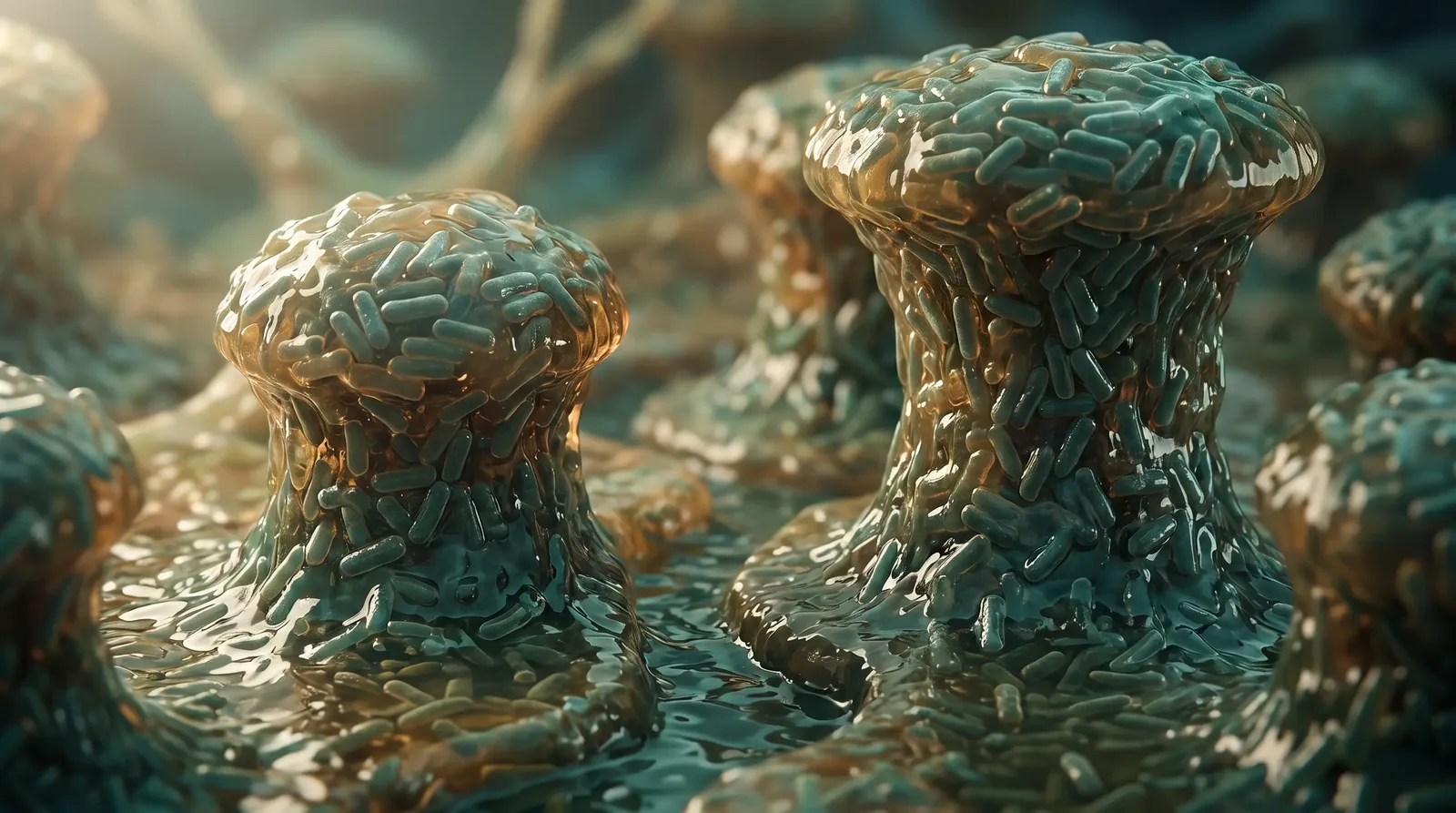
Where they matter is as an indicator. Drain flies breed only where there is a film of decomposing organic matter to feed on. A persistent infestation means that film, the drain biofilm, is established inside the pipe. In a food-service or healthcare setting, that biofilm is the actual problem, and the flies are the visible symptom of it.
Do drain flies carry disease?
Drain flies are not established disease vectors, but because they develop inside drain biofilm, they can mechanically carry bacteria on their bodies as they move from the drain into the surrounding area. In a sensitive environment such as a commercial kitchen or a healthcare facility, that contamination pathway is a legitimate concern, even though the flies are not infecting anyone directly.
The stronger, better-documented risk is the biofilm reservoir the flies come from. Peer-reviewed research has repeatedly shown that drain and wastewater biofilm can harbor dangerous organisms. A review of hidden infection reservoirs by Bloomfield and colleagues (2015) identified drains as an underappreciated source of pathogens in buildings, and Carling's 2018 analysis documented 23 hospital outbreaks of carbapenem-resistant organisms traced to wastewater drains. Maillard and Centeleghe (2023) showed why this biofilm resists routine cleaning and disinfection.
None of those studies are about drain flies specifically. They are about what lives in the drain that drain flies breed in. The takeaway is consistent: the drain biofilm, not the fly, is where the documented risk sits, and the flies are a sign that the reservoir is active. For the deeper science, see our overview of biofilm in building drains and antibiotic-resistant bacteria in drains, or browse the research library.
The key distinction: the danger is not the fly, it is the reservoir. A few drain flies in a home are a minor annoyance. A recurring infestation in a commercial kitchen or a patient-care area signals that the drain biofilm has become an established habitat, and that is what needs to be addressed.
Why drain flies keep coming back
If drain flies return within days or weeks of treatment, it is because the breeding site was never removed. Drain flies lay eggs in the biofilm that lines the inside of the drain. The drain fly larvae feed on that film and complete their lifecycle, from egg to adult, in roughly 8 to 24 days inside the pipe. Killing the adults you can see does nothing to the eggs and larvae below.
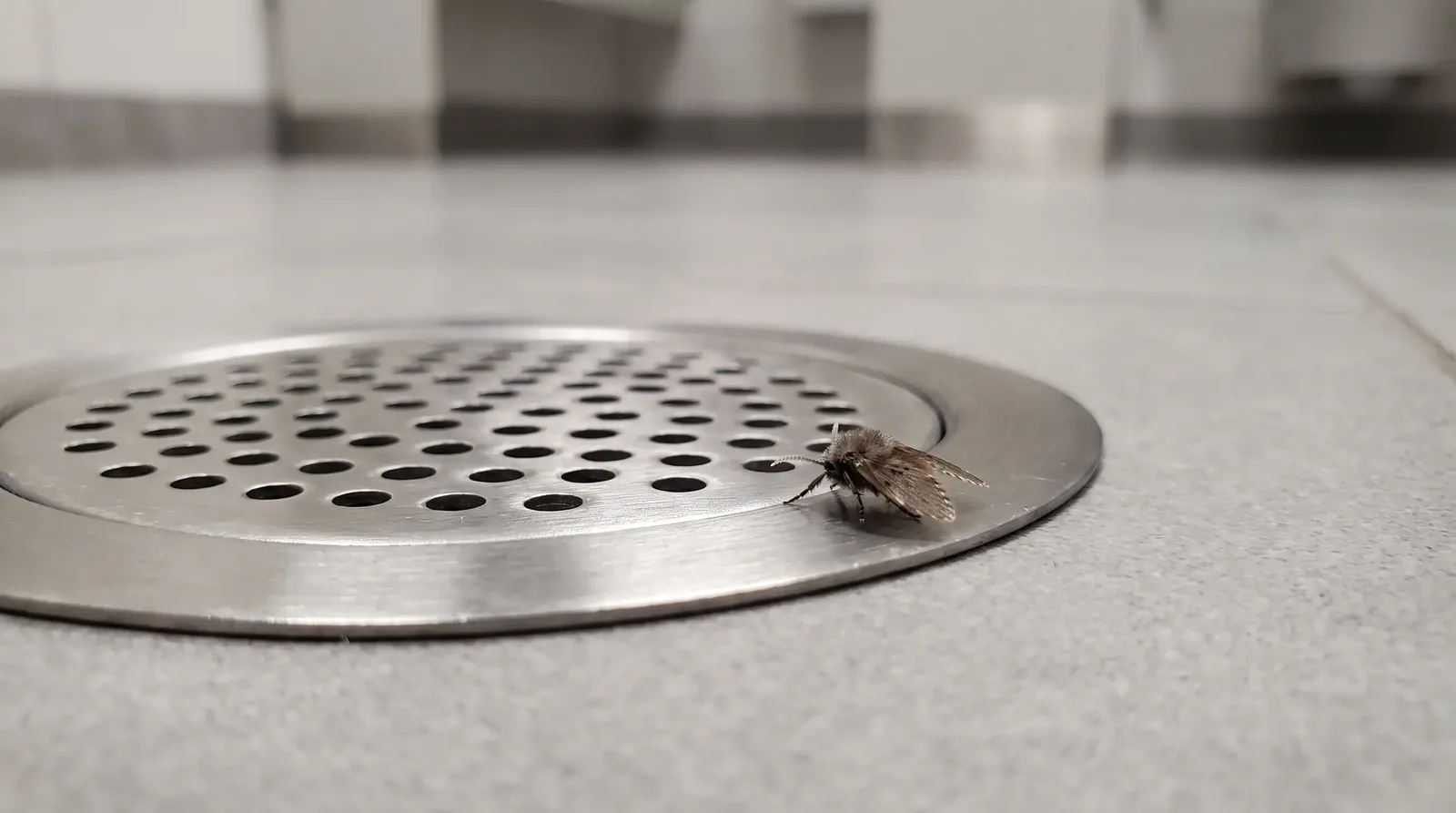
Sprays do not reach the eggs and larvae inside the pipe. Drain gels and foams can reduce the biofilm temporarily, but the organic layer rebuilds quickly, and even a thorough treatment does not stop the next generation of adults from emerging through the drain opening. This is the same cycle that makes drain flies so costly in restaurants, where a recurring infestation drives repeated pest-control visits and risks a health-inspection finding.
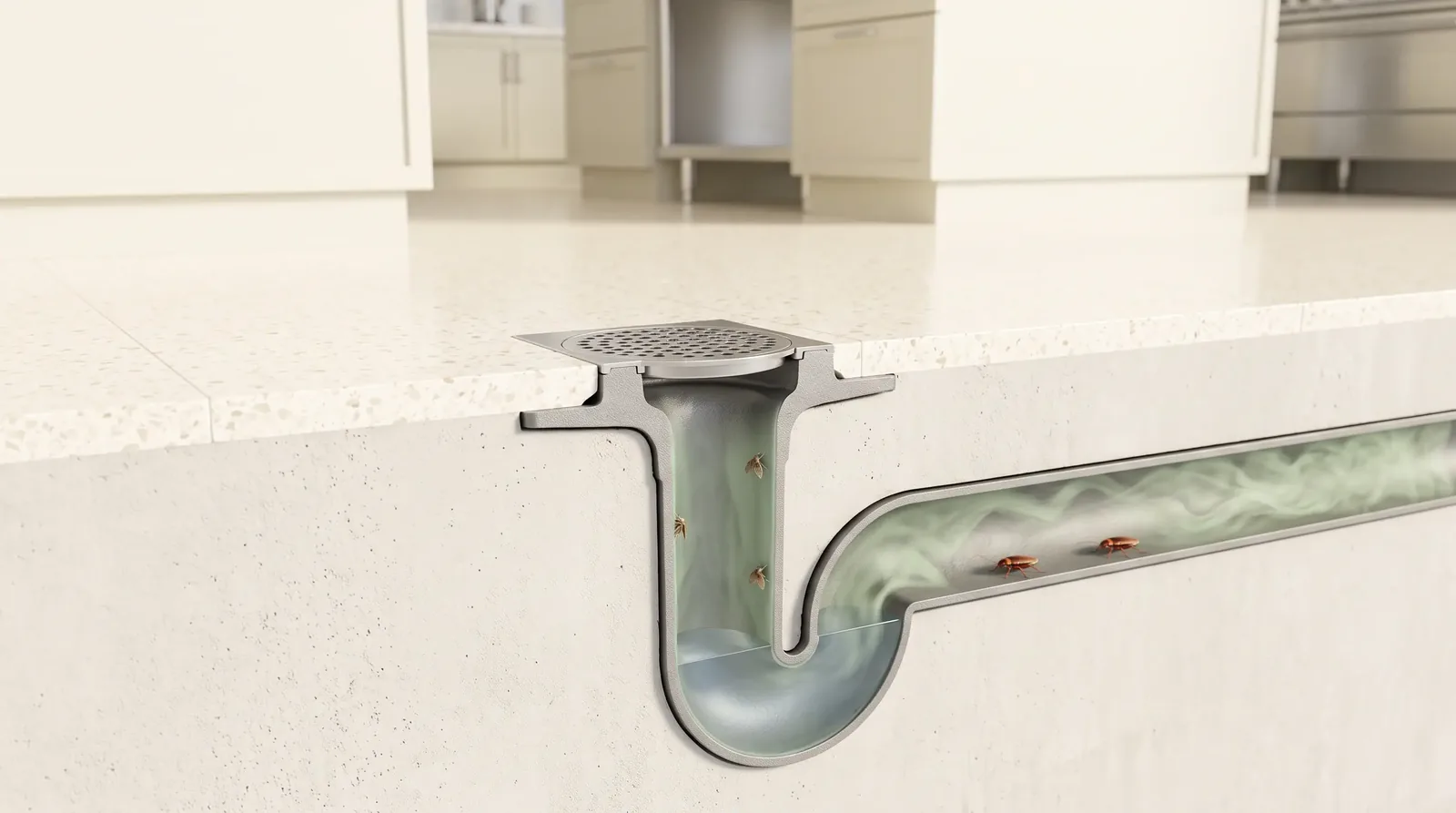
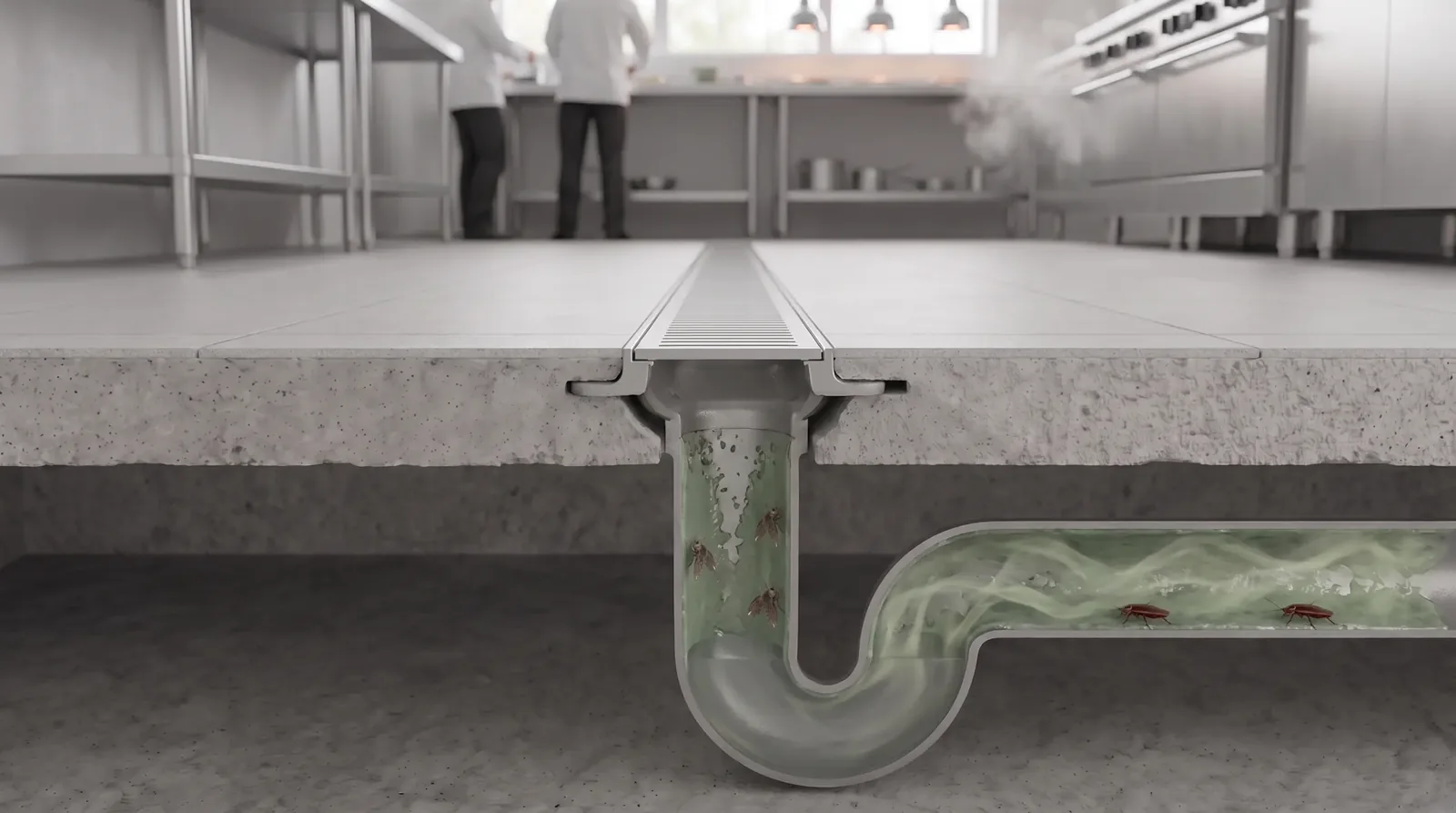
A working P-trap blocks flies coming up from the sewer, but only while it holds water, and it does nothing about flies breeding in the biofilm above the water. In a floor drain that receives little flow, the trap dries out in two to three weeks, and the drain becomes an open path for flies, odors, and sewer gas alike.
How to get rid of drain flies for good
Permanent control has two parts: reduce the biofilm the flies breed in, and physically seal the drain so adults cannot emerge. Chemicals alone or cleaning alone will not solve it.
Clean the drain to remove the breeding film
Mechanical cleaning, a drain brush plus an enzyme or bacterial drain cleaner, reduces the organic film that feeds the larvae. Done on a schedule, this lowers the breeding capacity of the drain. On its own, though, it does not stop adults already in the pipe from emerging, and the film rebuilds between cleanings.
Seal the drain with a physical barrier
The step that actually breaks the cycle is a one-way barrier in the drain. A waterless trap seal like Green Drain drops into the existing floor drain body and uses a silicone valve that opens for water and closes when flow stops. Closed, it blocks adult drain flies, cockroaches, sewer gas, and odors from coming up through the drain, whether or not the P-trap holds water.
Combined with periodic cleaning, a physical seal removes both halves of the problem: the cleaning starves the biofilm, and the seal stops any remaining adults from reaching the room. For the full method, see our guide to getting rid of drain flies permanently, and the pest-control approach to drain exclusion for operators managing it across many drains.
Frequently asked questions
Are drain flies harmful to humans?
Drain flies do not bite or sting, and they are not established disease vectors, so they are considered a nuisance pest rather than a direct health threat. The concern is indirect: a persistent infestation indicates an organic biofilm reservoir in the drain, and in food-service or healthcare settings the flies can mechanically carry bacteria from that biofilm into the surrounding area.
Do drain flies carry disease?
Drain flies are not a primary disease vector, but because they breed in drain biofilm they can carry bacteria on their bodies. The better-documented risk is the biofilm itself. Peer-reviewed research has linked drain and wastewater biofilm to outbreaks of antibiotic-resistant organisms in hospitals. The flies are best read as a sign that the drain reservoir is active.
Why do drain flies keep coming back after I spray them?
Spraying kills adult flies but does not reach the eggs and larvae in the drain biofilm. The lifecycle continues inside the pipe and new adults emerge within days. Permanent control requires removing the biofilm and physically sealing the drain so adults cannot emerge.
How do I get rid of drain flies permanently?
Clean the drain to reduce the breeding film, then seal it with a physical barrier so adults cannot emerge. A waterless trap seal provides a one-way valve that blocks drain flies, pests, and sewer gas while still letting water drain. Combined with regular cleaning, this removes the breeding habitat and the emergence path at the same time.