A P-trap is the U-shaped bend of pipe under a sink, shower or floor drain. Water left in the bend after each use forms a seal that keeps sewer gas from rising into the room. Plumbing codes require a trap on every fixture. The seal lasts only as long as the water does: in a drain that rarely sees water, it slowly evaporates and the drain opens to the sewer.
It is also written p trap or ptrap, and sometimes spelled pee trap. Almost every drain in a building relies on the same simple idea to keep sewer gas out: a small pool of water held in a curved pipe. When the trap holds its water, you never think about it. When the water is gone, you smell it.
This article explains how a P-trap works, why its water seal dries out more often than most facility managers expect, and what keeps a drain sealed when the water is gone. The short film below shows a floor-drain trap holding its seal, losing it, and how a seal above the trap backs it up.
How a P-trap works
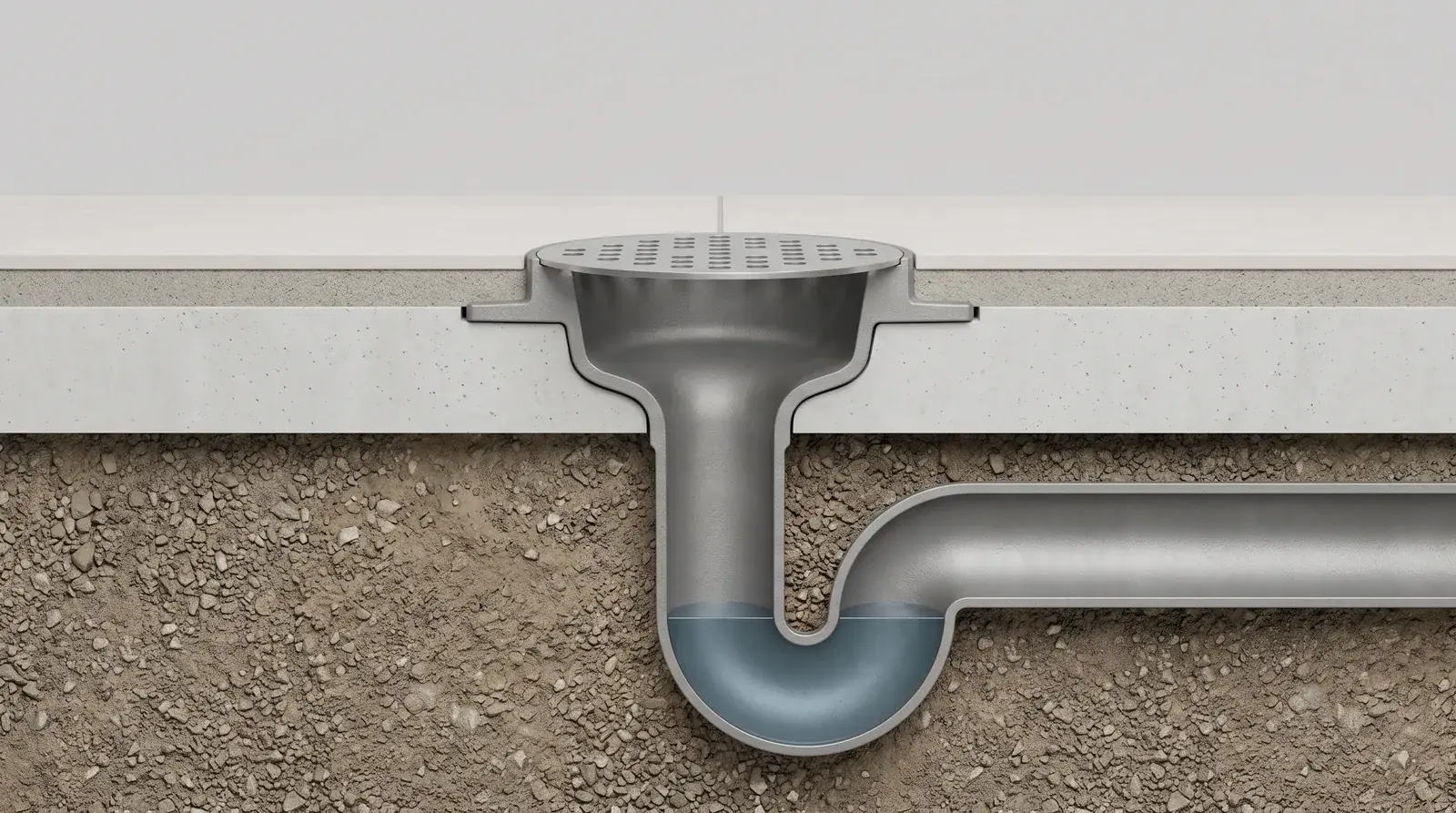
A P-trap is a U-shaped bend in a drain pipe. When water flows through the drain, some of it stays behind in the curved section. This standing water creates a seal between the building interior and the sewer system below.
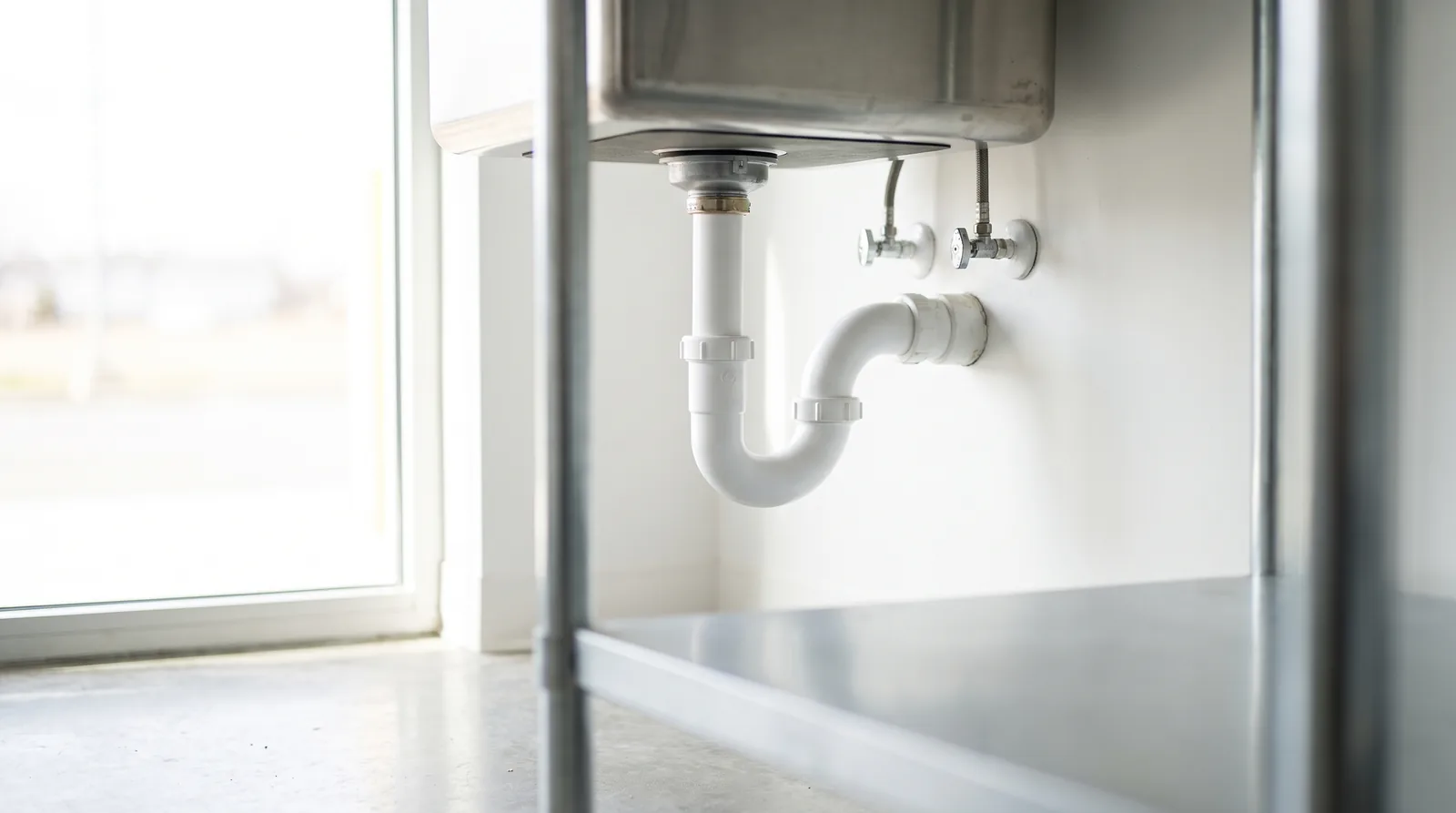
The concept is simple: gases cannot pass through liquid. As long as water sits in the trap, sewer gas stays in the sewer. The P-trap is required by plumbing codes in every state and has been the standard method of drain sealing since the 1800s.
The depth of that water is set by code. The International Plumbing Code requires a trap seal of at least 2 inches and no more than 4 inches. Seen from the side, the bend and the pipe that leaves it toward the wall look like the letter P lying on its side, which is where the name comes from.
Every plumbing fixture has a trap. Toilets have it built into the bowl; sinks, tubs, showers and floor drains have a separate trap below them. The difference is that sinks and toilets get used regularly, keeping the trap continuously recharged with fresh water. Floor drains often do not.
P-traps in floor drains
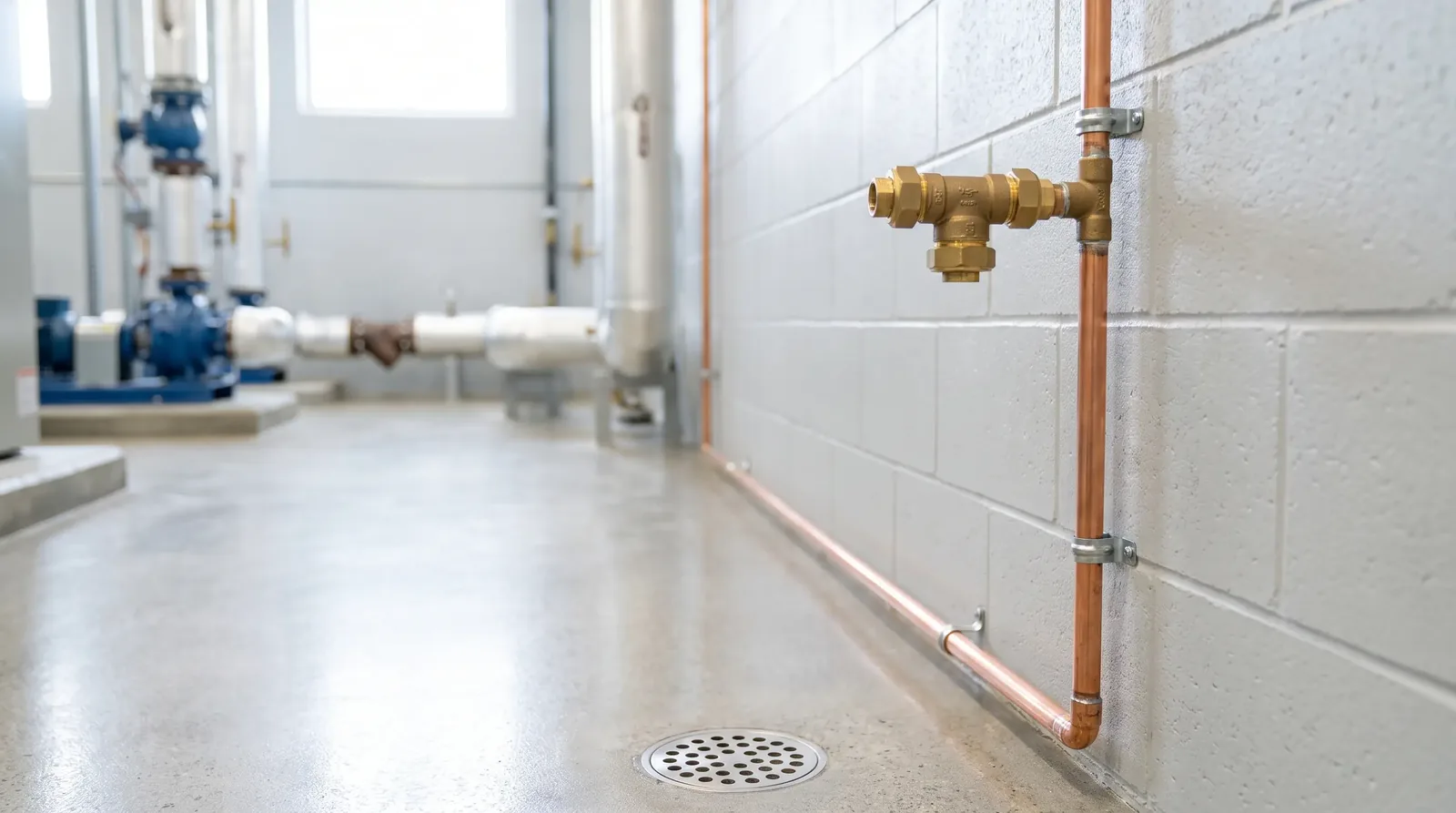
Every floor drain connects to a trap below the floor, usually out of sight. Nobody sees it, and in rooms where the floor is rarely washed down, nobody refills it. That makes floor-drain traps the ones most likely to dry out, and the usual source of a sewer smell in a mechanical room, a storage room or an empty tenant space.
Why a P-trap dries out
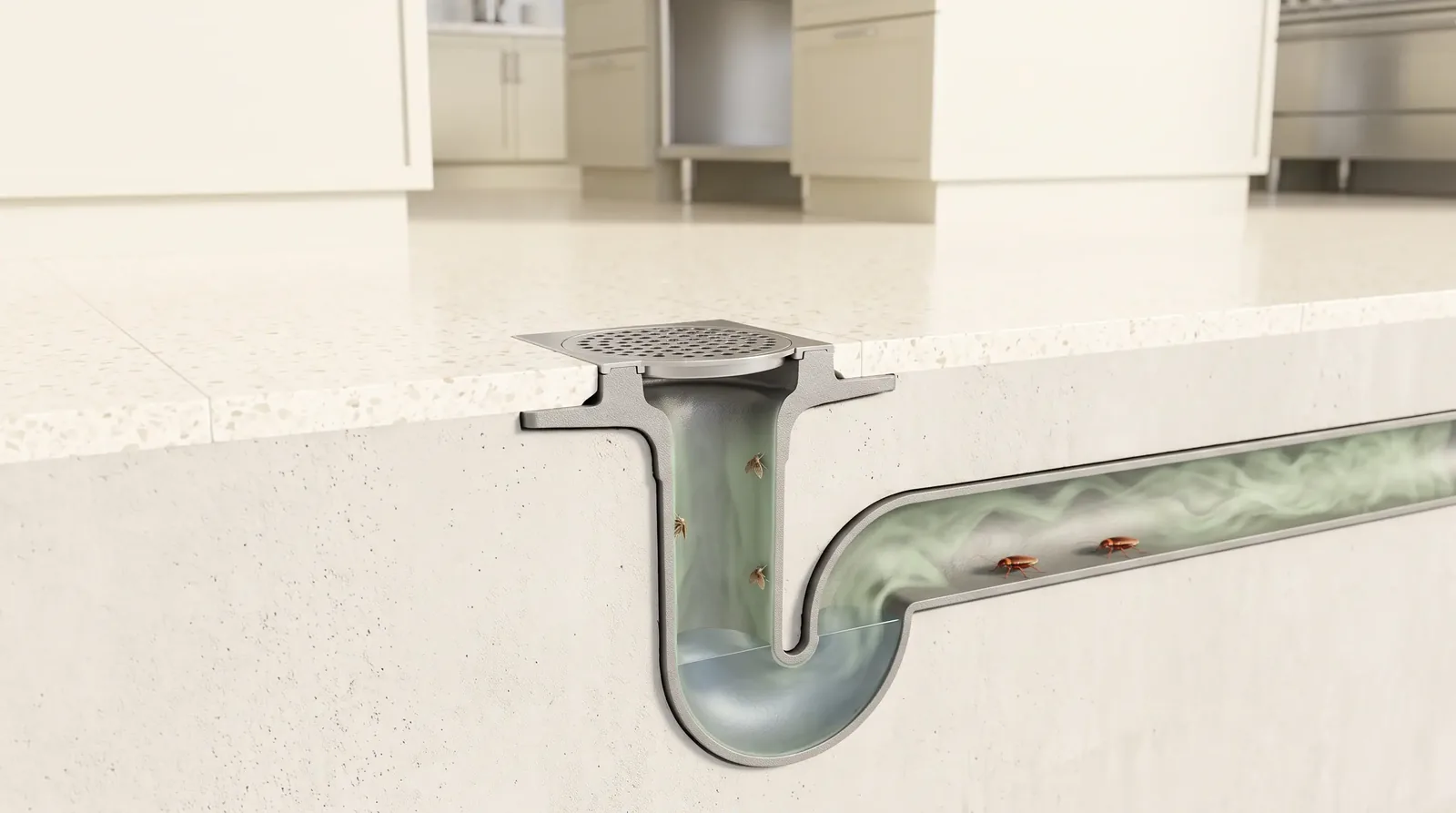
The entire system depends on one thing: the water staying in the trap. When that water disappears, the seal is gone. There is nothing between the building and the sewer.
Evaporation
Water evaporates. Measurements published in HPAC Engineering put trap evaporation at roughly 1 to 3 inches of water a month, at the high end in dry climates. With a 2-inch seal, a drain that never sees water can lose its seal in about a month, and sooner in warm, dry rooms or where HVAC air moves across the drain.
This is the most common way a trap loses its seal. It affects every building with floor drains in low-traffic areas:
- Mechanical rooms and utility closets
- Vacant tenant spaces in commercial buildings
- Seasonal hotel rooms and resort wings
- School buildings during summer break
- Hospital corridors and storage areas
- Warehouse and industrial floor drains
Capillary action and wicking
Debris that accumulates in the trap (hair, sediment, cleaning product residue) can act as a wick, pulling water out of the trap faster than normal evaporation. This is especially common in drains that are cleaned infrequently.
Wind and pressure fluctuations
In tall buildings, wind loads and stack effect can create pressure differentials in the drainage system. These pressure changes can siphon water out of traps, particularly on upper floors. A gust of wind on a high-rise can empty a trap in seconds.
Infrequent use
The simplest cause: nobody uses the drain. A floor drain in a storage room, a shower in an unoccupied hotel room, a restroom in a closed school wing. If water does not flow through the drain regularly, the trap will eventually dry out. It is not a question of if. It is a question of when.
What happens when a P-trap dries out
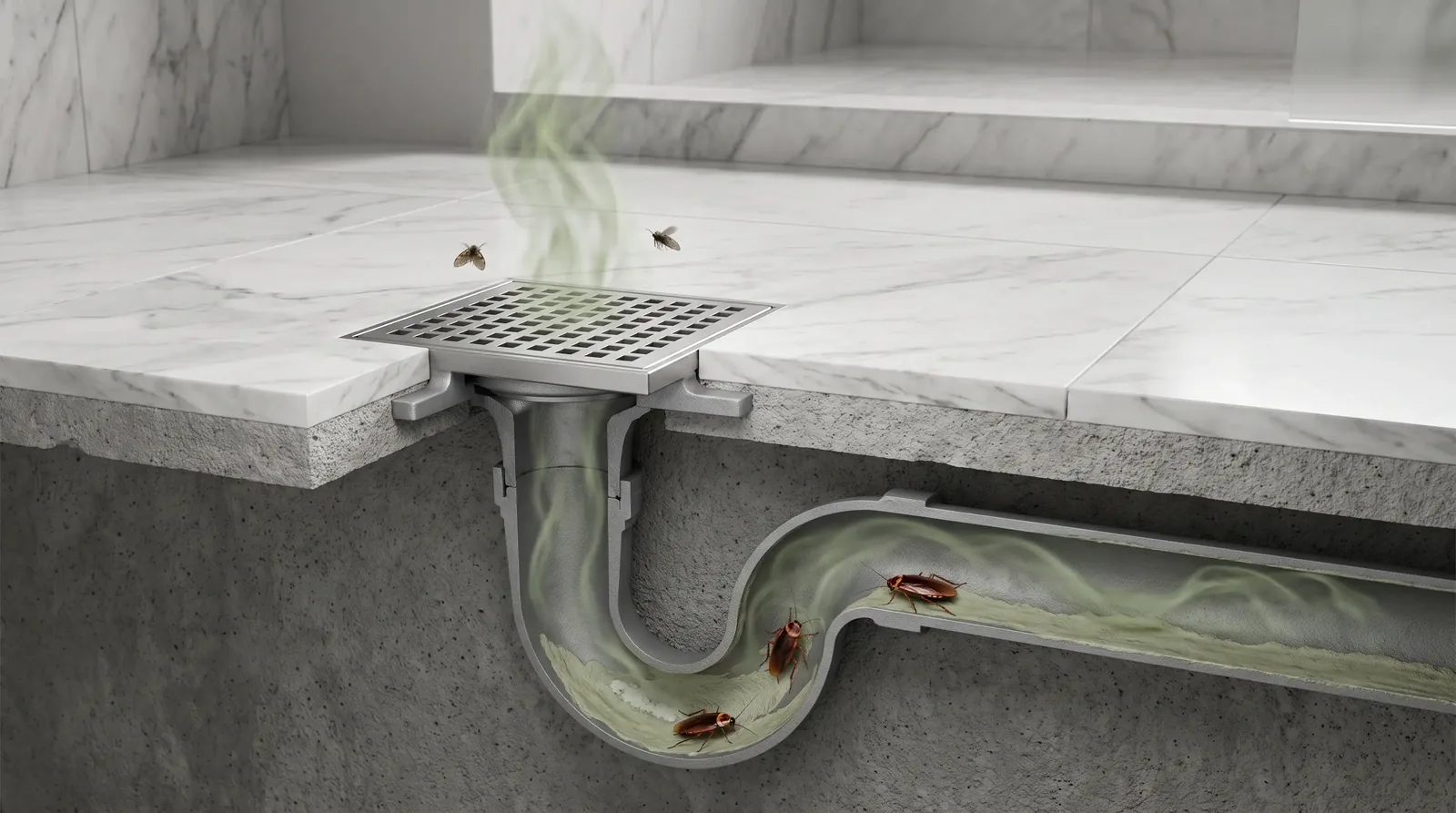
When the water seal disappears, the drain becomes an open pipe connected directly to the sewer. Three things can now enter the building:
1. Sewer gas
Sewer gas is a mixture of hydrogen sulfide (H2S), methane, ammonia, and carbon dioxide. Even at low concentrations, hydrogen sulfide causes headaches, nausea, and eye irritation. At high concentrations, it can be fatal. The characteristic rotten-egg smell is the most recognizable symptom of a dry trap, but by the time you smell it, occupants have already been exposed.
2. Pests
An open drain is an open door. Drain flies breed in the biofilm inside drain pipes and emerge through open traps. Cockroaches, mosquitoes, and even rodents can travel through sewer lines and enter buildings through dry traps. Sprays and foggers reach the flies in the room, not the larvae in the pipe, which is why spraying alone cannot solve a problem that originates from an open drain.
3. Pathogens
In healthcare facilities, dry traps are a documented source of hospital-acquired infections. Peer-reviewed research has linked drain biofilms to outbreaks of carbapenem-resistant organisms (CRE), MRSA, Pseudomonas aeruginosa, and other antibiotic-resistant pathogens. When the trap seal fails, aerosolized bacteria from the drain can enter patient care areas.
From the research: A 2018 systematic review documented 23 hospital outbreaks of carbapenem-resistant organisms traced to wastewater drains. Chemical disinfection of the drains repeatedly failed. Physical barrier interventions showed the most consistent success.
Traditional solutions and their limitations
Manual flushing
The oldest approach: pour water down the drain on a schedule. This works as long as someone remembers, the schedule is maintained, and every drain in the building is included. In practice, manual flushing breaks down during vacations, staff turnover, building closures, and weekends. The traps that need attention most (in unused areas) are the ones most likely to be forgotten.
Trap primers
A trap primer is a mechanical or electronic device that periodically sends water to the trap to keep it charged. Trap primers solve the evaporation problem but introduce new ones:
- Water consumption: A single continuous-flow trap primer can use over 52,000 gallons of water per year. Even pressure-drop models consume thousands of gallons annually.
- Maintenance: Trap primers have mechanical components (valves, solenoids, sensors) that require regular maintenance. Mineral deposits, debris, and valve failures are common.
- Failure modes: When a trap primer fails, it fails silently. The trap dries out and the building has no warning until the odor appears or an outbreak occurs.
- Cost: Between water consumption, maintenance, and replacement, trap primers create ongoing operational expenses that compound over the life of the building.
Use our Water Savings Calculator to see the annual water and cost impact of trap primers in your building.
Chemical treatments
Enzyme cleaners, drain deodorizers, and chemical sealants provide temporary relief. They do not prevent evaporation. They do not create a physical seal. And they must be reapplied on a recurring basis. In school districts, many chemical treatments raise Proposition 65 compliance concerns.
The alternative: waterless trap seals
A waterless trap seal is a mechanical device that creates a physical barrier in the drain without relying on water. Instead of a pool of liquid that can evaporate, it uses a one-way valve that allows water to flow down but blocks everything from coming back up.
Green Drain is a one-way silicone skirt valve that drops into the existing floor drain, above the trap. Water flowing down (cleaning, mopping, equipment drainage) opens the skirt; when the flow stops, the skirt recloses on its own and the drain stays sealed, with or without water in the trap below. The P-trap keeps doing its job. Green Drain holds the line when the water runs out. It is a drop-in install with no plumbing changes, and because the seal is mechanical, not liquid, it does not evaporate.
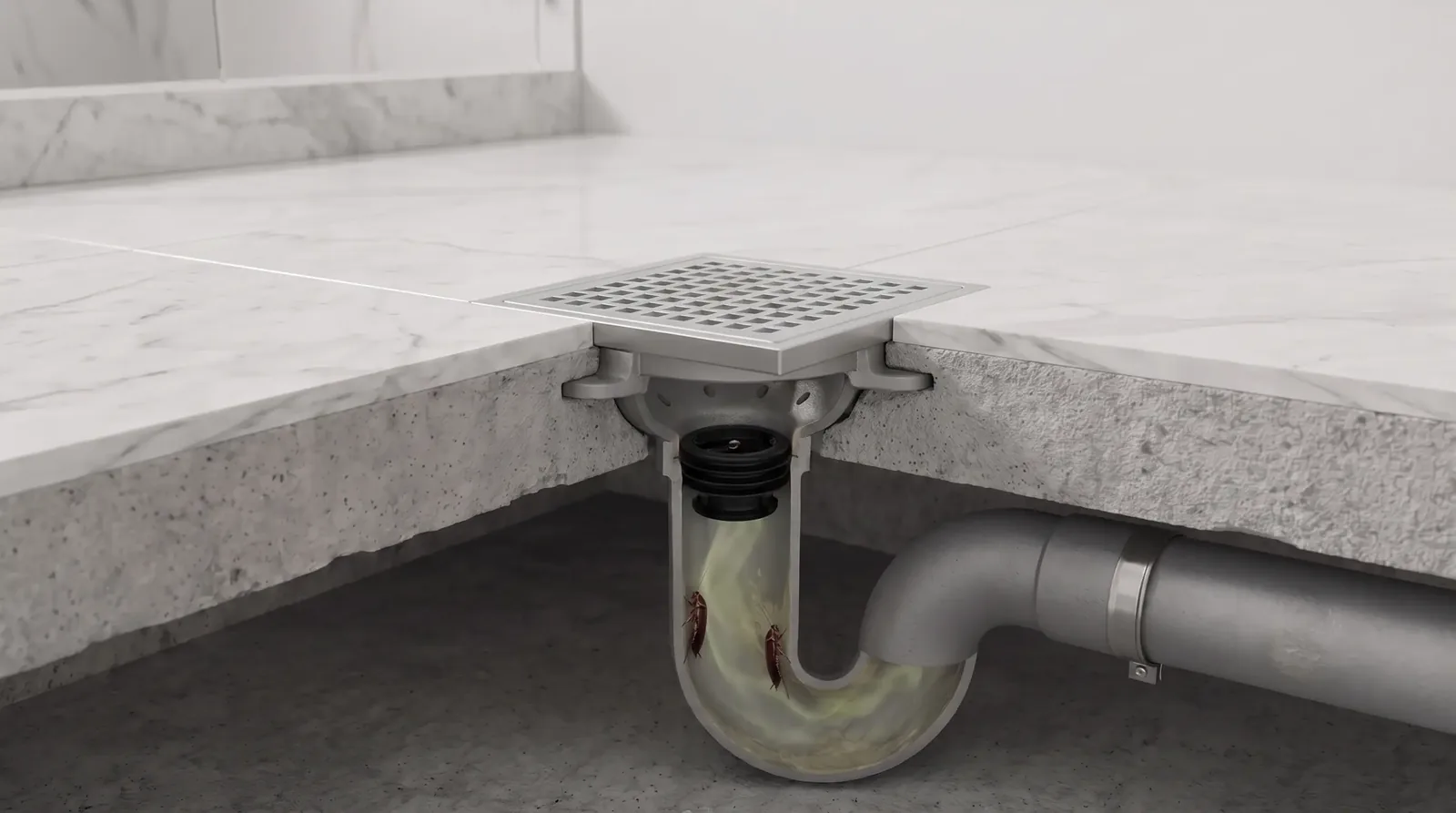
Key differences from traditional P-trap maintenance:
- Zero water consumption to maintain the seal
- No water supply, solenoids or sensors to maintain
- No evaporation risk during building closures, summer breaks, or vacancy
- Drop-in installation with no plumbing modifications
- Six certifications: cUPC (IAPMO, covering ASSE 1072-2020), NSF/ANSI 2, WaterMark, CE / ETA-18/0536, Saber, and HACCP International with independent test reports from SGS, DTI, and CRT
Which buildings benefit most
Any building with floor drains in low-use areas benefits from a seal that does not depend on the trap water. The highest-impact applications include:
- Hospitals and healthcare facilities: where dry traps can lead to pathogen transmission and hospital-acquired infections
- K-12 schools: where 8 to 12 weeks of summer break are long enough for unused traps to dry out
- Restaurants: where drain flies and sewer odor affect health inspections and customer experience
- Hotels: where seasonal rooms and low-occupancy wings create drain odor problems
- Commercial office buildings: where vacant tenant spaces become odor sources
Frequently asked questions
What is a P-trap?
A P-trap is the U-shaped bend of pipe under a sink, shower or floor drain. Water left in the bend after each use forms a seal that keeps sewer gas from rising into the room. Plumbing codes require a trap on every fixture.
Why is it called a P-trap?
Seen from the side, the bend and the pipe that leaves it toward the wall look like the letter P lying on its side. It is also written p trap or ptrap, and sometimes spelled pee trap.
Do floor drains have P-traps?
Yes. Every floor drain connects to a trap below the floor, usually out of sight. Because floor drains are rarely used, theirs are the traps most likely to dry out.
How long does it take for a P-trap to dry out?
Measurements published in HPAC Engineering put trap evaporation at roughly 1 to 3 inches of water a month. Plumbing codes require a trap seal of 2 to 4 inches, so a drain that never sees water can lose its seal in about a month, and sooner in warm, dry rooms or where air moves across the drain.
What happens when a P-trap dries out?
The drain is open to the sewer. Sewer gas, with its rotten-egg smell, can rise into the room, and drain flies and other pests can come up through the pipe.
Can I just pour water down the drain periodically?
Yes, refilling the trap works for a while. The challenge is consistency: facility teams look after hundreds of drains, and the ones in unused rooms are the easiest to forget. A waterless trap seal keeps the drain closed between top-ups.
Are waterless trap seals code-compliant?
Green Drain is cUPC listed by IAPMO, which covers ASSE 1072-2020, the standard for barrier-type floor drain trap seal protection devices. Acceptance is decided by your local plumbing authority; our state plumbing code guide covers each state.
How long does a waterless trap seal last?
Green Drain's silicone skirt is tested to more than 2,500 open-close cycles. Life in service depends on how much the drain is used, so inspect the seal at 6 to 12 months in service to confirm the silicone is intact and sealing properly, and replace only as needed. High-use drains wear sooner; low-use drains often last a year or longer.