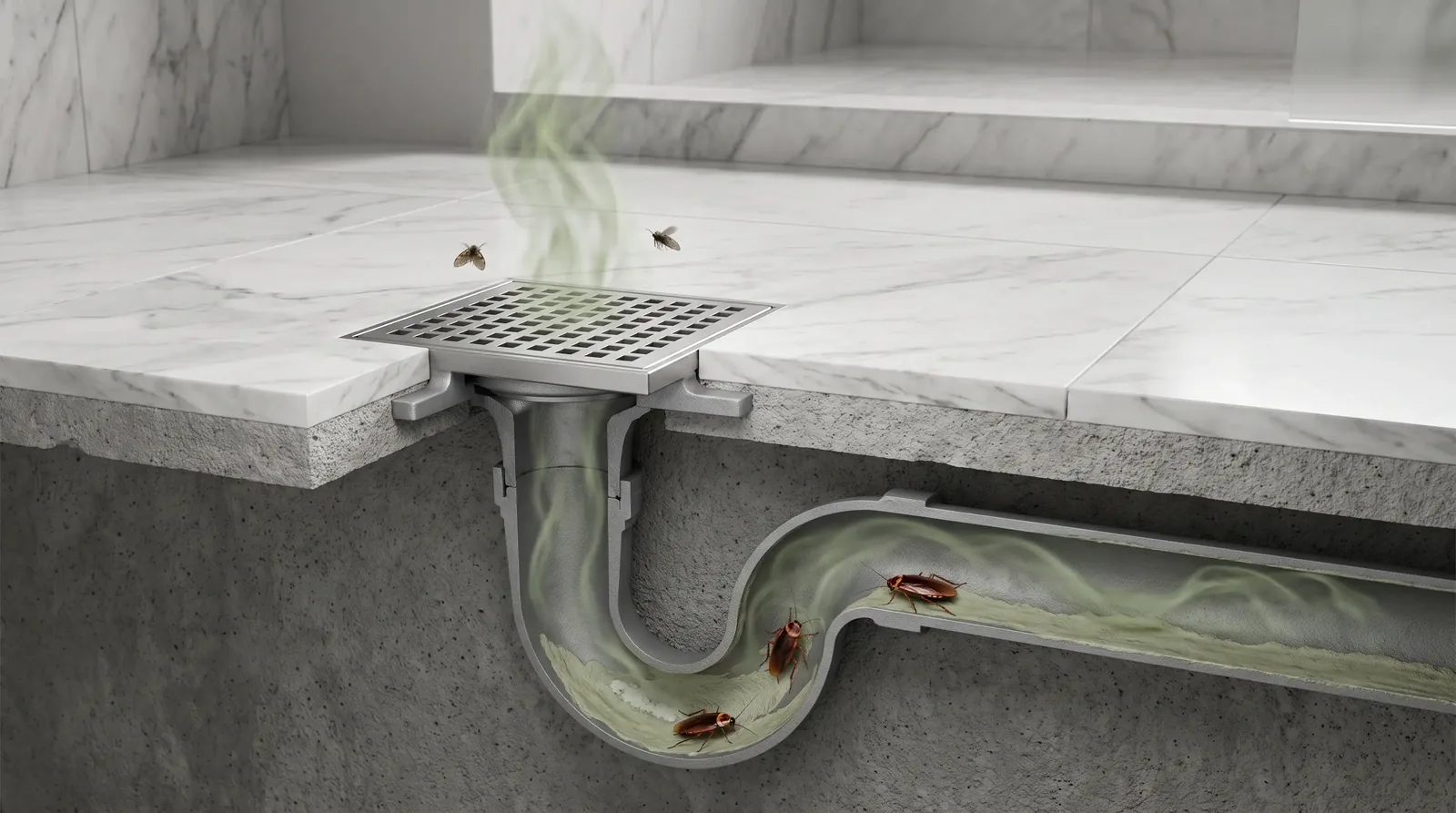
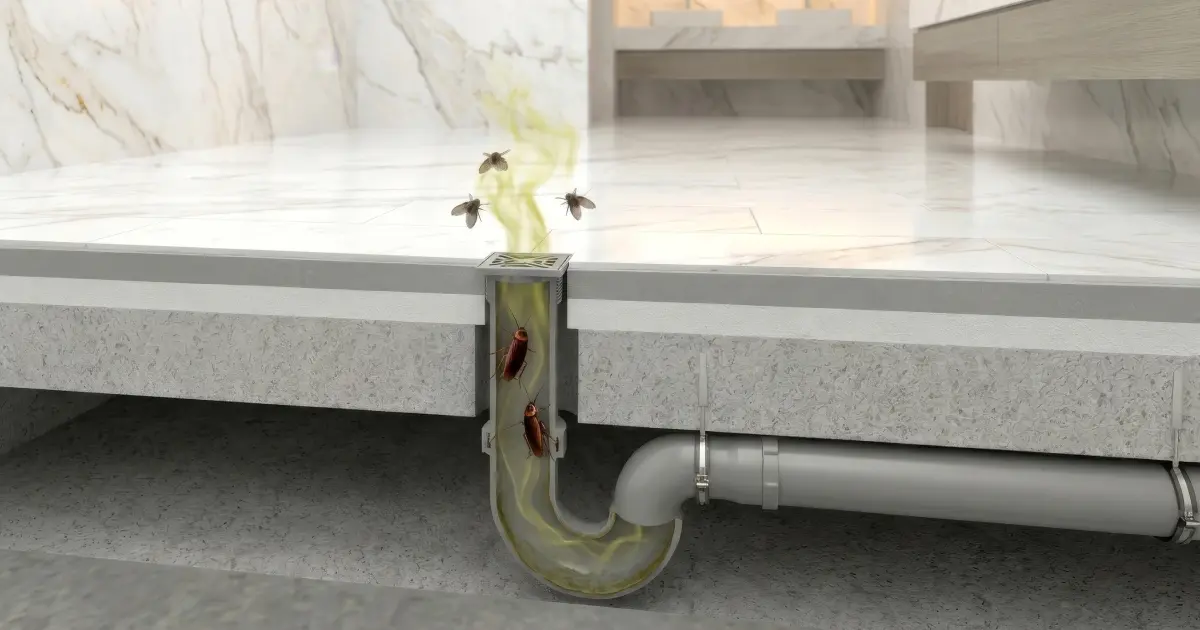
A sewer smell in the house means a drain or pipe is open to the sewer. The most common cause is a trap that has dried out in a drain nobody uses, such as a basement floor drain or a guest shower. Run water into every drain you rarely use. If the smell stays, or you cannot find where it comes from, call a plumber.
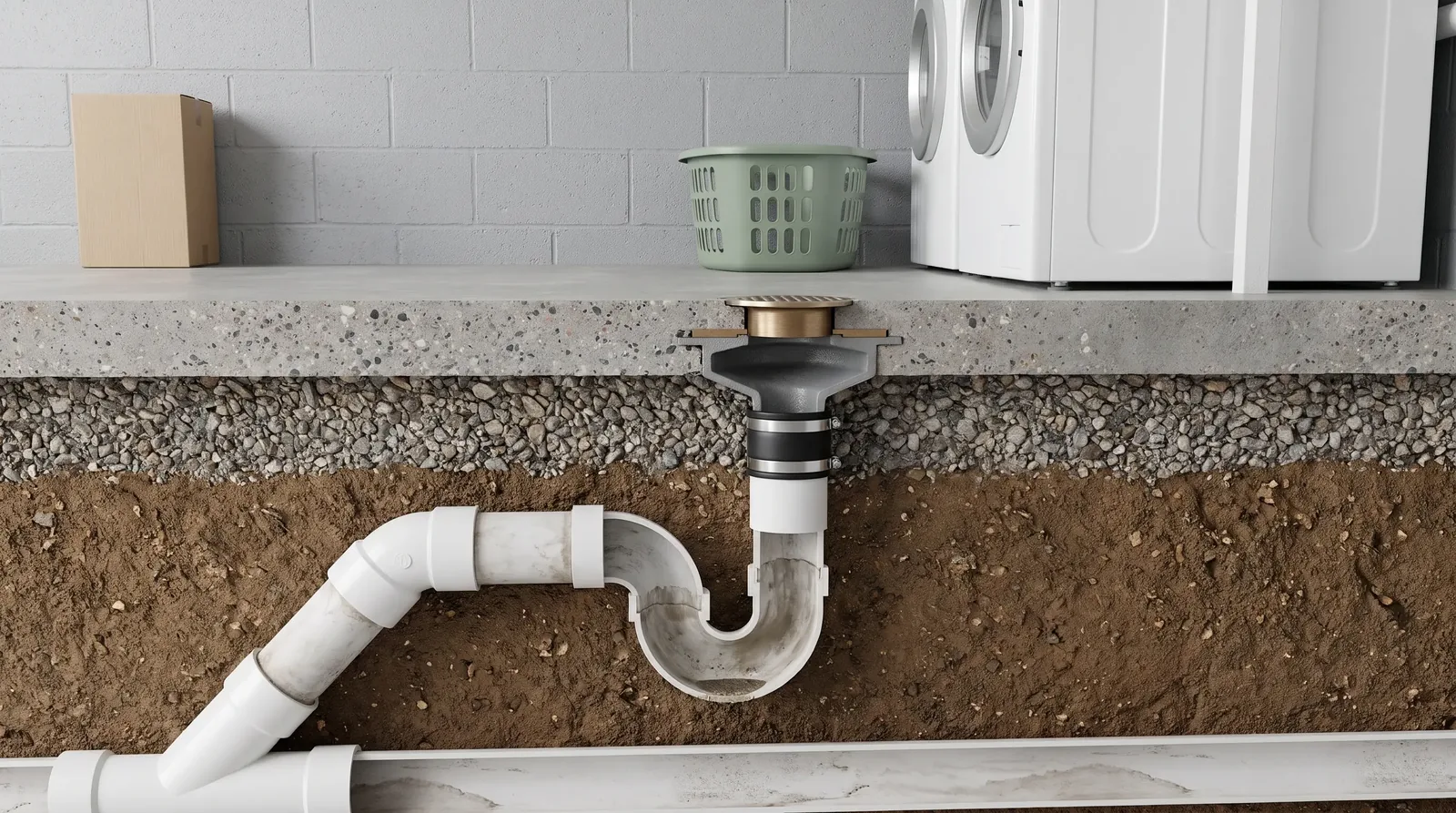
This guide walks through the usual causes, most likely first, a room-by-room check you can do yourself, and the fixes in order of cost, starting with the free one. If your question is whether the gas itself is a health risk, our article on whether sewer gas is dangerous covers that. For how the water seal under a drain works, see what a P-trap is, and for floor drains in particular, common floor drain problems.
Why does my house smell like sewer?
Because somewhere a drain, a fixture or a pipe is letting air from the sewer line into the room. Every fixture in a house (toilet, sink, shower, tub, floor drain) is connected to the drain piping, and each one has a trap: a U-shaped bend that holds water. That water is the seal that keeps sewer gas in the pipe. Vent pipes, the pipes that stick up through the roof, let the gases out above the house and keep the pressure in the drains steady so the traps can hold their water. A sewer smell inside means one of those parts is not doing its job.
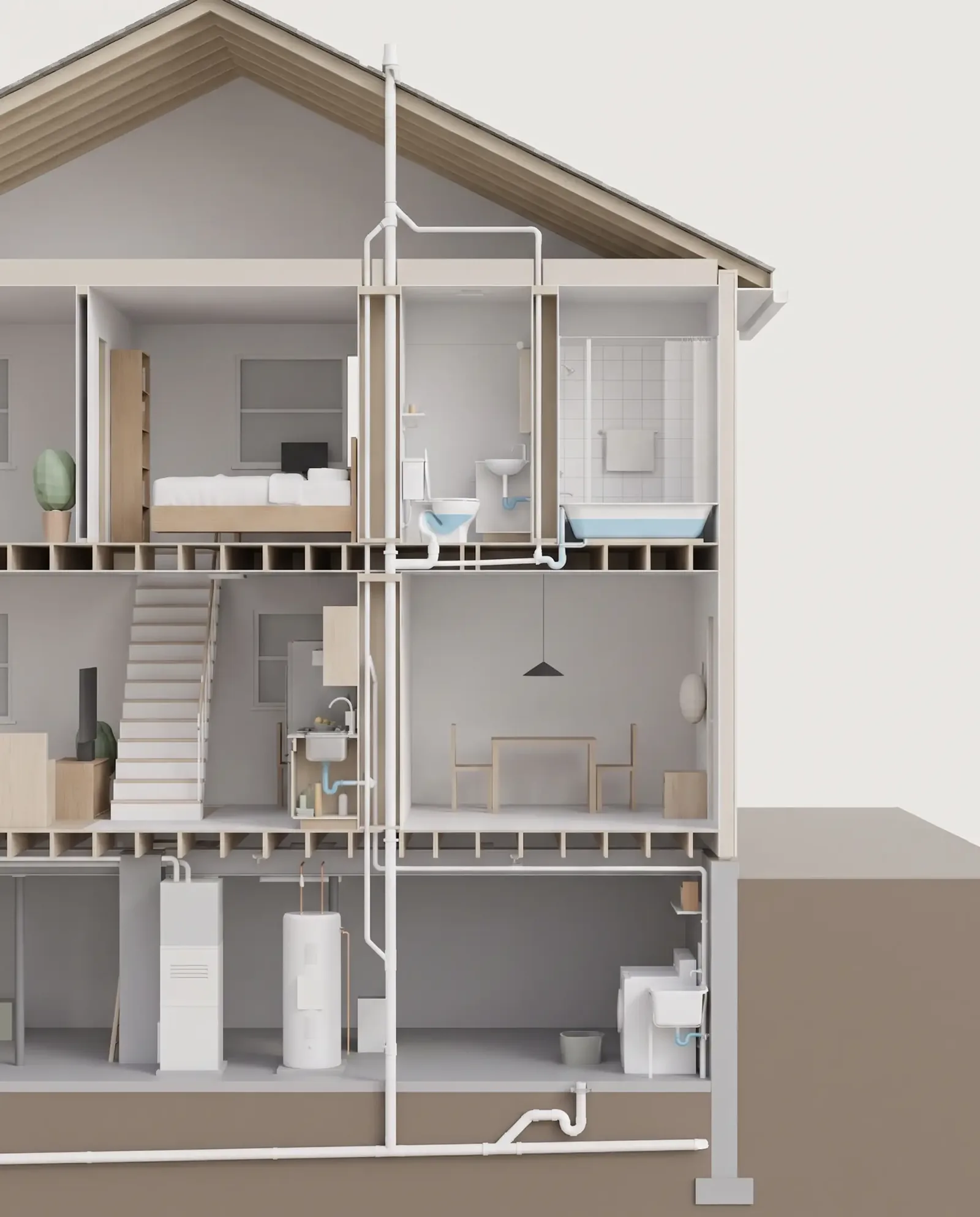
These are the usual causes, with the most likely first.
- A trap that has dried out. This is the most common cause of sewer odor indoors. When a drain is rarely used, such as the shower or tub in a guest bathroom, the water in its trap evaporates and the seal is gone.
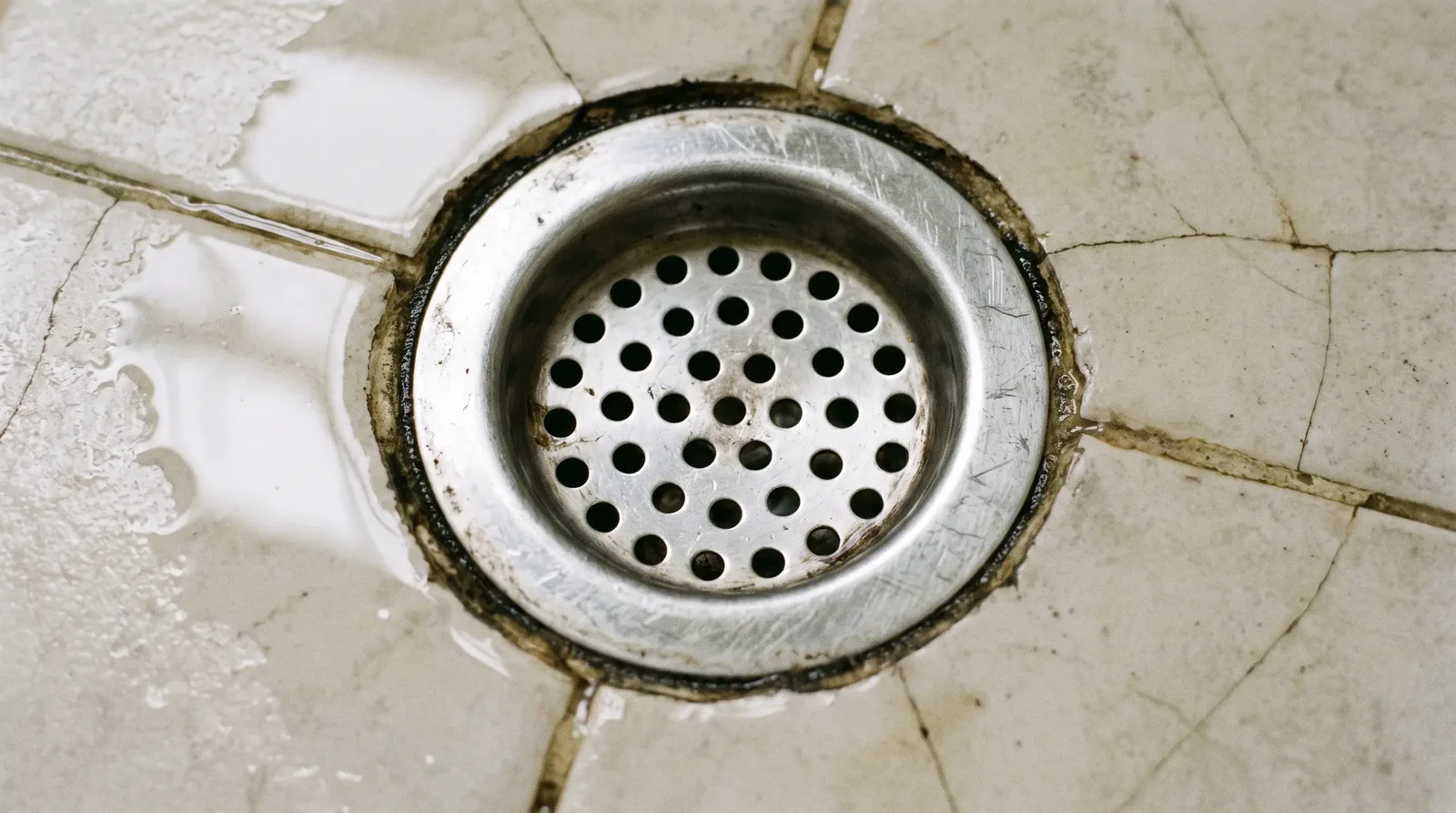
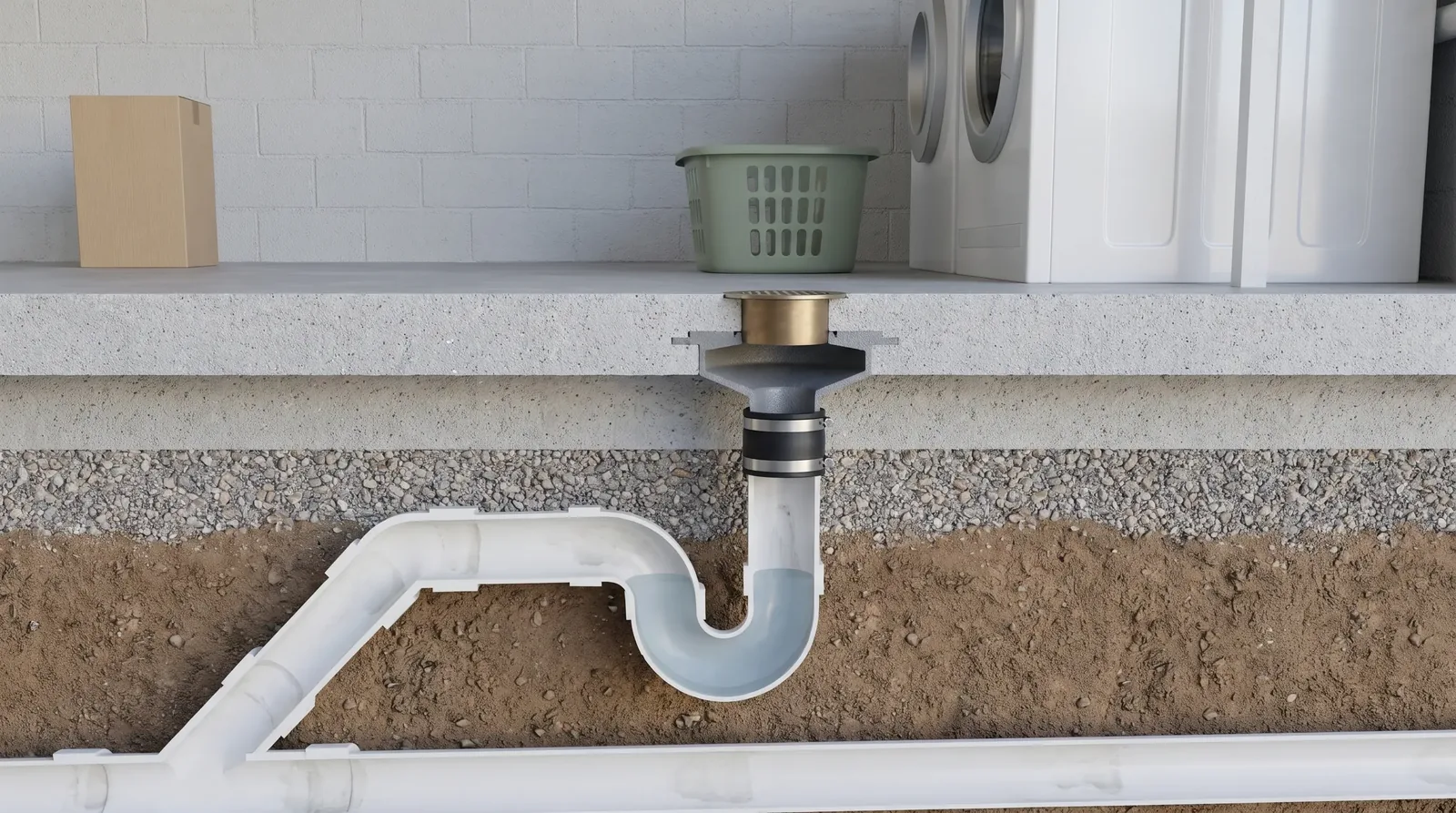
- A floor drain or basement drain. A floor drain can go a long time without any water reaching it. If a basement floor drain is rarely used, the water in its trap evaporates over time, and the smell comes up through the grate.
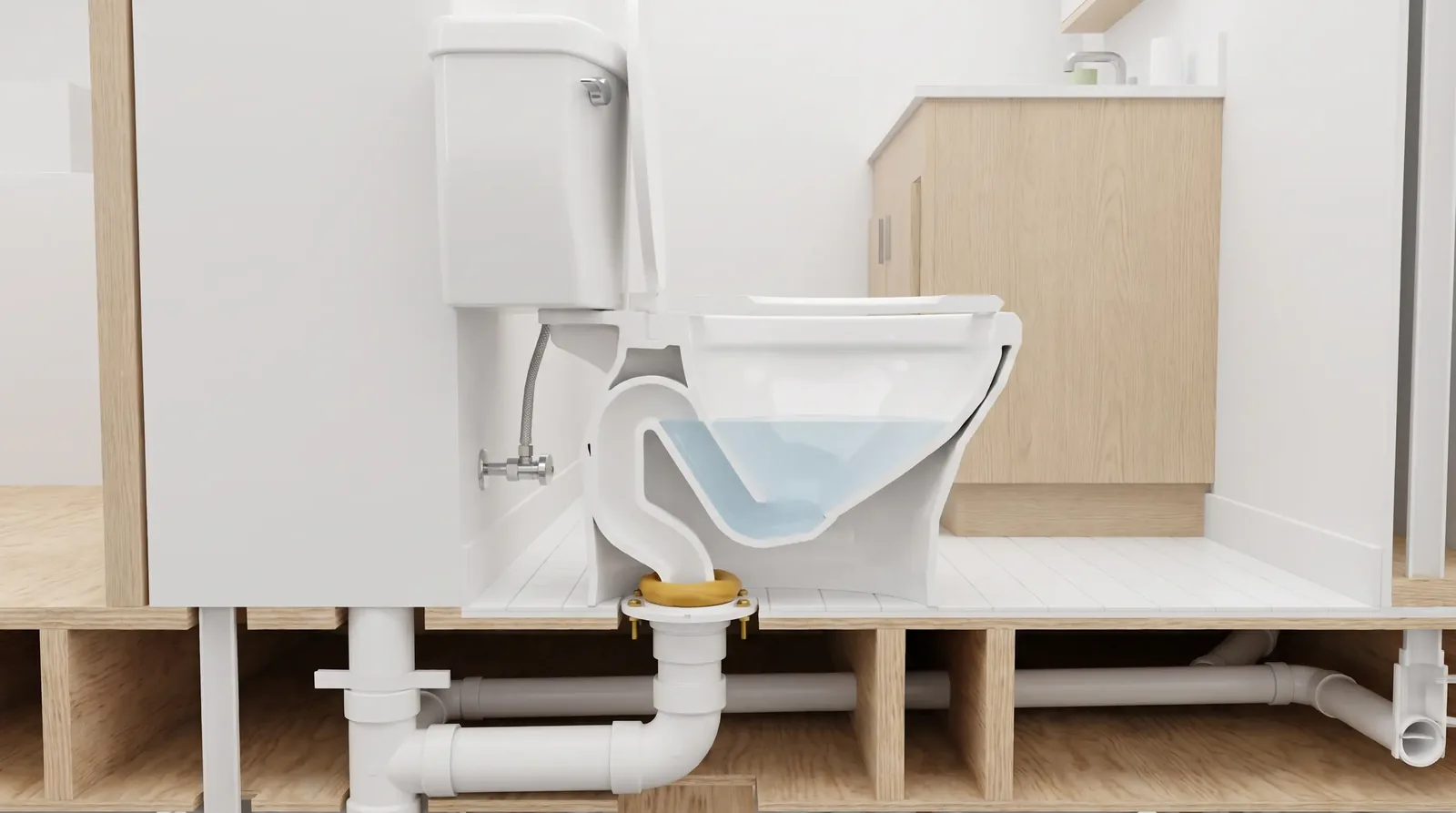
- A failed toilet seal. A wax ring seals a toilet where it meets the drain in the floor. If the ring fails, air from the drain can leak out at the base of the toilet.
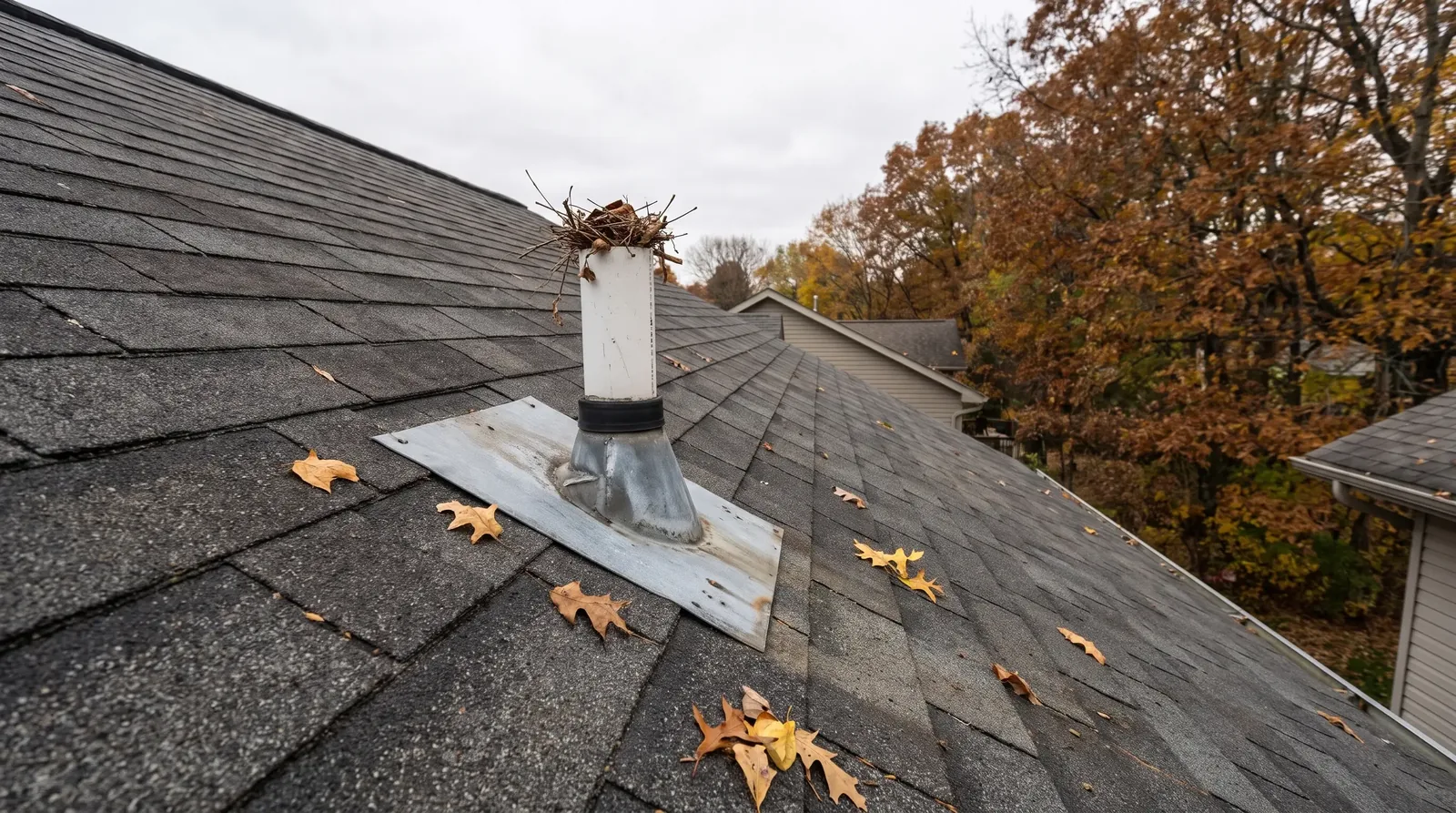
- A blocked or damaged vent. Leaves, bird nests and pests can block a roof vent, and a vent pipe can freeze in a long cold spell. A vent that cannot breathe can push sewer gas out through the traps, or pull the water out of them when other fixtures drain. Gurgling and bubbling in the fixtures are a common sign.
- A cracked or leaking drain or vent pipe. Loose fittings, corrosion and holes in the piping let gas out without letting water out. A metal drain pipe can rust through along its top side and never drip, yet still leak sewer gas. An old house trap in a basement or crawl space can crack too.
- A dirty sink overflow. The overflow, the small hole near the rim of a sink, leads to a channel inside the bowl. Debris collects in it and can smell.
- A missing trap or vent. Every fixture should have a trap and a vent. Do-it-yourself plumbing sometimes leaves one out, and the drain still seems to work.
- A septic problem. In a home on a septic system, a clogged or frozen vent, a down draft from changing wind, or a drainfield that is not working properly can all cause an odor inside the house.
How do I find out where the sewer smell is coming from?
Follow your nose first, then check the drains, starting with the ones nobody uses. The aim is to find the point where the smell gets in. Work through the house in this order.
- List the drains that rarely see water. Guest bathroom showers and tubs, a basement or laundry floor drain, a utility sink, the sink in a spare room. These are the first suspects.
- Check each trap for water. At a sink, look at the curved pipe underneath. At a floor drain or shower, lift the grate and shine a flashlight down. If a trap is dry, pour water down the drain to refill it.
- Check the base of every toilet. Grab the bowl and try to slide it from side to side. It should resist a few pounds of pressure. If it rocks, the wax ring has failed.
- Check the sinks. Smell the overflow hole near the rim, and make sure the trap under the bowl holds water.
- Look at any pipe you can see. In a basement or crawl space, look along the drain and vent pipes for loose fittings, corrosion and holes, and check the top side of horizontal metal drain pipes for rust.
- Check the roof vent. Look for leaves, a nest or other debris in the vent opening on the roof. If you are not comfortable on a roof, leave this one to a plumber.
- Still nothing? Ask for a smoke test. A plumber blows non-toxic smoke through the drain and vent piping under slight pressure. Wherever the smoke shows up inside the house is where the sewer smell is getting in.
If your home is on a septic system, also walk the area over the drainfield. Soft, wet or spongy soil there when there has been no significant rain is a good sign that the system is failing, and that calls for a septic service provider.
Why does sewer smell come and go?
Because the seal that stops it comes and goes. A trap loses its water while the drain sits unused, and the smell appears. The next time someone runs that shower or sink, the trap refills and the smell stops. If running water into a drain makes the smell go away, a dry trap in that drain was the likely cause.
Weather plays a part. Hot or dry weather makes trap water evaporate faster. Homes on septic systems have two more: a down draft, a change in the wind pattern over a vent, can bring an odor inside, and a vent pipe can freeze during a long cold spell.
Pressure in the drains is the third reason. Gas in the drain lines changes pressure as water flows through them. With a working vent, that pressure escapes through the roof. With a blocked or missing vent, gas can bubble through the water in a trap, or a draining fixture can siphon a trap empty. If the smell shows up after a toilet flushes or a tub drains, and you hear gurgling, that points to a vent problem.
Sewer smell in the bathroom, basement, kitchen or laundry
Where the smell is strongest tells you which part to check first.
Bathroom
In a bathroom, check three things. First, the shower, tub and sink drains, especially in a guest bathroom that is rarely used, since the traps in a bathroom nobody uses are the ones that dry out. Second, the toilet: a toilet has a trap too, and if the bowl rocks, the wax ring under it has failed and the smell is at the base. Third, the sink overflow, the small hole near the rim, where debris collects inside the bowl.
Basement
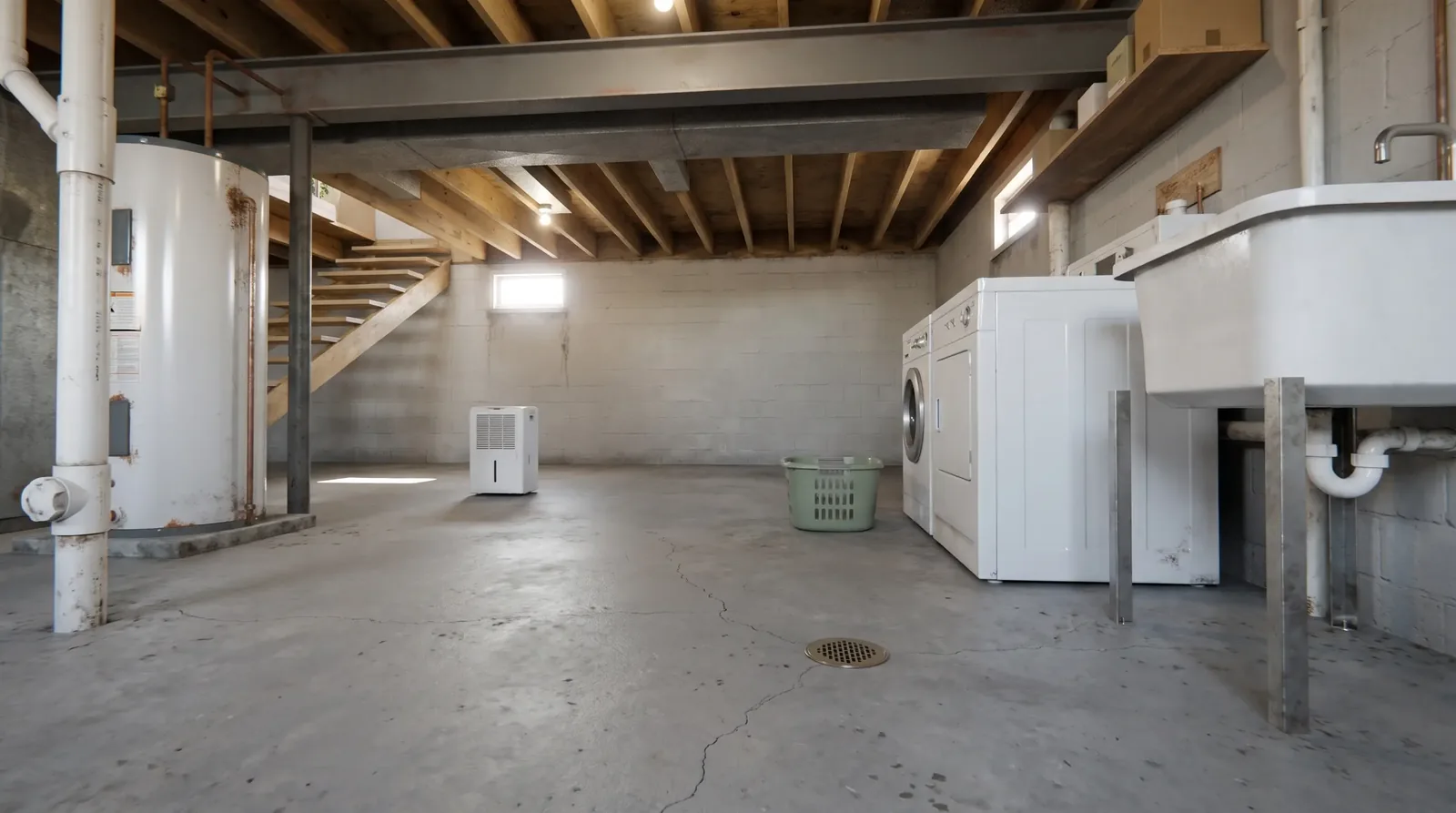
In a basement, start with the floor drain. If it is rarely used, the water in its trap evaporates over time, and it is the first point of entry to look for. Then look at the exposed pipes for loose fittings, corrosion and rust along the top of metal drain lines, and at the old house trap if your home has one, since it can crack.
Kitchen
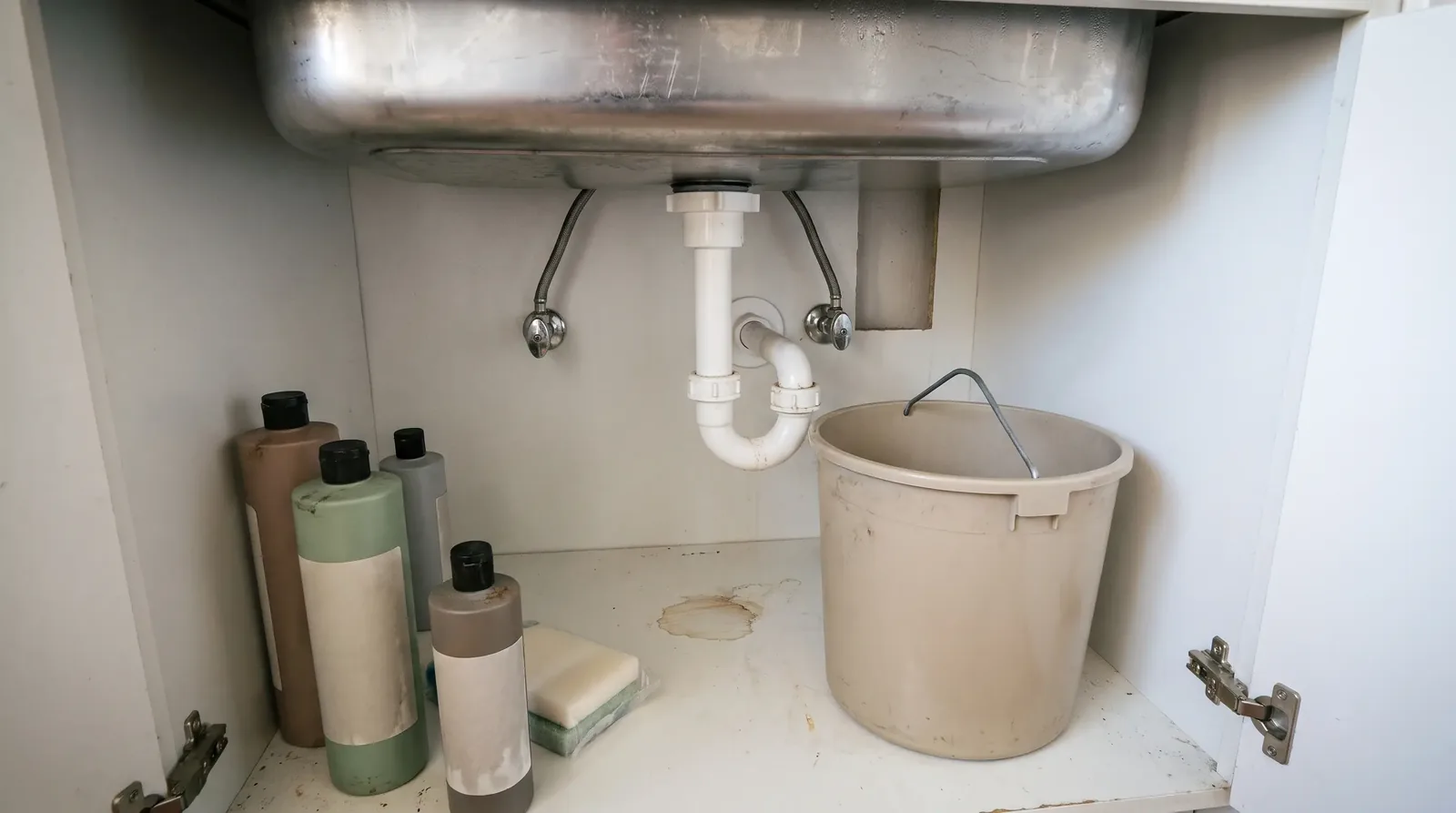
At a kitchen sink, look underneath first: the trap should hold water and the joints should be dry, with no sign of a leak. If the trap is fine, the smell may be coming from buildup inside the drain. One simple clean is a cup of baking soda followed by a cup of vinegar, left for a few minutes, then flushed with hot water.
Laundry
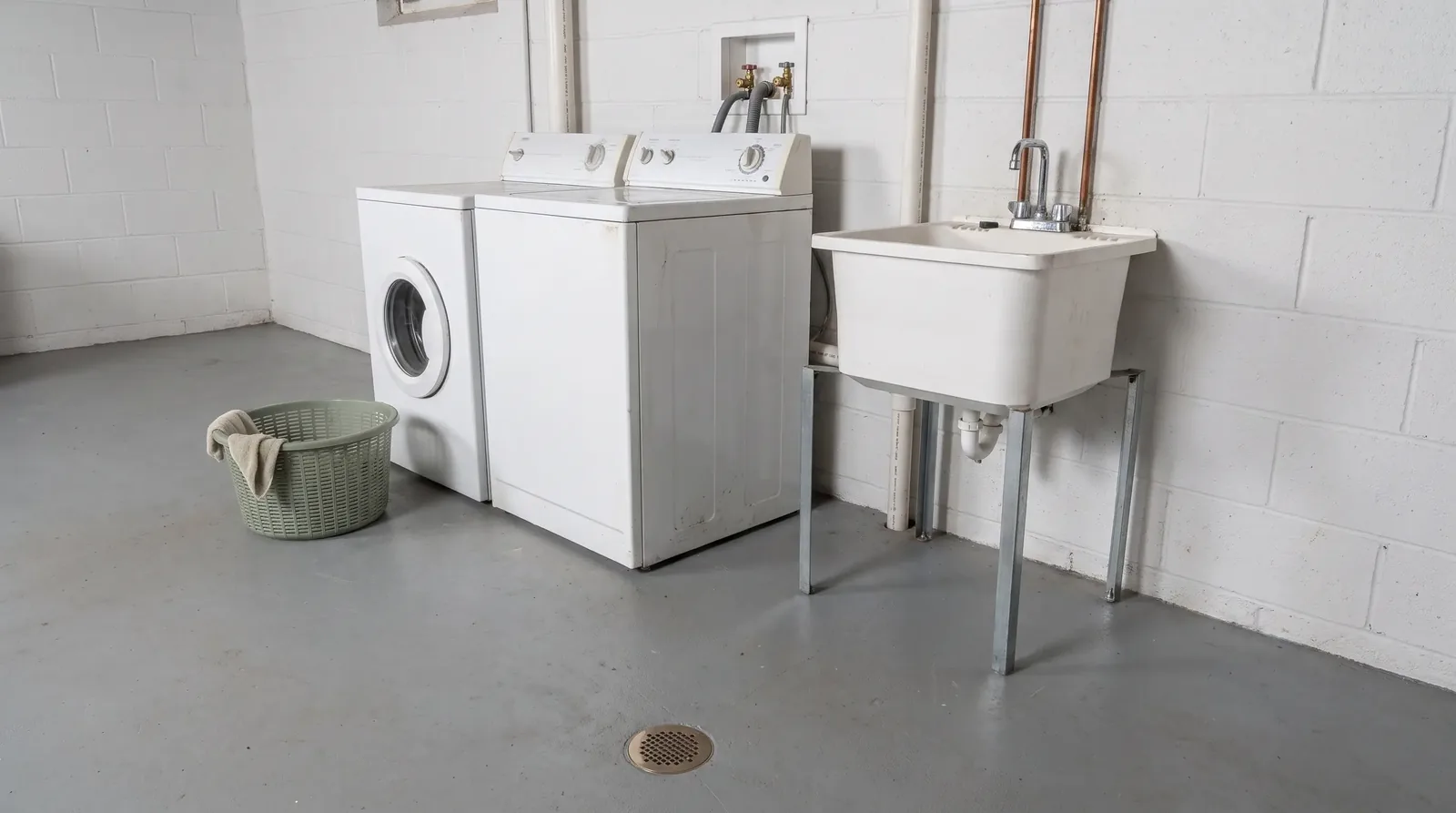
In a laundry room, the usual sources are the floor drain and a utility sink that is rarely used. Both have traps that dry out the same way a basement floor drain does. Run water into each one and see whether the smell fades.
How do I fix the sewer smell in my house?
Start with the free fix and work up. A dry trap is the most common cause, so step one is the place to begin.
- Run water into every drain. Pour water into each sink, shower, tub and floor drain, starting with the ones that are rarely used. Use about a quart in each. This refills any dry trap and restores the seal.
- Slow the evaporation in drains you rarely use. After refilling a trap, a small amount of mineral oil poured into the drain floats on top of the water and slows evaporation. Use mineral oil rather than cooking oil, which can go rancid and smell on its own.
- Clean the drain and the overflow. If a trap is full and a drain still smells, clean out the buildup in the drain, and flush a cleaner through the sink overflow.
- Clear the vent. Removing leaves or a nest from a blocked roof vent may be enough to stop the smell. A vent that is blocked further down may need a plumber to clean it all the way through the roof.
- Fix the toilet seal. If a toilet rocks, the wax ring has failed and the toilet needs to be reset on a new ring. A plumber can do this.
- Call a plumber. If the smell comes back after you refill the drains, the cause may be a damaged trap, a blocked vent or a leak, and a licensed plumber can find and fix it. The same goes for a leak behind a wall, a missing trap or vent, and any smell you cannot trace. A smoke test is the usual way to find the leak. On a septic system, call a septic service provider, a plumber, or both.
Is it safe to stay in a house with sewage smell?
Whether sewer gas is a health risk depends on how much of it there is, and our article on whether sewer gas is dangerous covers the levels and what to watch for. Before you treat the smell as a drain problem, rule out natural gas: sewer gas and natural gas can both smell like rotten eggs, because gas companies add a sulfur-based odorant to natural gas, which has no smell of its own. If you smell gas, stop what you are doing and leave right away, then call your gas utility or 911 from a safe place, and do not go back in until the gas company says it is safe.
How to keep the smell from coming back
The free way is to keep water in every trap. For drains you rarely use, run water in them on a schedule: at least once a month in all sinks, showers and floor drains. Mineral oil on top of the water in a seldom-used trap stretches the time between refills.
That works for as long as someone remembers every drain, including the ones in rooms nobody goes into. The drains most likely to keep drying out are the ones this guide started with: the basement floor drain, the laundry floor drain, a guest shower, and the drains in a home that sits empty for a while. Those are where a waterless trap seal fits.
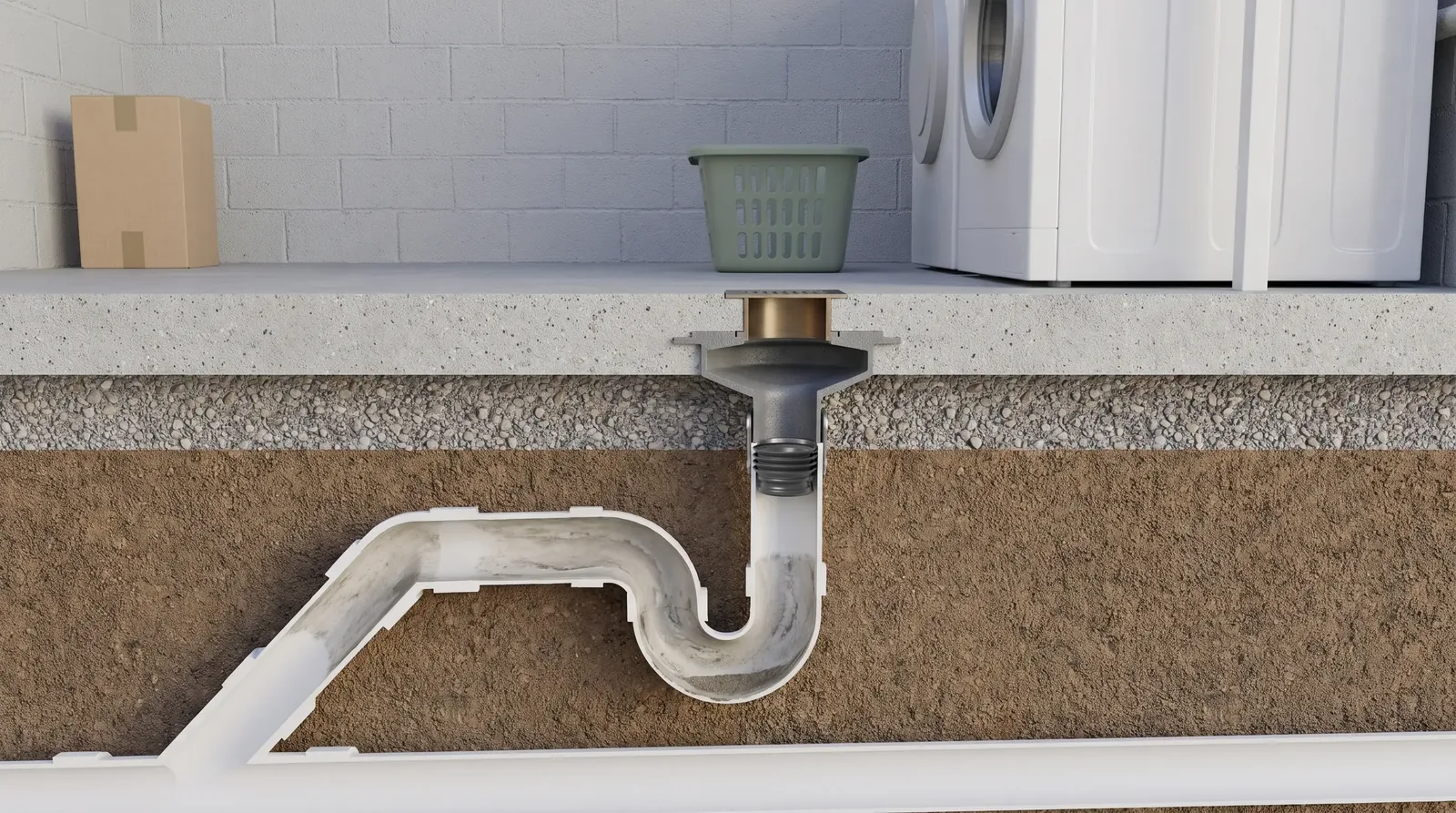
A waterless trap seal keeps the drain closed when the trap water is gone. Green Drain is a one-way silicone skirt valve that drops into the existing floor drain, above the P-trap, with no plumbing changes. Water flowing down opens the skirt; when the flow stops, the skirt recloses on its own. Your P-trap stays where it is; the Green Drain covers for it when the water in it evaporates. It comes in sizes for drain pipe openings from 1.25 inches to 6 inches, for floor and fixture drains.
It fixes one cause, the dry trap. It does not replace the P-trap, the vent or plumbing repairs, so a failed toilet wax ring, a cracked pipe or a blocked vent still needs the fix described above.
To pick a size, lift the grate or strainer and measure the pipe opening at the bottom of the bowl, inside wall to inside wall, and match it to the size chart. Then shop Green Drain.
Frequently asked questions
Why does my house smell like sewer when there is no leak?
Usually because a trap has dried out. A sink, shower, tub or floor drain that is rarely used loses the water in its trap, and with no water seal, sewer gas comes up through the drain without any water leaking anywhere. Run water into every drain you rarely use. If the smell stays, check the toilet seals and the roof vent, then call a plumber.
Are sewer smell, sewage smell and sewer gas smell the same thing?
Yes. People use all three, along with "house smells like sewer", for the same problem: the smell of the sewer line coming into the house through the drains or pipes. The causes and the fixes are the same whichever words you use.
Why does sewer smell come and go?
Most often because a trap dries out while a drain sits unused, then refills the next time someone runs water into it. Hot or dry weather speeds up the drying. Wind blowing down over a roof vent, a vent that freezes in cold weather, and pressure changes in the drain lines when a blocked vent cannot let air in can all make a smell appear and disappear.
How do I get rid of the sewer smell in my bathroom?
Run water into the shower, tub and sink drains, especially in a guest bathroom. Check that the toilet does not rock, since a rocking toilet means the wax ring under it has failed. Clean the sink overflow. If the smell stays after all three, call a plumber.
How do I get rid of the smell from a basement floor drain?
Pour water into the drain to refill the trap, then add a small amount of mineral oil on top to slow the evaporation. If the drain keeps drying out, run water into it on a schedule. If the smell does not stop once the trap is full, look at the exposed pipes and the old house trap, if there is one, and call a plumber.
Can a septic system cause a sewer smell in the house?
Yes. A septic system has vent pipes, and if a vent is clogged or frozen, or wind pushes air down over it, the odor can come inside. A drainfield that is not working properly can also cause a smell inside the house. Call a septic service provider, a plumber, or both, because the cause has to be found on site.
Does pouring water down the drain fix a sewer smell?
Often, yes. If the smell came from a dry trap, refilling it restores the seal and the smell stops. It lasts until the water evaporates again, so drains that are rarely used need water again on a schedule. If the smell continues once every trap is full, the cause is somewhere else, such as a toilet seal, a vent or a pipe.