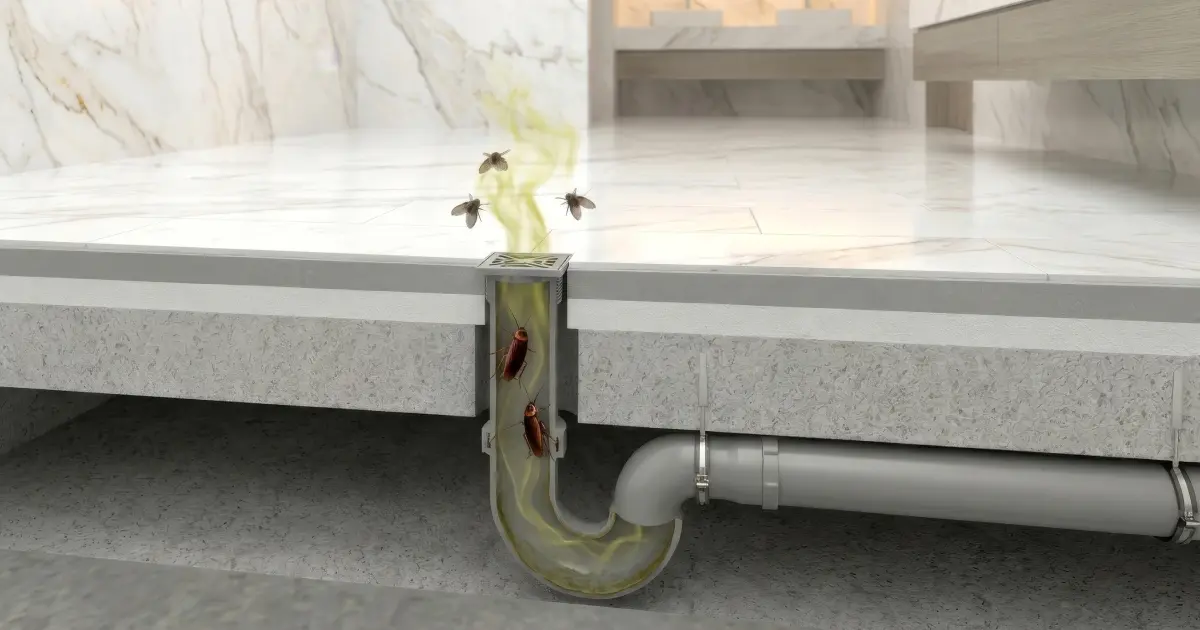
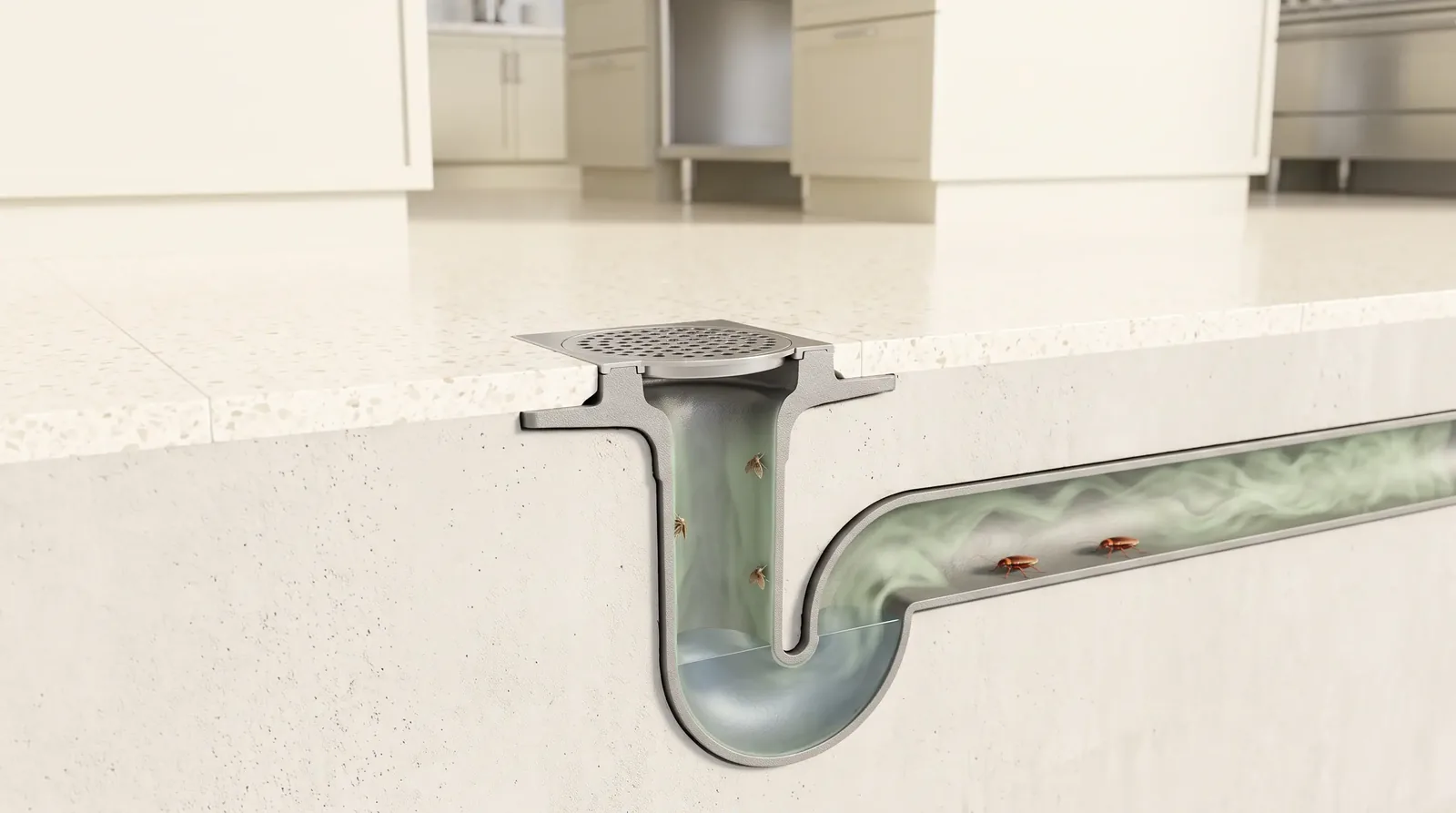
Sewer gas can be dangerous, and the smell means a drain is open to the sewer. Its hydrogen sulfide is toxic as it builds up: OSHA's workplace ceiling is 20 ppm, and NIOSH treats 100 ppm as immediately dangerous. You can smell it far below those levels, so the rotten-egg smell is a warning, not proof of a harmful dose. The usual source indoors is a dry drain trap: refill it, then seal it.
The rotten egg smell in the mechanical room. The headaches in the ground-floor office. The nausea complaints from staff in the basement storage area. These are usually not random building issues. They are signs of sewer gas entering the occupied space through an open pathway in the building's drain system.
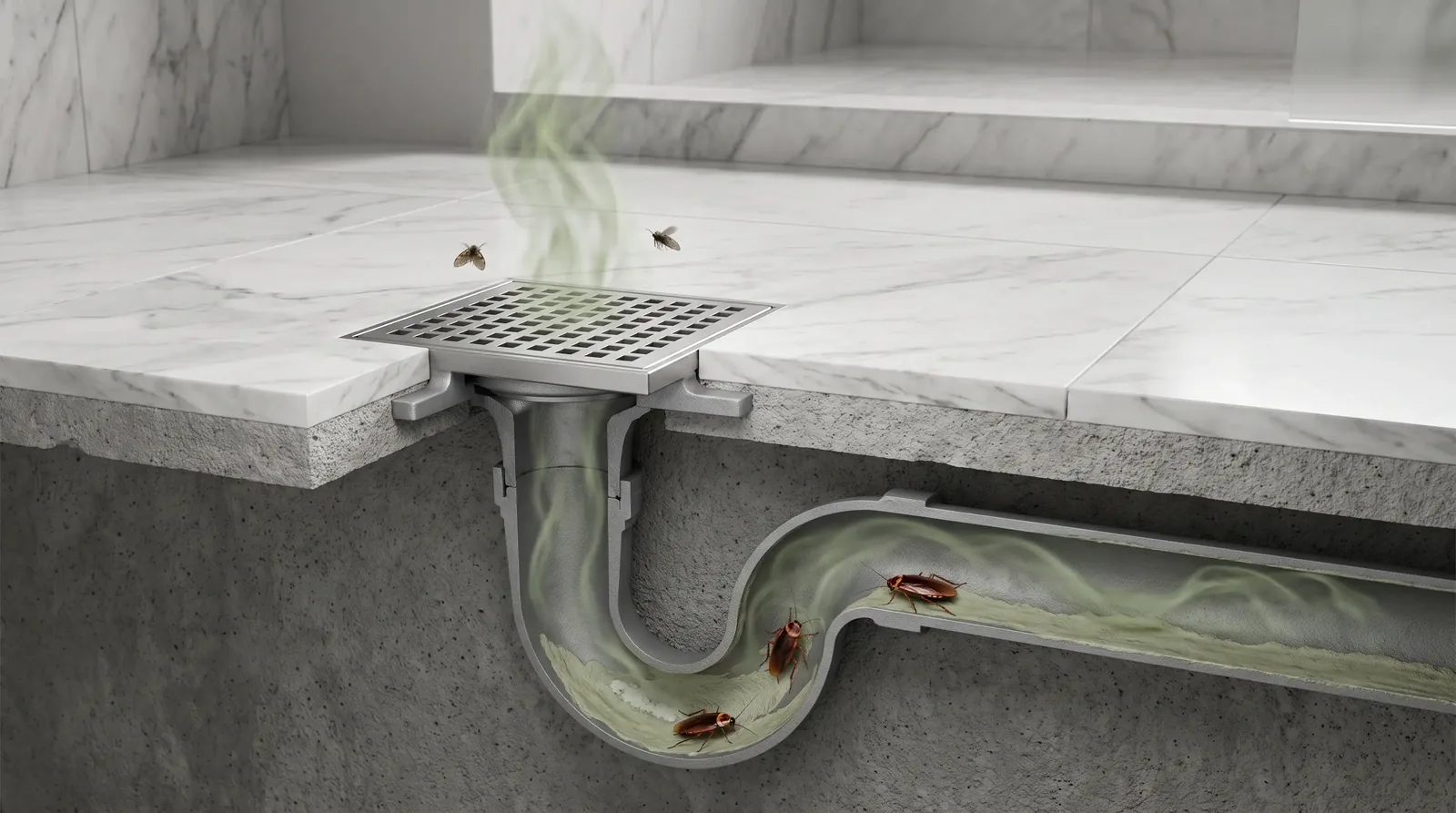
This article covers what sewer gas actually is, the health risks at measurable concentrations, whether it can explode, what to do if you smell it, how it enters buildings, and the methods that reliably keep it out.
What sewer gas is made of
Sewer gas is not a single substance. It is a complex mixture of gases produced by the decomposition of organic matter in the wastewater system. The composition varies depending on the waste stream, temperature, and microbial activity, but the primary components are consistent across all sewer systems.
Hydrogen sulfide (H2S)
Hydrogen sulfide is the most dangerous component of sewer gas and the one responsible for the characteristic rotten egg odor. It is produced by anaerobic bacteria that break down sulfur-containing organic matter in wastewater. H2S is heavier than air, meaning it accumulates in low-lying areas such as basements, mechanical rooms, and floor-level spaces. It is also flammable, between about 4% and 44% in air.
At low concentrations, hydrogen sulfide is a nuisance. At high concentrations, it is lethal. The critical danger is that H2S paralyzes the olfactory nerve at concentrations above approximately 100 ppm. This means the smell disappears just as the gas becomes most dangerous. Occupants may believe the problem has resolved when in fact the concentration has increased to a life-threatening level.
Methane (CH4)
Methane is produced by the same anaerobic decomposition process. It is colorless, odorless, and lighter than air. Methane itself is not toxic, but it is highly flammable. In enclosed spaces, methane can accumulate to explosive concentrations. The lower explosive limit (LEL) for methane is 5% concentration in air; the upper explosive limit (UEL) is 15%. Within this range, any ignition source (electrical spark, pilot light, static discharge) can trigger an explosion.
Methane also displaces oxygen. In poorly ventilated spaces, methane accumulation can reduce oxygen levels below the threshold for safe breathing (19.5% O2), creating an asphyxiation risk.
Ammonia (NH3)
Ammonia is present in sewer gas from the breakdown of nitrogen-containing waste, including urine and protein-based organic matter. It has a sharp, pungent odor that is distinct from hydrogen sulfide. Ammonia is a respiratory irritant at low concentrations and can cause chemical burns to the eyes, skin, and respiratory tract at higher concentrations. OSHA sets the permissible exposure limit for ammonia at 50 ppm as an 8-hour time-weighted average.
Other components
Sewer gas also contains carbon dioxide (CO2), which displaces oxygen; volatile organic compounds (VOCs) from industrial and household chemicals; and sulfur dioxide (SO2), another respiratory irritant. In healthcare facility wastewater systems, sewer gas may also carry aerosolized bacteria and other pathogens from the drain biofilm.
Health effects by concentration
The health impact of sewer gas exposure depends primarily on the concentration of hydrogen sulfide, which is the most acutely toxic component. OSHA and NIOSH have established specific exposure limits and health effect thresholds.
0.01 to 1.5 ppm: odor threshold
Most people can detect hydrogen sulfide at concentrations as low as 0.01 ppm. At this level, the rotten egg odor is noticeable but there are typically no immediate health effects. This is the range where most building occupants first notice a sewer gas problem. It indicates a breach in the drain system but is not immediately hazardous.
2 to 10 ppm: irritation begins
At 2 to 5 ppm, the odor becomes moderate to strong. Eye irritation begins, particularly in contact lens wearers. Some individuals experience mild headaches. At 5 to 10 ppm, the odor is strong and offensive. Nausea, tearing of the eyes, and moderate headaches are common. This is the range where occupant complaints become frequent and sustained.
10 to 50 ppm: OSHA regulatory range
OSHA's permissible exposure limit (PEL) for hydrogen sulfide is a ceiling of 20 ppm, with an acceptable maximum peak of 50 ppm for a maximum of 10 minutes, no more than once per 8-hour shift. At these concentrations, workers experience severe eye irritation, coughing, respiratory distress, and digestive upset. Prolonged exposure in this range can cause pulmonary edema (fluid in the lungs).
50 to 100 ppm: serious health risk
At 50 ppm, conjunctivitis (eye inflammation) and respiratory tract irritation become pronounced. At concentrations approaching 100 ppm, the olfactory nerve begins to fatigue and the ability to smell the gas diminishes. Workers may experience dizziness, loss of coordination, and impaired judgment. NIOSH classifies 100 ppm as the Immediately Dangerous to Life or Health (IDLH) concentration.
Above 100 ppm: life-threatening
Above 100 ppm, the olfactory nerve is paralyzed and the gas can no longer be smelled. This is the most dangerous phase because the warning sign (odor) disappears. At 200 to 300 ppm, rapid loss of consciousness occurs within minutes. At 500 to 700 ppm, death can occur within minutes from respiratory paralysis. At 1,000 ppm and above, a single breath can cause immediate collapse.
OSHA fact: Hydrogen sulfide is classified as a chemical asphyxiant and is one of the leading causes of workplace death in confined spaces. Between sewer systems, manure pits, and industrial settings, H2S exposure accounts for multiple fatalities every year in the United States. Building interiors rarely reach those concentrations; the deaths happen in sewers, pits and other confined spaces.
Symptoms of sewer gas exposure
At the low levels most often found indoors, the signs are the smell itself, eye irritation, headache and nausea. They usually ease once the person gets to fresh air and the source is sealed. Stronger exposure brings coughing, a sore throat, breathing difficulty, dizziness and confusion. A strong smell that suddenly fades is not good news: above about 100 ppm, hydrogen sulfide deadens the sense of smell.
Can sewer gas explode?
Yes, in the right conditions. Methane burns when it makes up between 5% and 15% of the air, and hydrogen sulfide between about 4% and 44%. The amounts that escape through a dry floor drain are far smaller than that, so a sewer smell in a room is not an explosion risk on its own. The danger is in sewers, sumps, pits, crawl spaces and other enclosed spaces where gas can build up. Never use an open flame to look for a sewer leak.
What to do if you smell sewer gas
- If the smell is strong, or anyone feels dizzy, confused or short of breath, get everyone out to fresh air and call 911 or the fire department. Do not go back in to look for the source.
- Otherwise, open windows and doors to bring in fresh air.
- Run water into every drain, including floor drains, showers and sinks that are rarely used. A gallon refills a dry trap. If the smell fades, a dry trap was the cause.
- Check the base of each toilet and every cleanout cap for a loose seal or a missing cap.
- If the smell comes back or you cannot find it, call a plumber for a smoke test.
- Seal the drains that keep drying out so the smell does not return the next time they sit unused.
How sewer gas enters buildings
Sewer gas does not appear randomly. It enters through specific, identifiable pathways in the building's plumbing system. Understanding these pathways is the key to prevention.
Dry P-traps (the most common cause)
The P-trap water seal is the primary barrier between the building interior and the sewer system. When the water in a P-trap evaporates, the seal is broken and sewer gas flows freely into the building. Measurements published in HPAC Engineering put trap evaporation at roughly 1 to 3 inches of water a month, so a 2-inch seal in a drain that never sees water can be gone in about a month, sooner in warm, dry rooms or where HVAC air moves across the drain.
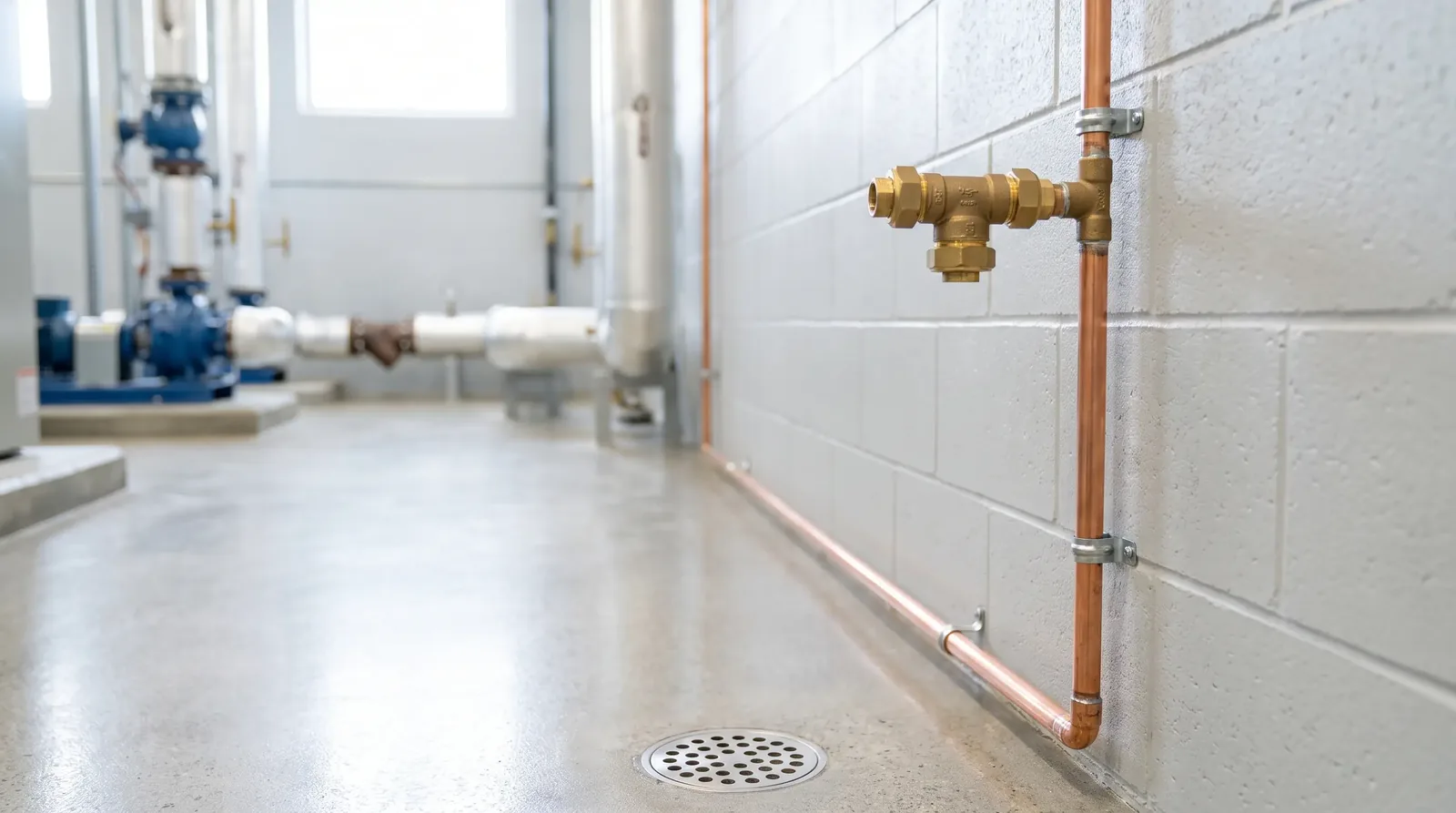
Floor drains are the most common culprits because they often receive no regular water flow. Mechanical rooms, storage areas, vacant tenant spaces, school buildings during breaks, and hotel rooms during low season all have floor drains that sit unused long enough for the trap to dry out. If you are troubleshooting a specific drain issue such as odor, slow drainage, or gurgling, our guide to common floor drain problems covers root causes and DIY fixes for each.
Cracked or broken drain pipes
Physical damage to drain pipes below or within the building allows sewer gas to escape into wall cavities, floor spaces, and occupied areas. Common causes include ground settling, root intrusion, corrosion in older cast iron systems, and construction damage. Gas from cracked pipes may enter the building in locations far from any visible drain, making the source difficult to identify without a smoke test.
Failed wax rings on toilets
The wax ring that seals a toilet to the floor flange can deteriorate over time, creating a gap that allows sewer gas to leak into the restroom. Symptoms include a persistent sewer smell near the base of the toilet, particularly noticeable when the building is quiet (evenings, weekends) and HVAC airflow is reduced.
Missing or loose cleanout caps
Cleanout access points in the drain system are sealed with threaded caps. If a cap is missing, loose, or improperly seated after a maintenance visit, sewer gas escapes directly into the building. This is a common issue in mechanical rooms and utility areas where cleanouts are accessed for maintenance and not always properly resealed.
Deteriorated pipe joints and connections
In older buildings with cast iron, clay, or early-generation PVC piping, joints can separate or deteriorate over time. Hub-and-spigot joints packed with oakum and lead in cast iron systems are particularly vulnerable to degradation. Each failed joint becomes a gas leak point.
Negative building pressure
HVAC systems that create negative pressure inside the building relative to the sewer system can actively draw sewer gas into the building through any available opening. This is common in large commercial buildings, especially during heating season when exhaust fans, kitchen hoods, and air handling units create sustained negative pressure. The effect amplifies any existing breach in the drain system.
Where sewer gas gets in
The four pathways this article walks through, most common first.
Dry P-trap the most common cause
Floor drain trap evaporates: about a month without flow, sooner in warm, dry rooms.
Cracked pipe
Settling, roots, corrosion; gas escapes into walls far from any visible drain.
Failed wax ring
The toilet-to-flange seal deteriorates, causing persistent restroom odor.
Failed joints
Loose cleanout plugs and aged fittings leak gas in mechanical spaces.
Also covered in the article: dried-out traps in seldom-used fixtures and blocked vent stacks.
Finding the source
When occupants report sewer gas odor, the first step is identifying which pathway the gas is using. A systematic approach saves time and prevents the common mistake of treating the wrong area.
Step 1: Check all floor drains
Walk every floor of the building and pour water (at least one gallon) into every floor drain, particularly those in low-traffic areas. If the odor stops or reduces in a specific zone after pouring water, the source is a dry P-trap, the most common cause.
Step 2: Inspect cleanout caps
Check every cleanout access point in the building for missing, loose, or damaged caps. Pay particular attention to cleanouts in mechanical rooms, utility corridors, and areas recently accessed for plumbing service.
Step 3: Smoke test
For persistent or hard-to-locate sewer gas issues, a plumbing smoke test is the definitive diagnostic tool. A plumber introduces non-toxic, artificially generated smoke into the drain system through a roof vent or cleanout. The smoke fills the entire drain system and escapes through any breach: dry traps, cracked pipes, failed joints, missing caps, and deteriorated seals. Observers inside the building watch for smoke emerging into occupied spaces. Every smoke exit point is a sewer gas entry point.
Step 4: Electronic detection
Portable H2S meters can measure hydrogen sulfide concentrations in real time. Walking the building with a calibrated meter identifies concentration gradients that point toward the source. This is particularly useful for gas entering through concealed pathways (inside walls, above ceilings) where the smoke test may not produce visible results in occupied spaces.
Prevention methods
Once the source is identified, prevention falls into two categories: fixing structural issues (cracked pipes, failed joints, missing caps) and maintaining drain seals.
Structural repairs
Cracked pipes, separated joints, and failed connections require physical repair or replacement. There is no maintenance shortcut for structural plumbing defects. These repairs are typically one-time expenses that permanently resolve the gas entry pathway.
Manual trap maintenance
The lowest-tech approach: assign staff to pour water down every floor drain on a regular schedule. This keeps P-traps charged and the water seal intact. The limitation is human consistency. Buildings may have dozens or hundreds of floor drains spread across multiple floors. Staff turnover, schedule disruptions, building closures, and simple oversight mean that drains get missed. One missed drain in one mechanical room is enough to fill an entire floor with sewer gas. Understanding why preventive maintenance outperforms reactive drain repair can help facility teams build more reliable protocols.
Trap primers
Trap primers automate the process of keeping water in P-traps. They work, but they consume water (up to 52,000 gallons per year per drain for continuous flow models), require maintenance, and fail silently when mechanical components break down. When a trap primer fails, the building has no warning until the odor returns.
Waterless trap seals
A waterless trap seal keeps the drain closed when the trap water is gone. Green Drain is a one-way silicone skirt valve that drops into the existing floor drain, above the P-trap, with no plumbing changes. Water flowing down opens the skirt; when the flow stops, the skirt recloses on its own and blocks sewer gas whether or not the trap below still holds water.
Because the seal is silicone rather than a pool of water, it does not evaporate. It works during building closures, summer breaks, overnight, and through extended vacancy periods, with no water supply to run and nothing to refill. The P-trap keeps doing its job; the seal above it holds the line when the water runs out.
Use the Water Savings Calculator to see the annual water and cost impact of replacing trap primers with waterless seals in your building, or explore Green Drain products for your specific drain sizes.
Building types most at risk
While sewer gas can affect any building, certain facility types face elevated risk due to their drain configurations and usage patterns:
- Commercial office buildings. Vacant tenant spaces, reduced weekend occupancy, and mechanical rooms with infrequently used floor drains create multiple dry trap opportunities.
- Healthcare facilities. Patient care areas are especially sensitive to sewer gas and odor from failed drain seals. A waterless trap seal is a supportive engineering control that restricts the upward movement of air and aerosols from the drainage system into the occupied space; it complements, and does not replace, a facility's infection prevention program.
- Schools and universities. Extended breaks (summer, winter, spring) leave hundreds of floor drains unattended for weeks, long enough for unused traps to dry out.
- Hotels and resorts. Seasonal occupancy fluctuations mean entire wings or floors may sit unused for months, with every bathroom and floor drain trap drying out.
- Industrial and warehouse facilities. Large floor areas with widely spaced floor drains that receive infrequent water flow. Often combined with poor ventilation that allows gas to concentrate.
Frequently asked questions
Is sewer gas dangerous?
It can be. Sewer gas is mostly hydrogen sulfide, methane, ammonia and carbon dioxide. Hydrogen sulfide is the dangerous part: OSHA's workplace ceiling is 20 ppm, and NIOSH treats 100 ppm as immediately dangerous to life or health. People can smell it from about 0.01 ppm, far below those limits, so a sewer smell is a warning that a drain is open to the sewer rather than proof of a harmful dose. Find the source and seal it.
Is a sewage smell in the bathroom or house dangerous?
A faint sewer smell indoors usually comes from a dry trap, a loose toilet seal or an open cleanout, and the gas is usually at low levels. At a few parts per million, hydrogen sulfide can still cause headaches, nausea and eye irritation in some people, and the smell means the drain is open to the sewer. Run water into every drain, check the toilet base and cleanout caps, and call a plumber if it persists.
What does sewer gas smell like?
Rotten eggs, from hydrogen sulfide. At very high concentrations (above about 100 ppm) hydrogen sulfide deadens the sense of smell, so a strong smell that suddenly fades is not a sign that the gas has gone.
Can sewer gas explode?
Yes, in the right conditions. Methane burns between 5% and 15% of the air, and hydrogen sulfide between 4% and 44%. The amounts that escape through a dry floor drain are far smaller than that, but gas can build up in sewers, sumps, pits and other enclosed spaces. Never use an open flame to look for a sewer leak.
Can sewer gas kill you?
At high concentrations, yes. Hydrogen sulfide at 500 to 700 ppm can cause collapse within minutes. Deaths happen almost entirely in sewers, manholes and other confined spaces, not from a dry drain in an occupied room, but a strong smell with dizziness or confusion means leave for fresh air and call 911.
Is sewer gas heavier than air?
Partly. Hydrogen sulfide is heavier than air and collects low, in basements, pits and near floor drains. Methane is lighter than air and rises. That is why a sewer smell is usually strongest near the floor and the drain it comes from.
What causes sewer gas smell in buildings?
The most common cause is a dried-out P-trap in a floor drain. When the water in the trap evaporates, the seal is gone and sewer gas can rise into the room. Other causes include cracked or broken drain pipes, failed wax rings on toilets, missing cleanout caps, and deteriorated pipe joints.
How do I find a sewer gas leak?
Start by checking every floor drain in the building, especially in low-traffic areas like mechanical rooms, storage closets, and vacant spaces. Pour water down each drain. If the smell stops, the cause was a dry P-trap. For more systematic detection, use a smoke test: a plumber introduces non-toxic smoke into the drain system and observes where it exits into the building. This reveals dry traps, cracked pipes, and failed seals at once.