The drain fly life cycle runs from egg to adult in 8 to 24 days, and adult drain flies live for about 14 to 20 days after that. The whole cycle plays out inside the drain, in the biofilm that coats the pipe walls, which is exactly why drain flies are so hard to get rid of and why they keep coming back. This guide walks through each stage and what it means for control.
If your goal is to eliminate an active problem rather than understand the biology, start with our guide to getting rid of drain flies permanently. If you want to know how these insects actually develop, read on.
The four stages of the drain fly life cycle
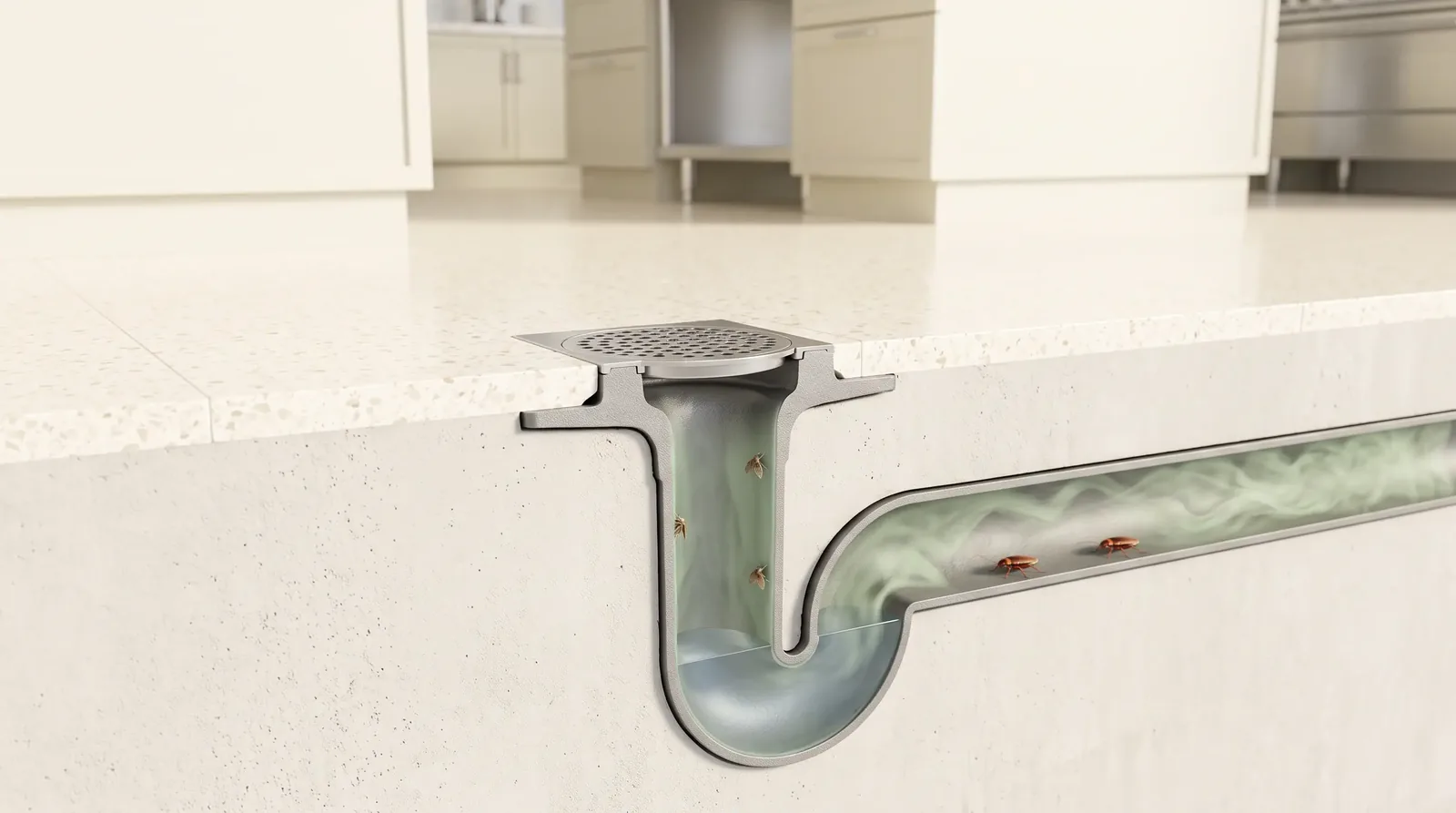
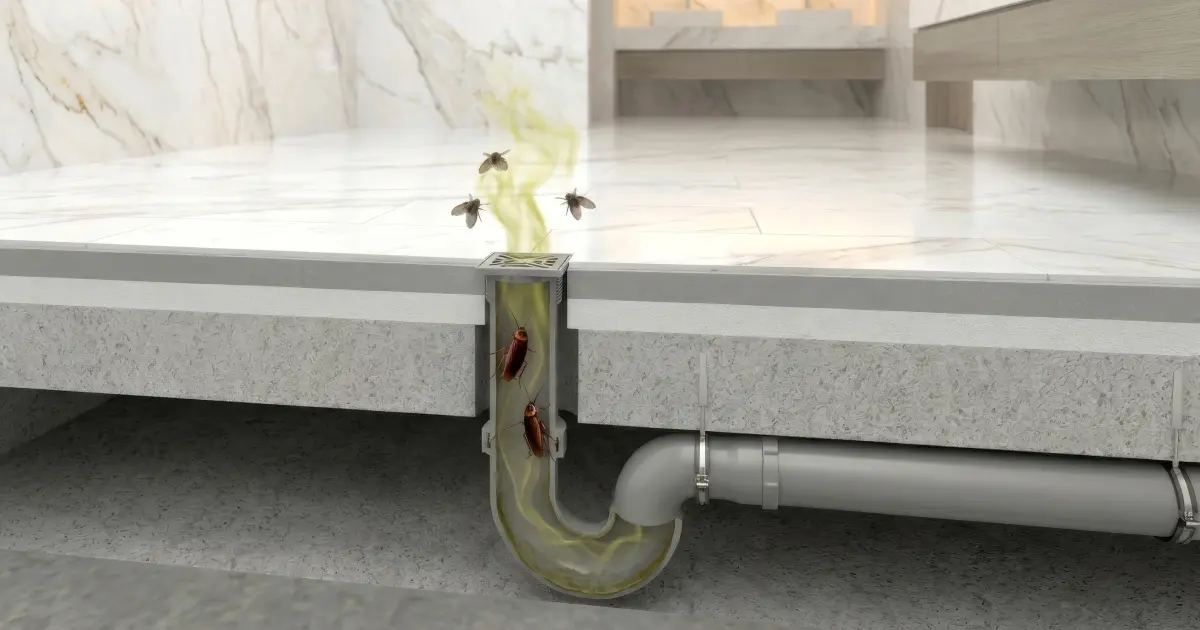
Drain flies (also called moth flies or sewer gnats) go through complete metamorphosis: egg, larva, pupa, and adult. Every stage before adulthood happens inside the drain, protected by the biofilm layer that lines the pipe.
Stage 1: Egg
A female drain fly lays her eggs in irregular masses, most often 15 to 40 at a time and sometimes up to 100, directly on the biofilm surface inside the drain pipe. The eggs are pale, elongated, and nearly invisible to the naked eye. They are deposited in the moist, protected environment deep in the pipe, not at the drain opening where you might spot them. Under warm conditions, the eggs hatch in 32 to 48 hours.
Stage 2: Larva
The larval stage is the one that matters most for control. The larvae are legless, translucent, and roughly 4 to 10 millimeters long. They live inside the biofilm, feeding on the bacteria, fungi, and organic sediment that make up its structure. The larval stage lasts 9 to 15 days. Throughout it, the larvae are fully shielded by the biofilm layer. They are not exposed to the water flowing through the drain, and they are not reached by chemicals poured down the drain opening. For how to recognize them and confirm which drain they are breeding in, see our guide to drain fly larvae.
Stage 3: Pupa
After the larval stage, the insects pupate near the surface of the biofilm for 20 to 40 hours. Pupae are stationary and, like the eggs and larvae, protected by their position inside the pipe.
Stage 4: Adult
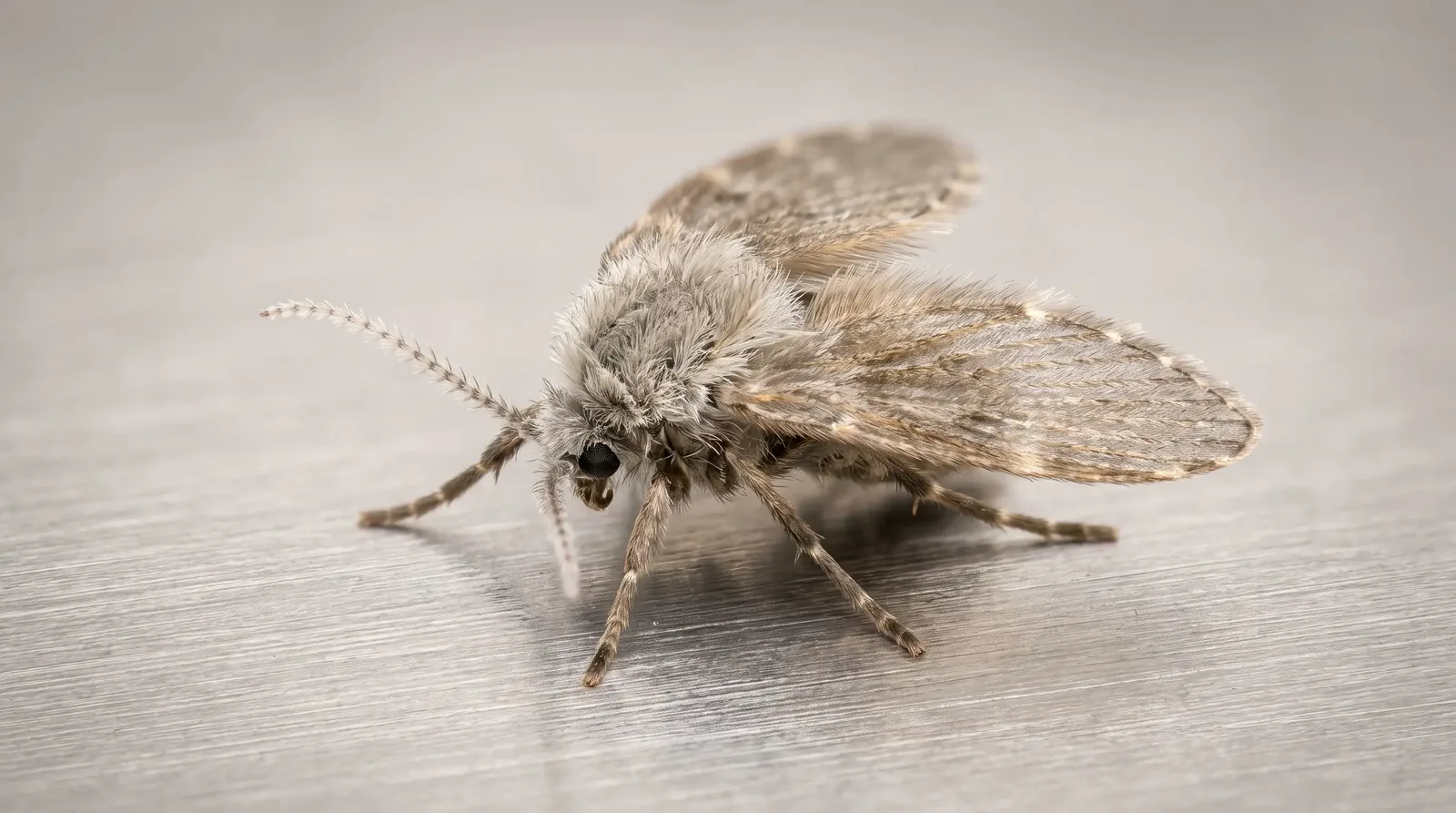
Adult drain flies emerge from the pipe into the building and live for about 14 to 20 days. During that time, females lay multiple egg batches back into the biofilm. A single breeding pair can produce hundreds of offspring in a drain system within a few weeks.
How long do drain flies live?
An individual adult drain fly lives roughly 14 to 20 days. But that number is misleading if you are trying to solve an infestation, because the generations overlap. While one set of adults is nearing the end of its life, the eggs it laid are already hatching and a new set of larvae is developing in the biofilm. The population renews itself continuously, so the drain never really goes quiet on its own.
Why the life cycle makes drain flies hard to eliminate
Two features of the life cycle explain why the usual treatments fail:
- The vulnerable stages are hidden. Eggs, larvae, and pupae all live inside the biofilm, below the reach of surface cleaning and shielded from bleach, boiling water, and enzyme cleaners poured down the drain. You can kill the adults you see and never touch the generation coming up behind them.
- The cycle is fast. At 8 to 24 days from egg to adult, the population replaces itself faster than most treatment schedules. Even aggressive weekly cleaning cannot outpace a breeding site that keeps producing new adults.
As long as two conditions hold, the flies persist: an organic biofilm inside the pipe for breeding, and an open pathway from the pipe into the building. Break either one and the cycle stops.
The practical takeaway. Because the breeding site is protected inside the pipe, the reliable fix is to seal the drain opening so emerging adults cannot reach the building, while cleaning removes the accessible biofilm. A waterless trap seal creates a one-way barrier that closes off that pathway. See the full method in how to get rid of drain flies permanently.
Where drain flies come from in the first place
Drain flies are not invaders from outside. They originate in the drain itself, wherever biofilm has built up and a trap seal has failed. The biofilm they breed in coats the pipe wall above the water in the P-trap, on the room side of it, so a full trap does not keep them in; and once the trap water evaporates, the pipe is open to the sewer below as well. For the broader set of issues a failing floor drain causes, see common floor drain problems and how to fix them.
Frequently asked questions
How long do drain flies live?
Adult drain flies live about 14 to 20 days. In that time, females lay several batches of eggs back into the drain biofilm, so the population overlaps and renews continuously. The full life cycle from egg to adult takes only 8 to 24 days, which is why killing the adults you can see does not end the problem.
What is the drain fly life cycle?
The drain fly life cycle has four stages: egg, larva, pupa, and adult. Females lay eggs in batches of 15 to 40, sometimes up to 100, on the biofilm inside drain pipes. Eggs hatch in 32 to 48 hours. Larvae feed inside the biofilm for 9 to 15 days. Pupae form near the biofilm surface for 20 to 40 hours. Adults then emerge and live about 14 to 20 days. Start to finish, the cycle takes 8 to 24 days.
Why do drain flies keep coming back?
Drain flies keep coming back because the eggs and larvae live deep inside the drain biofilm, protected from surface cleaning and from chemicals poured down the drain. Even when adults are killed, a new generation emerges from the biofilm within days. The cycle only ends when the breeding site is removed or the drain opening is sealed so new adults cannot reach the building.
How fast do drain flies multiply?
Very fast. A single female lays batches of 15 to 40 eggs, sometimes up to 100, and multiple batches over her 14 to 20 day adult life, and each generation completes in as little as 8 days. A single breeding pair can produce hundreds of offspring in a drain system within a few weeks, which is why an untreated drain fly problem escalates quickly.