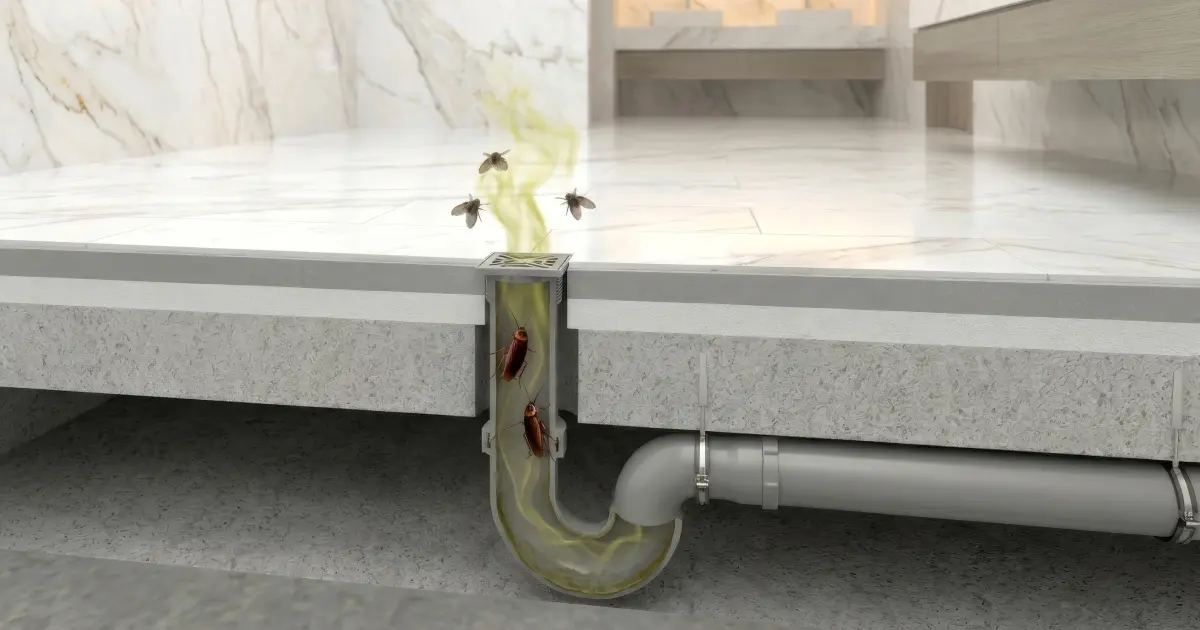
If you are searching for a trap guard for a floor drain, you are trying to solve a specific problem: a floor drain that lets sewer gas, odor, or pests into the building when its P-trap dries out. Trap guard and waterless trap seal are two names for the same category of product that solves it. This guide explains what these devices are, how the common designs differ, and how to compare them on the factors that actually matter: sizing, installation, cleaning, and code acceptance.
The goal here is education, not a sales pitch. A barrier-type device is one good way to protect a floor drain, and the right choice depends on your drains, your building, and your local code authority.
What a trap guard is
Trap guard is a common name for a barrier-type floor drain trap seal protection device. It is a mechanical insert that sits inside the floor drain and acts as a one-way gate. When water runs down the drain (from mopping, cleaning, or equipment discharge), the device opens and lets it through. When the flow stops, it closes and forms a seal that blocks sewer gas, odor, and pests from coming back up.
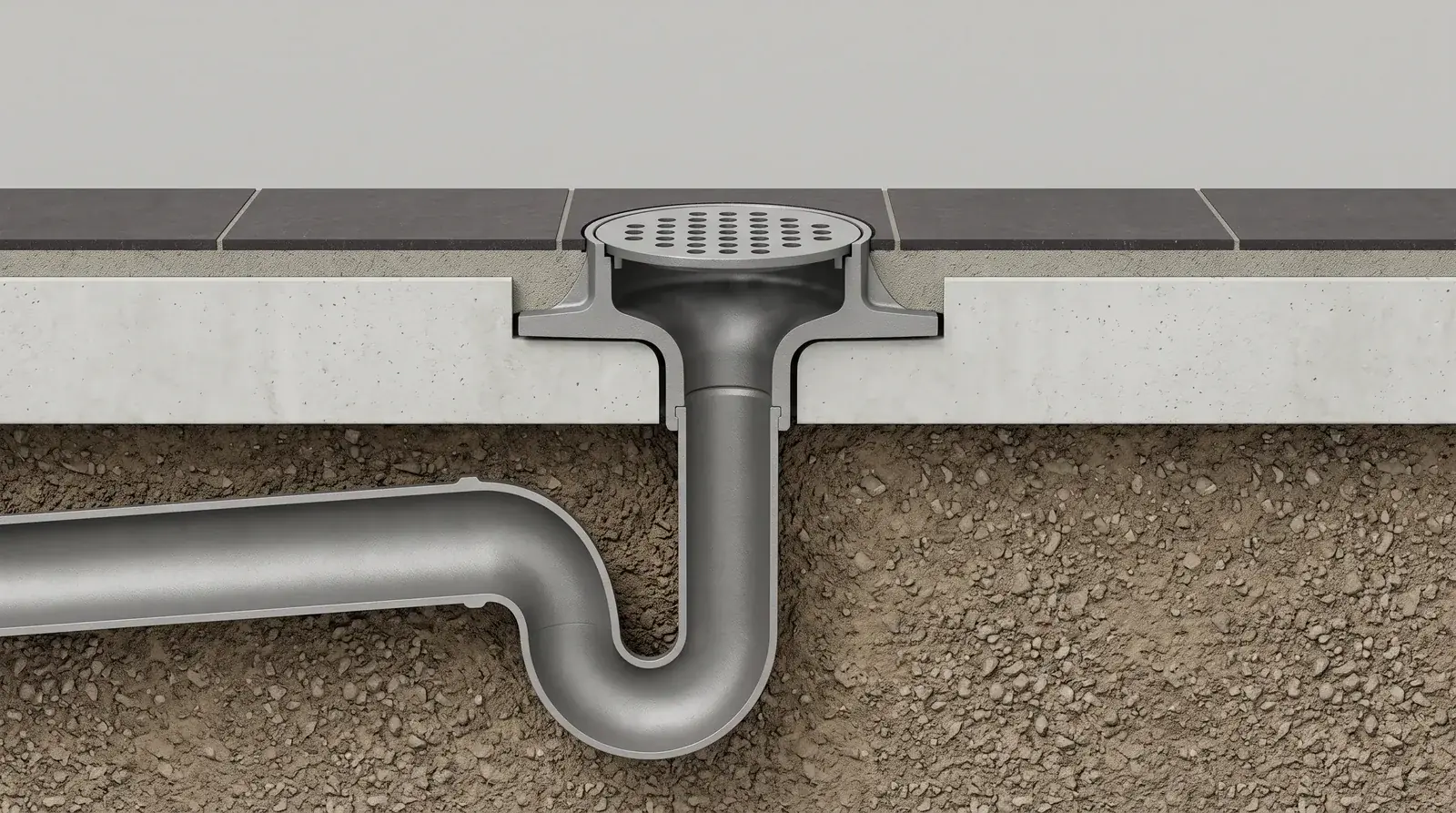
The important thing to understand is that a barrier device works with the drain's P-trap, not instead of it. The P-trap is the U-shaped pipe that holds a small pool of water to block sewer gas. That water evaporates in about two to three weeks when a drain goes unused, and the seal fails. A barrier device removes that weakness by holding the seal mechanically, whether or not there is water in the trap. The performance standard for these devices is ASSE 1072.
How the designs differ
The category name is the same, but the sealing mechanism is not. Barrier-type floor drain devices generally use one of a few approaches:
- One-way valve. A flexible valve that opens under flow and closes under its own weight when the flow stops. Green Drain uses a molded silicone one-way valve.
- Membrane or flap. A hinged flap or membrane that lifts to let water pass and drops back to seal.
- Skirted insert. A collar or skirt that seats into the drain body to form the barrier.
All of these can meet the same functional goal. What varies from product to product is how well the seal reseats after heavy or debris-laden flow, how easily the device is removed and cleaned, the range of drain sizes offered, and which independent certifications the specific product carries. Those are the details worth comparing, because they determine how the device performs in a real building over years of use.
How the Green Drain waterless trap seal works
Green Drain is a barrier-type waterless trap seal built around a molded silicone one-way valve. It drops into the existing floor drain body in about 30 seconds, with no tools and no plumbing changes. Water flows down through the open valve. When the flow stops, the valve closes and creates a physical barrier against sewer gas, odors, and drain flies and other pests.
Because the seal is mechanical rather than a pool of water, it does not evaporate. It holds through weekends, seasonal closures, and any stretch when the drain goes unused. The silicone valve is rated for continuous exposure to cleaning chemicals and to temperatures up to 300 degrees Fahrenheit, and it is tested to over 2,500 open-close cycles under load. It is removable for cleaning and drops back into place.
Head-to-head comparison
The table below compares the two at the category level. Where a value depends on the specific product, it is marked as such, because barrier devices are not all built the same.
| Factor | Trap Guard (barrier device, general) | Green Drain Waterless Trap Seal |
|---|---|---|
| Category | Barrier-type floor drain trap seal device | Barrier-type floor drain trap seal device |
| Sealing mechanism | Varies (valve, membrane, or skirt) | One-way molded silicone valve |
| Works with the existing P-trap | Yes | Yes |
| Water or power required | None | None |
| Installation | Drop-in (varies by product) | Drop-in, about 30 seconds, no tools |
| Drain sizes | Varies by product | Eight sizes, 1.25 inch to 6 inch (DN32 to DN150) |
| Cleaning | Removable (varies by product) | Removable for cleaning, reseats in place |
| Standard / certification | ASSE 1072 category; confirm the specific product's listings | cUPC listed (IAPMO), tested to ASSE 1072-2020, NSF/ANSI 2 |
Code acceptance
Barrier-type floor drain trap seal protection devices are recognized in the model plumbing codes. The International Plumbing Code lists an ASSE 1072 device as a code-recognized method for protecting a floor-drain trap seal from evaporation (IPC 1002.4.1.4), and the Uniform Plumbing Code recognizes it as a trap seal protection method (UPC Section 1007). How the two codes handle it differs by state, which is why acceptance for a specific job is always a local decision. You can look up your state on our plumbing codes by state directory.
When you compare products, confirm the certifications the specific device carries. Green Drain is cUPC listed through IAPMO and tested to ASSE 1072-2020; the details are on our certifications page. Present the device's listing to your local authority having jurisdiction, since the AHJ makes the final call on any installation.
P-traps are not the enemy. A barrier device does not remove or replace the P-trap. It works with the trap the plumbing code already requires and holds the seal when the trap water is gone. You keep the code-required trap and add a seal that does not depend on evaporation.
How to choose
Whichever category name you searched for, the comparison comes down to a few practical questions:
- Does it fit your drains? Confirm the device is offered in the exact sizes of your floor drains. Green Drain covers eight sizes from 1.25 inch to 6 inch.
- Is it certified, and does your AHJ accept it? Look for cUPC and ASSE 1072, and confirm acceptance with your local authority.
- Is it easy to clean and reseat? A device that is awkward to remove or does not reseat cleanly after debris-laden flow will not get maintained.
- Does it hold the seal when the building is empty? The whole point of a barrier device is protection during the low-flow and vacant periods when a P-trap dries out.
Explore Green Drain waterless trap seals by drain size, compare the approach with trap primers, or request a quote for your facility.
Frequently asked questions
What is a trap guard for a floor drain?
Trap guard is a common name for a barrier-type floor drain trap seal protection device. It drops into the floor drain and provides a mechanical one-way barrier that lets water drain down but closes to block sewer gas, odor, and pests when there is no flow. It works alongside the existing P-trap and protects the drain when that trap dries out. The performance standard for these devices is ASSE 1072.
Is a trap guard the same as a waterless trap seal?
They are the same category of product. Trap guard, waterless trap seal, and barrier-type floor drain trap seal protection device all describe a mechanical insert that seals a floor drain without relying on standing water. The differences are in the sealing mechanism (for example a one-way silicone valve versus a membrane or flap), the range of drain sizes offered, and which independent certifications the specific product carries.
Do I still need a P-trap if I use a waterless trap seal?
Yes. A waterless trap seal is not a replacement for the P-trap. It works with the existing P-trap and holds the seal when the trap water evaporates. The P-trap remains part of the plumbing system; the device simply removes the evaporation weakness that lets floor drains fail when they go unused.
Are barrier-type floor drain trap seals code compliant?
Barrier-type floor drain trap seal protection devices are recognized in the model plumbing codes. The IPC lists an ASSE 1072 device as a code-recognized method (IPC 1002.4.1.4) and the UPC recognizes it as a trap seal protection method (UPC Section 1007). Green Drain is cUPC listed through IAPMO and tested to ASSE 1072-2020. Acceptance for a specific installation rests with the local authority having jurisdiction.