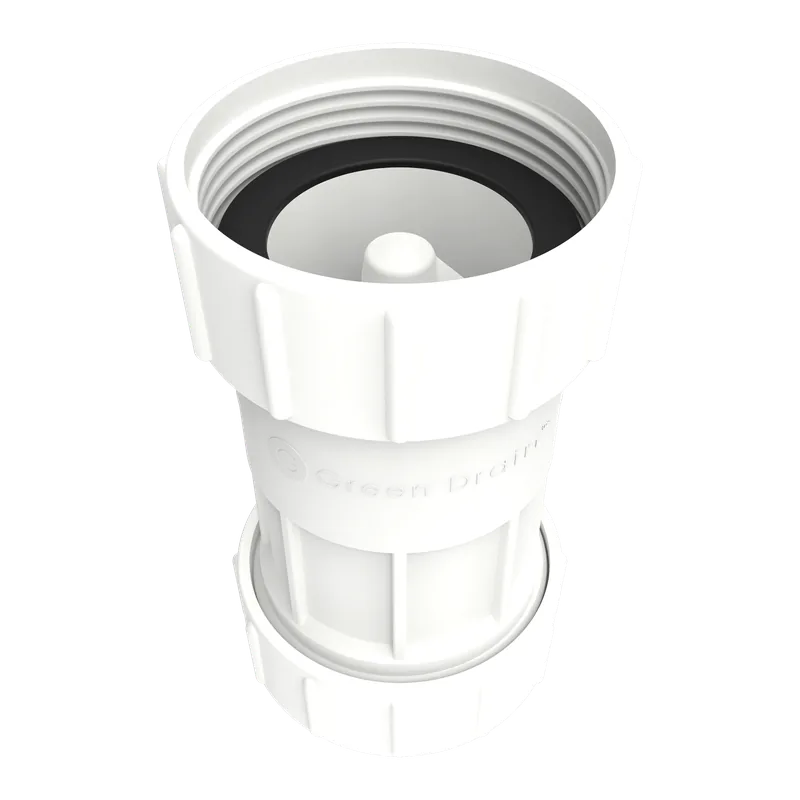
GD-SSD Waterless Trap
The GD-SSD gives you back the space a P-trap takes. It is a waterless trap: a straight, self-sealing valve 94 mm long that sits in the waste line under sinks, basins and appliances, in homes, caravans and boats. It seals with silicone, not water, so there is no U-bend to work around and nothing to evaporate, freeze or slosh out.
Be first to know when it is released.
We will email you when the GD-SSD is available, with occasional Green Drain news before then. Unsubscribe anytime.
Plumbing merchants, distributors and OEMs: tell us about your business and we will reach out ahead of release.
Dimensions are from the factory drawing. Sizes, pipe connections, listings and pricing will be published at release.
Take back the space under the sink.
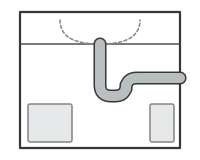
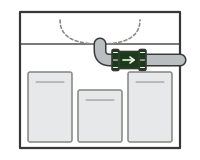
A P-trap hangs a U-bend of standing water below the drain, and everything in the cupboard has to fit around it. Even a space saver trap still holds its water in a bend. The GD-SSD is a straight valve that sits in the line itself. No U-bend, no water, and the space below it is yours again.
- GD-SSD
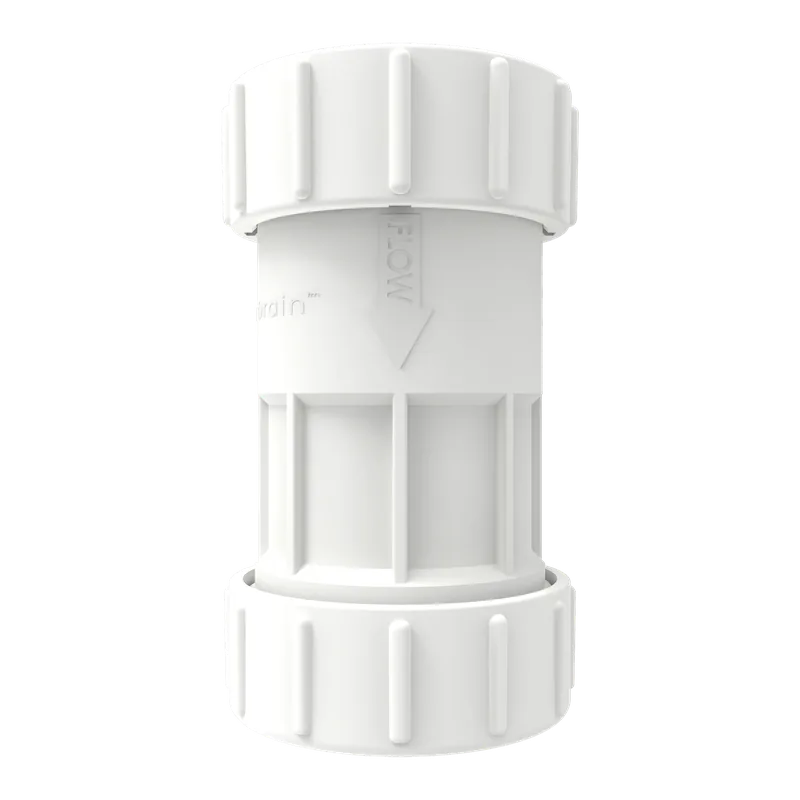
- 93.8 mm (3.69 in) long, end to end. Straight, no water.
- A typical 40 mm P-trap
- 108 to 159 mm from the inlet to the bottom of the bend, before the arm to the wall, and full of water.
- Room for storage under a vanity or a caravan galley sink
- Fits upright or on its side, wherever the drain runs
- No standing water to spill when the line is opened
In Australia, the plumbing standard already accepts a self-sealing device in place of a trap. More on the code.
GD-SSD length from the factory drawing. P-trap heights from manufacturer specification sheets for 32 and 40 mm (1-1/4 and 1-1/2 in) tubular traps.
How the GD-SSD works.
A P-trap keeps sewer gas out of a room with a few centimetres of standing water. Where that water can stay put, it works. The GD-SSD is for the drain lines where it cannot.
Water arrives
The fixture drains into the GD-SSD inlet. The pressure of the water pushes the silicone skirt open and the water flows straight through the body and on down the line.
Flow stops
The moment the flow stops, the skirt relaxes closed. Nothing is stored inside the GD-SSD. There is no pool of water to keep topped up.
The line stays sealed
Air, odour and pests from the drain side meet a closed silicone valve. It stays closed whether the fixture was used an hour ago or a season ago.
The GD-SSD uses the same silicone skirt valve that seals the Green Drain floor-drain trap seals, built into a short inline body with a connection at each end.
The Australian standard already allows it.
AS/NZS 3500.2, the sanitary plumbing and drainage standard, requires every fixture to have a trap or a self-sealing device. A self-sealing valve is a recognised alternative to the P-trap, and that is the job the GD-SSD is built for: sealing the drain without the water, the U-bend or the space a trap takes.
- Under a sink or basin
- In place of the P-trap, flat in the run or upright on the tailpiece, with the cupboard below free.
- Caravans and boats
- No water to slosh out on the road or the water, evaporate in storage or freeze in an alpine winter.
Plumbing is regulated by each state and territory, so check with your plumber or local authority before you plan an installation. The GD-SSD's certifications and listings will be announced at release.
No more grey water smell in the van.
A P-trap in a caravan or motorhome has a hard life. The water sloshes out on the highway, evaporates while the van sits, and in an alpine winter it can freeze. Every time it is gone, the grey water tank breathes into the cabin.
The GD-SSD holds no water, so none of that happens. It fits in the line under the galley sink and the vanity basin, flat in the run where the trap used to hang, so the cupboard below is yours again. And it stays sealed whether the van was used yesterday or last season.
- Nothing to slosh, evaporate or freeze
- 94 mm long, for the space a caravan gives you
- Fits above the trap you have, or in place of it where the code allows
- The same logic for boats, motorhomes, tiny homes and cabins
Where the GD-SSD goes.
The GD-SSD sits in the line, upright or on its side, wherever a drain runs. These are the places we drew it first.
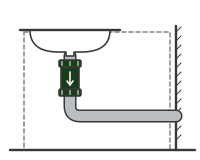
Under a basin
On the tailpiece, straight down from the drain, one run to the wall.
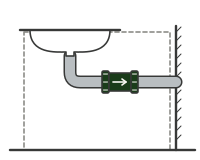
In the horizontal run
After the elbow, in the run to the wall, where the trap's outlet would be.
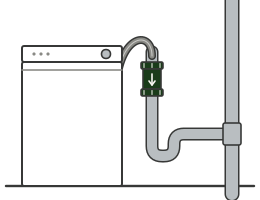
Laundry standpipe
At the top of the standpipe, with the P-trap left in place below it.
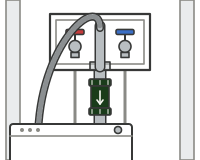
Washing machine outlet
Straight out of the wall box, at the top of the standpipe, before the run drops away.
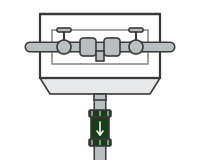
Backflow preventer drain
On the drip-pan drain under a backflow cabinet, a line that only sees water when the relief port opens.
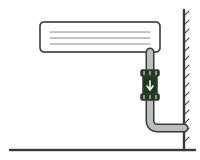
Condensate line
Inline on the small-bore drain from a split-system air conditioner.
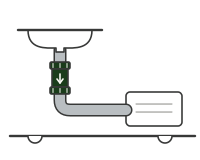
Caravan galley
Between the sink and the grey water tank, where a trap sloshes out on the road.
And the rest of the list, in the fixtures and places a water seal gives the most trouble:
- Kitchen sinks
- Bathroom basins
- Dishwasher drains
- Washing machine standpipes
- Laundry tubs
- Air-conditioner condensate
- Backflow preventer drains
- Caravans and motorhomes
- Boats
- Tiny homes and cabins
- Holiday homes and seasonal buildings
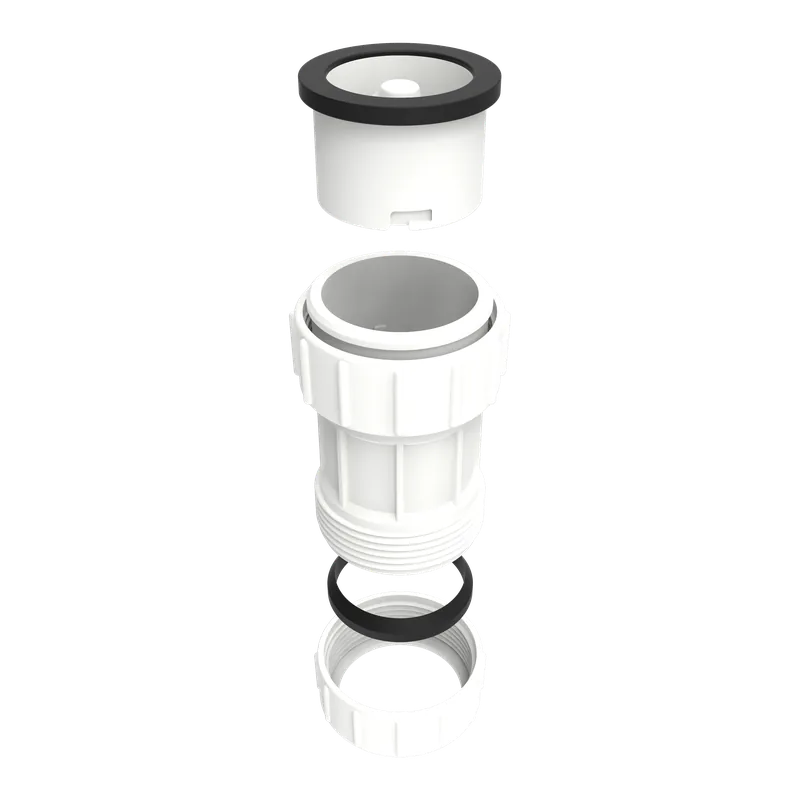
Replace the GD-SSD cartridge, not the valve.
The working part of the GD-SSD is a cartridge that sits in the inlet end of the body. It carries the silicone skirt valve. Everything else, the body, the seals and the compression nuts, is plumbing that stays in the line.
When the cartridge needs replacing, it comes out of the inlet end and a new one goes in. Replacement cartridges will be sold on their own. You do not cut pipe, you do not buy a new valve, and you do not disturb the fittings.
Ten ways a water seal goes missing.
A bathroom at home, a restaurant kitchen, a laundry, a caravan on the road: every P-trap in every one of them depends on a few centimetres of water staying exactly where they are. A dry trap is an open pipe to the drain. These are the ways the water leaves, and where each one happens. Every one of them is a place the GD-SSD earns its keep.
-
01
Evaporation A trap that is not used dries out between visits, and the smell arrives before anyone does.Holiday homes, guest bathrooms, seasonal buildings
-
02
Freezing Standing water in an unheated space freezes, and a frozen trap can crack.Cabins, stored caravans, alpine buildings
-
03
Wicking and leaks Hair over the weir wicks the water out a little at a time; a loose slip nut drips it out.Any bathroom basin, any old trap
-
04
Self-siphonage A full basin emptying fast drags the trap's own seal out behind it. That gurgle at the end is the seal leaving.Kitchens and bathrooms, any building
-
05
Induced siphonage A washing machine pumping out or a bath draining on the same branch pulls the seal out of a trap that was not even used.Laundries, apartments, shared branches
-
06
Back pressure Water from fixtures above compresses the air in the stack and blows the seal up into the fixture at the bottom.Tall buildings, the bottom of a stack
-
07
Momentum A bucket emptied in one pour carries the water through the trap faster than the trap can refill.Cleaners' sinks, restaurants, cleaning cupboards
-
08
Foaming Detergent foam backs up the branch and takes part of the seal with it when it collapses.Laundries, dishwashers, commercial kitchens
-
09
Wind Wind over the vent stack pushes and pulls on the air in the pipe; every gust rocks a little of the seal out.Buildings with a roof vent, exposed sites
-
10
Movement Water sloshes out of a trap on the road and on the water, on the first rough kilometre.Caravans, motorhomes, boats
Plumbing codes decide where a trap may be replaced and where it may not. Installation instructions and the applicable listings will be published with the product.
For plumbing merchants, caravan makers and air-conditioning contractors.
The GD-SSD will reach most of the people who fit it through partners. If you stock plumbing, caravan or air-conditioning parts, build caravans, motorhomes or boats, or install condensate drains, tell us about your business and we will reach out ahead of release.
Plumbing merchants and distributors
A compact part that takes little shelf space, with a replacement cartridge that brings customers back.
Caravan, motorhome and boat makers and dealers
A trap that does not slosh, evaporate or freeze, in the space a galley or a vanity can spare.
Air-conditioning and mechanical contractors
A waterless valve for condensate lines, where a water trap dries out between seasons.
GD-SSD questions we are already being asked.
What is a waterless trap?
A waterless trap does the job of a P-trap without the water. You will also see them called waterless waste traps, self-sealing waste valves or one-way traps. Instead of a U-bend of standing water, a valve inside opens when water flows and closes itself when it stops. The GD-SSD is a waterless trap with a silicone skirt valve in a replaceable cartridge.
How much space does the GD-SSD save?
The GD-SSD is 93.8 mm (3.69 in) long end to end, a straight valve with no U-bend and no standing water. A typical 40 mm tubular P-trap stands 108 to 159 mm from its inlet to the bottom of the bend, before the arm to the wall. How much room you gain in your installation depends on the connections, which will be published at release.
Does the GD-SSD replace the P-trap?
In Australia the plumbing standard allows it: AS/NZS 3500.2 accepts a self-sealing device in place of a trap, which is the job the GD-SSD is built for. It takes the trap's job and the space the trap used, and it can also sit in the line above an existing trap. The GD-SSD's certifications and listings will be announced at release.
Can I use the GD-SSD in my caravan or boat?
The GD-SSD is built for that. Under the galley sink or the vanity, in the line to the grey water tank. It holds no water, so there is nothing to slosh out on the road, evaporate in storage or freeze in winter, so the grey water smell stays in the tank, not in the van.
Can I replace just the GD-SSD cartridge?
Yes. The cartridge with the silicone skirt valve comes out of the inlet end and a new one goes in. Replacement cartridges will be sold on their own. The body and the fittings stay in the line.
When will the GD-SSD be available?
A release date has not been announced. Leave your email on this page and we will tell you when it is available.
What pipe does the GD-SSD fit?
Sizes and pipe connections will be published at release, together with the installation instructions and the fitting kits.
Is the GD-SSD certified or listed?
Listings and certifications for the GD-SSD will be announced at release. The certifications on this site today apply to the Green Drain floor-drain trap seals.
How is the GD-SSD different from the Green Drain floor-drain seals?
The floor-drain seals drop into a floor drain above the existing P-trap. The GD-SSD fits in a drain line, in the run of pipe under a sink or appliance, and seals with the same silicone skirt valve.
I sell plumbing products. How do I get the GD-SSD first?
Use the distributor application and mention the GD-SSD. We will contact you before the public release.
Be first to fit the GD-SSD.
Leave your email and we will tell you the day it is available. Need a floor drain sealed today? The Green Drain floor-drain seals ship now.