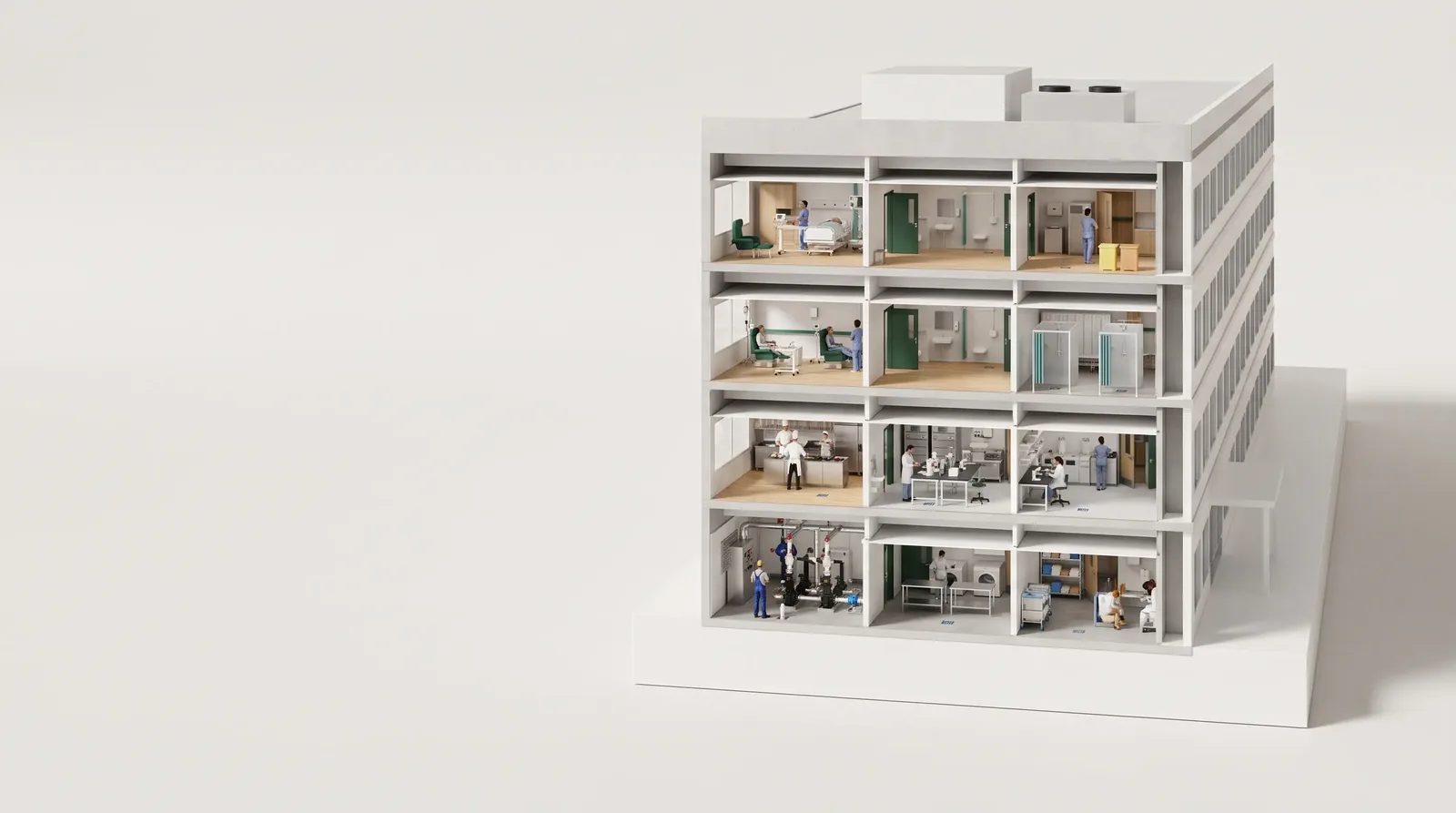
We believe every occupied space deserves to be safe from the hazards hiding in its own plumbing.
Founded in 2015 to address a problem most facilities don't see until it surfaces: drain barriers that fail without notice, leaving an open path between occupied spaces and the sewer system.
The premise: drain protection should work passively, holding its seal without a water supply, without electricity, and without intervention. From there came the work: research into how building drainage fails, third-party testing, code-body engagement, and a patented waterless trap seal built to that standard.
We work alongside facility operators, infection-control teams, code authorities, and laboratories who hold the same view of what a building's drains should be. We also support the inSIGHT Initiative, an international research network that studies the hidden infrastructure of modern buildings.
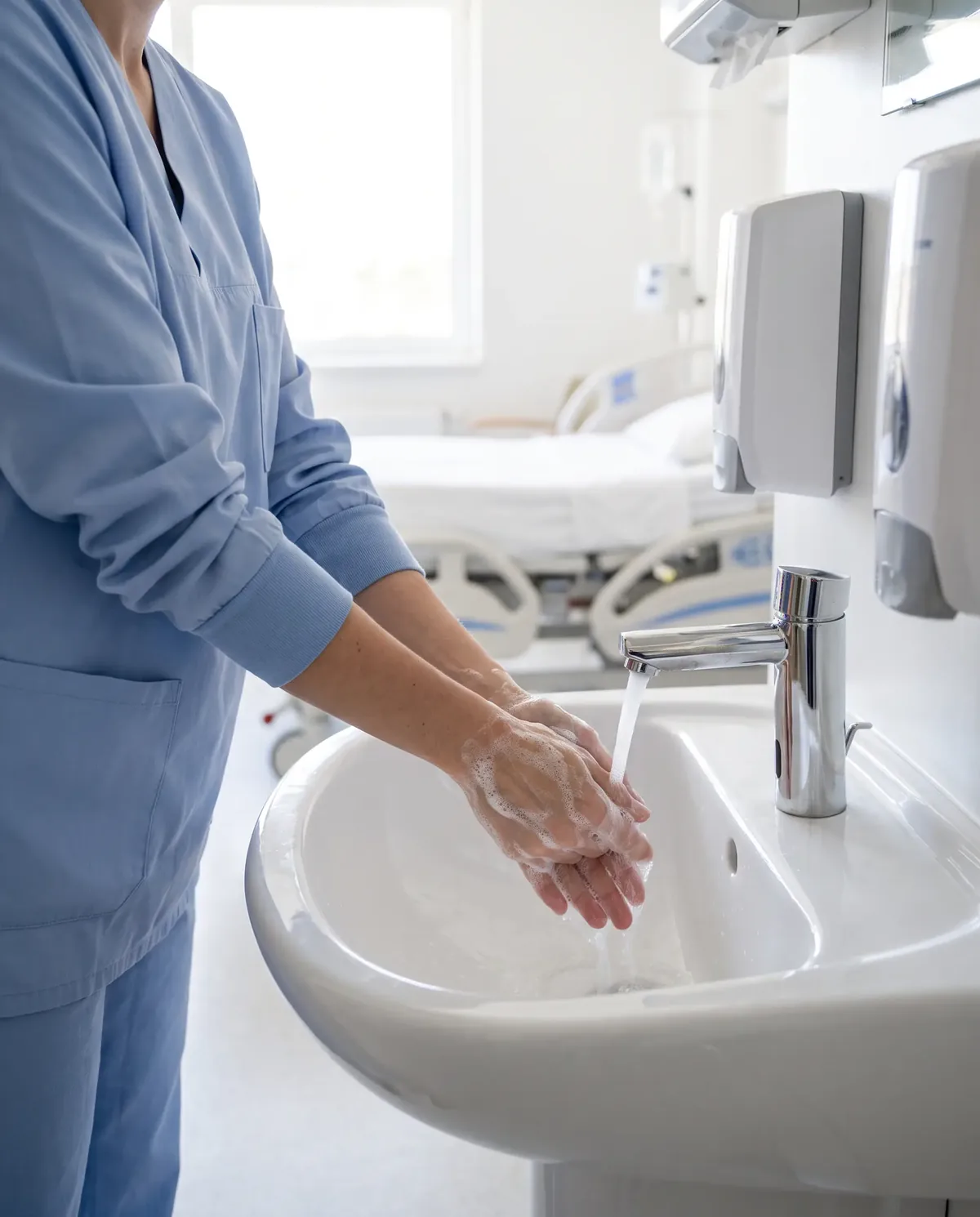
What happens at a floor drain once its P-trap seal has gone dry?
Hospital outbreaks have been traced to colonized sink traps and floor drains, where multi-drug-resistant organisms persist in biofilm. Food processing facilities classify drains as Zone 3 environmental monitoring surfaces. Sewer-side bioaerosols move through any drain whose P-trap has gone dry.
Research. A Green Drain trap seal restricts the upward movement of air and aerosols from the drain line. Independent laboratory testing conducted by SGS-CSTC in 2025 demonstrated greater than 99.9% retention of aerosolized MS2 bacteriophage under controlled test conditions. Tested device performance, not a health outcome. NSF/ANSI 2 listed the contact materials as food-equipment safe. HACCP International certified it for food handling environments.
Status. We maintain a public library of 40+ independent peer-reviewed studies on drain-borne contamination. They examine the risk in drainage systems, not this product. The library is open and updated continuously.
SELECTED STUDIES
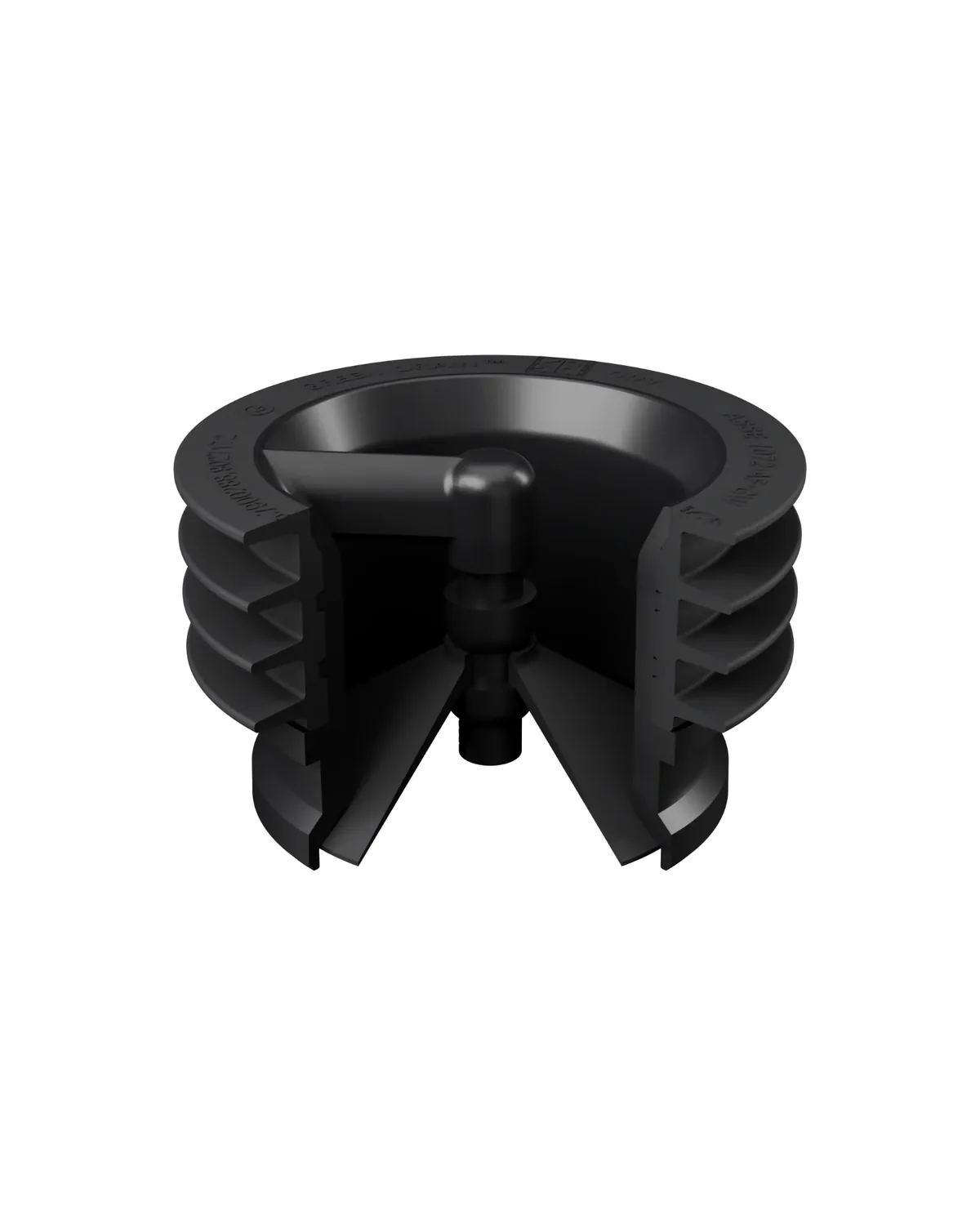
What replaces a P-trap's seal when it dries out?
A P-trap depends on a small column of water to block the connection between a building and its sewer system. In any drain that goes unused for days or weeks, that water evaporates. The conventional fix, a water-fed trap primer, calcifies, corrodes, and fails without notice.
Research. Green Drain is tested to ASSE/ANSI 1072, the recognized North American performance standard for barrier-type trap seal devices, and carries cUPC certification. Lab record: 32g opening force (well under the 113.4g maximum), 73 GPM for 10 continuous minutes on the GD4 (rated at least 89.8 GPM unrestricted), 2,500-plus operating cycles, greater than 96% evaporation reduction.
Status. cUPC and IAPMO R&T listings cover U.S. and Canadian plumbing codes. CE / ETA-Danmark covers the European Union. WaterMark covers Australia. The medical version, GD-MD, is a Class I medical device under MDR (EU) 2017/745, registered in EUDAMED.
SELECTED REPORTS
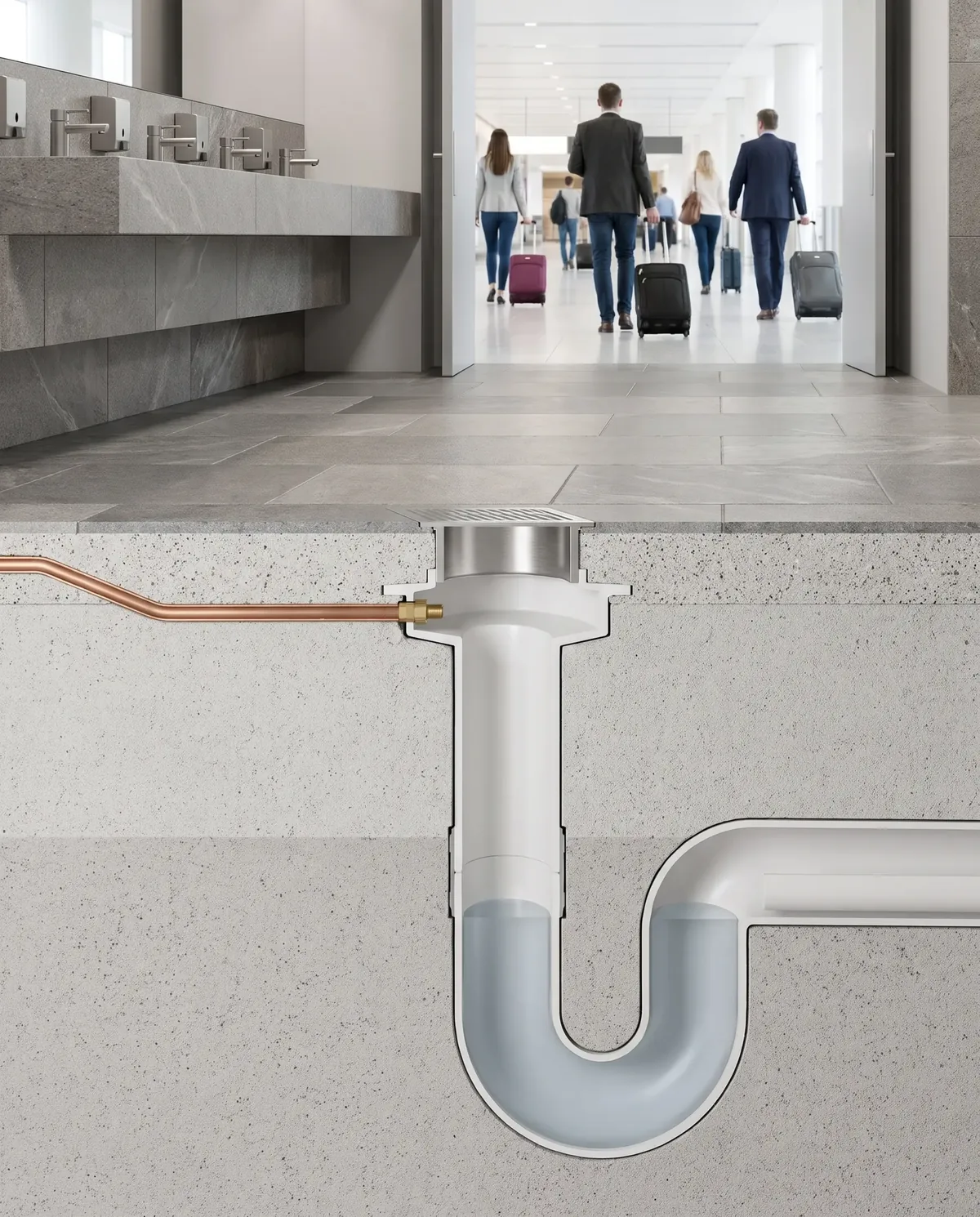
What does it cost to keep a drain seal wet for forty years?
A trap primer draws from the building's water supply to refill drain seals on a schedule. Per drain, that consumption is ten to thirty gallons per year. Across a building's lifecycle, the figure runs into the hundreds of thousands of gallons, consumed for one purpose: keeping a seal wet.
Research. Our public Water Savings Calculator models facility-level consumption against U.S. EPA WaterSense data and regional rate structures. Durability testing at -40°F to 100°C and across a wide pH range supports long service life on a single device.
Status. Each seal that replaces a trap primer, with the primer shut off, removes that drain's water draw, a reduction that shows up in the building's reported water use for GRESB or corporate ESG reporting.
The team behind Green Drain.
Our leadership team runs Green Drain across North America, Europe, and Asia-Pacific, selling directly and through authorized distributors.
Meet the team



Open the work.
The research, the certifications, the calculator. All public.