Small worms in a sink, shower or floor drain are usually drain fly larvae. They are slender, legless and white to creamy brown with a dark head, about 1/4 inch long when grown. They live in the slimy biofilm lining the drain and breathe through a tube at the tail. Scrub the biofilm out, then seal the drain opening.
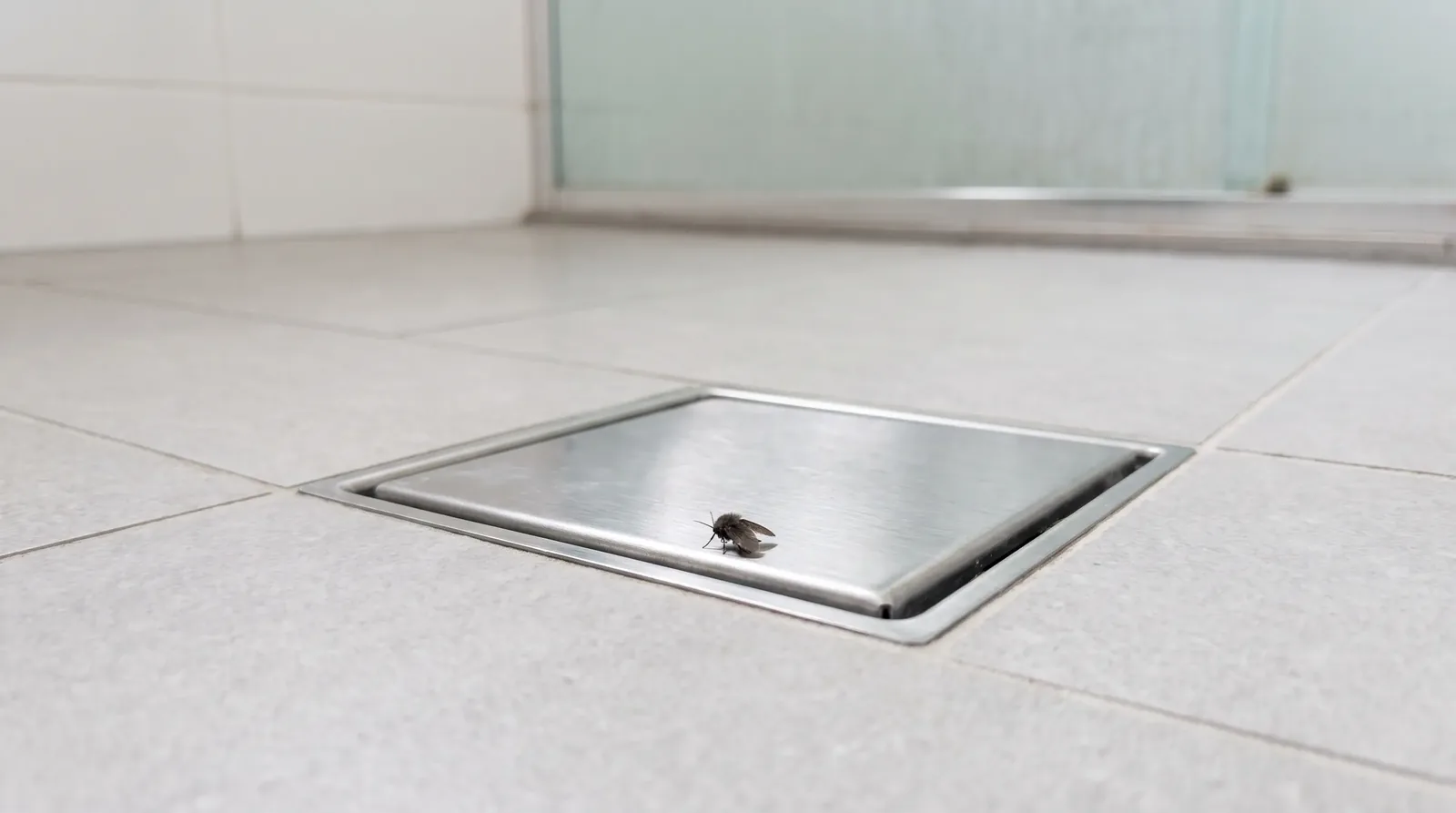
Adult drain flies are what you notice on the walls. The larvae are the reason they keep coming back. If you lifted a drain cover and found tiny pale worms in the slime, this guide covers how to recognize them, how to confirm which drain they are breeding in, and what actually gets rid of them. For the complete fix for the flies themselves, see our guide to getting rid of drain flies.
What do drain fly larvae look like?
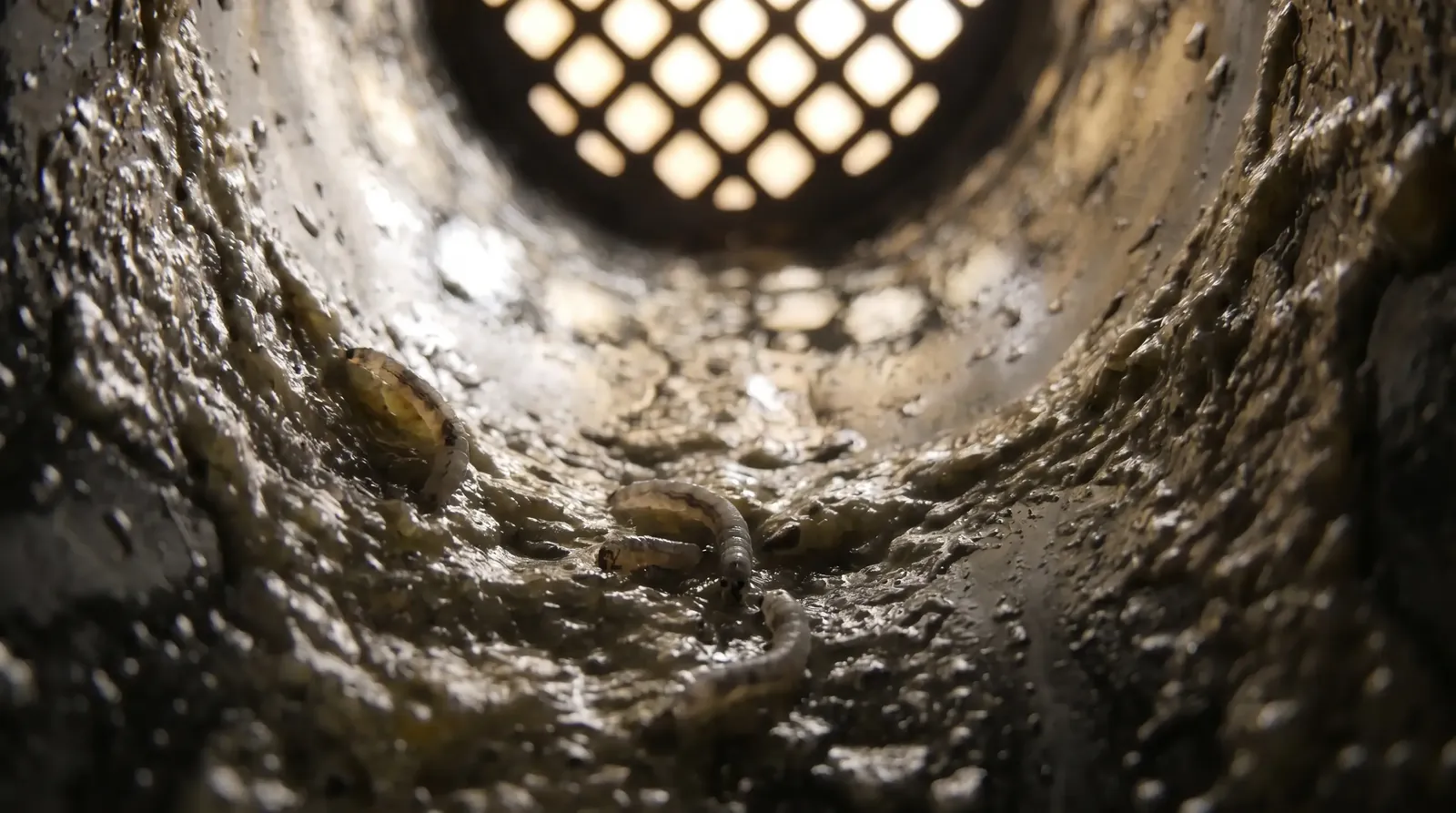
Drain fly larvae look like tiny mosquito larvae: slender, legless and worm-like, white to creamy brown, with a distinct head. At the tail end is a short breathing tube, a siphon, which lets them breathe air while they sit in the wet slime. Fully grown, they are about 1/4 inch (6 mm) long.
The pupae that come next are yellow to brown, with two small breathing horns at the head end. You will often find both in the same drain.
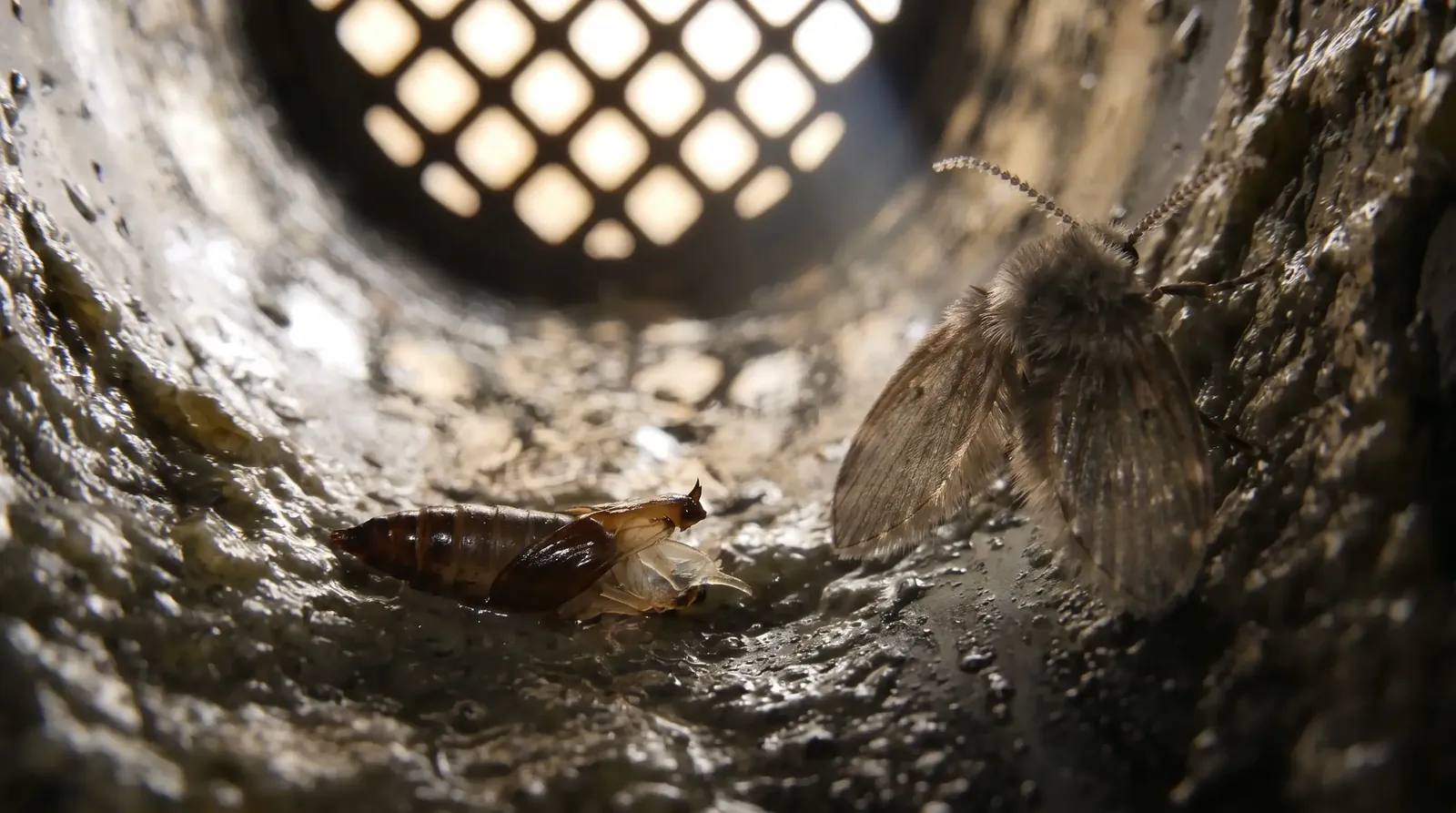
Where drain fly larvae live
Drain fly larvae live in, and feed on, the slimy biofilm that coats the inside of sink, shower and floor drains. Because they breathe air through the siphon, they stay near the surface of that biofilm, which is why you find them in the slime on the drain wall and at the waterline rather than down in the water. Away from drains, they also turn up in other wet organic buildup: elevator pits, around sump pumps and under leaking pipes.
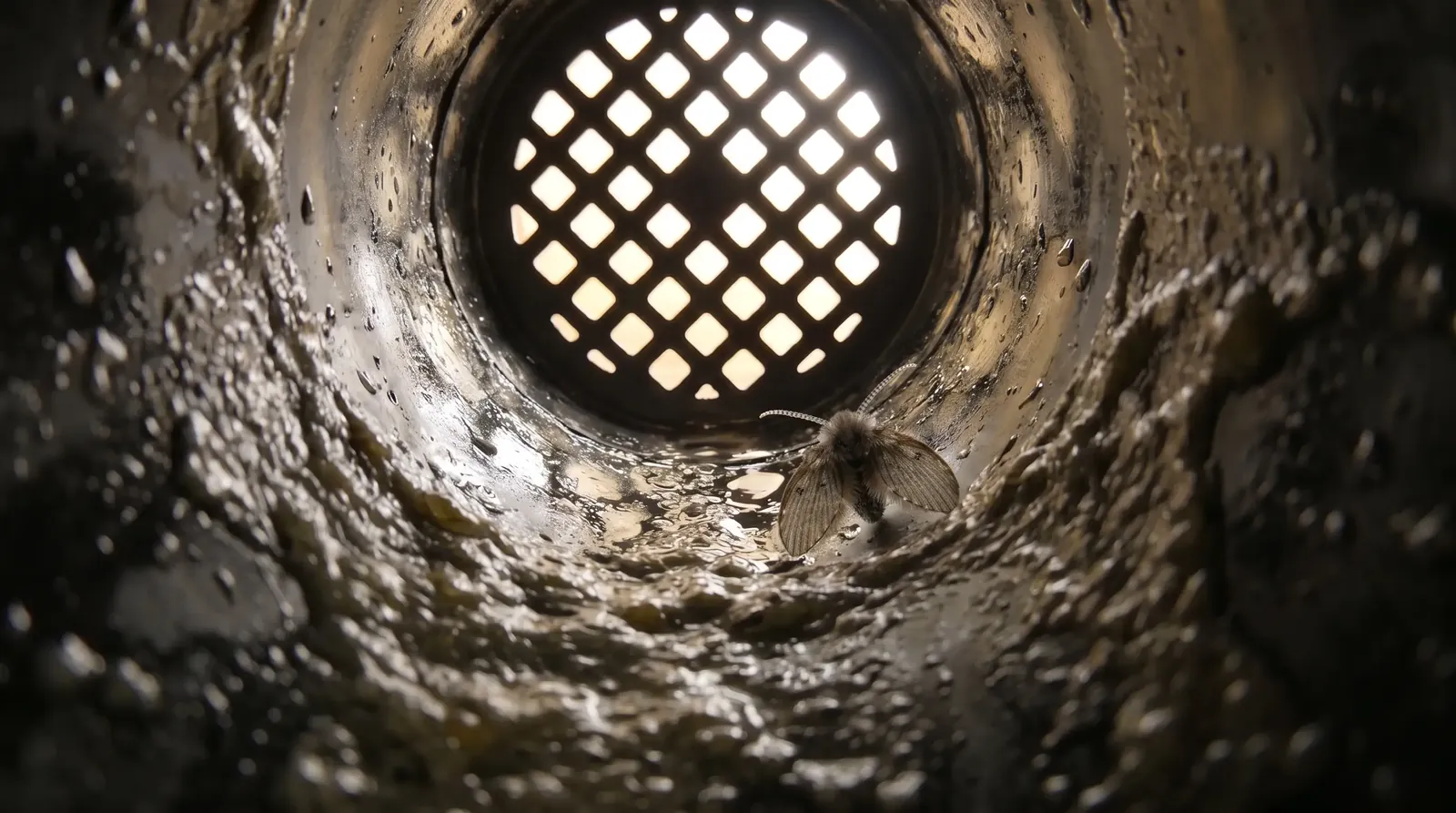
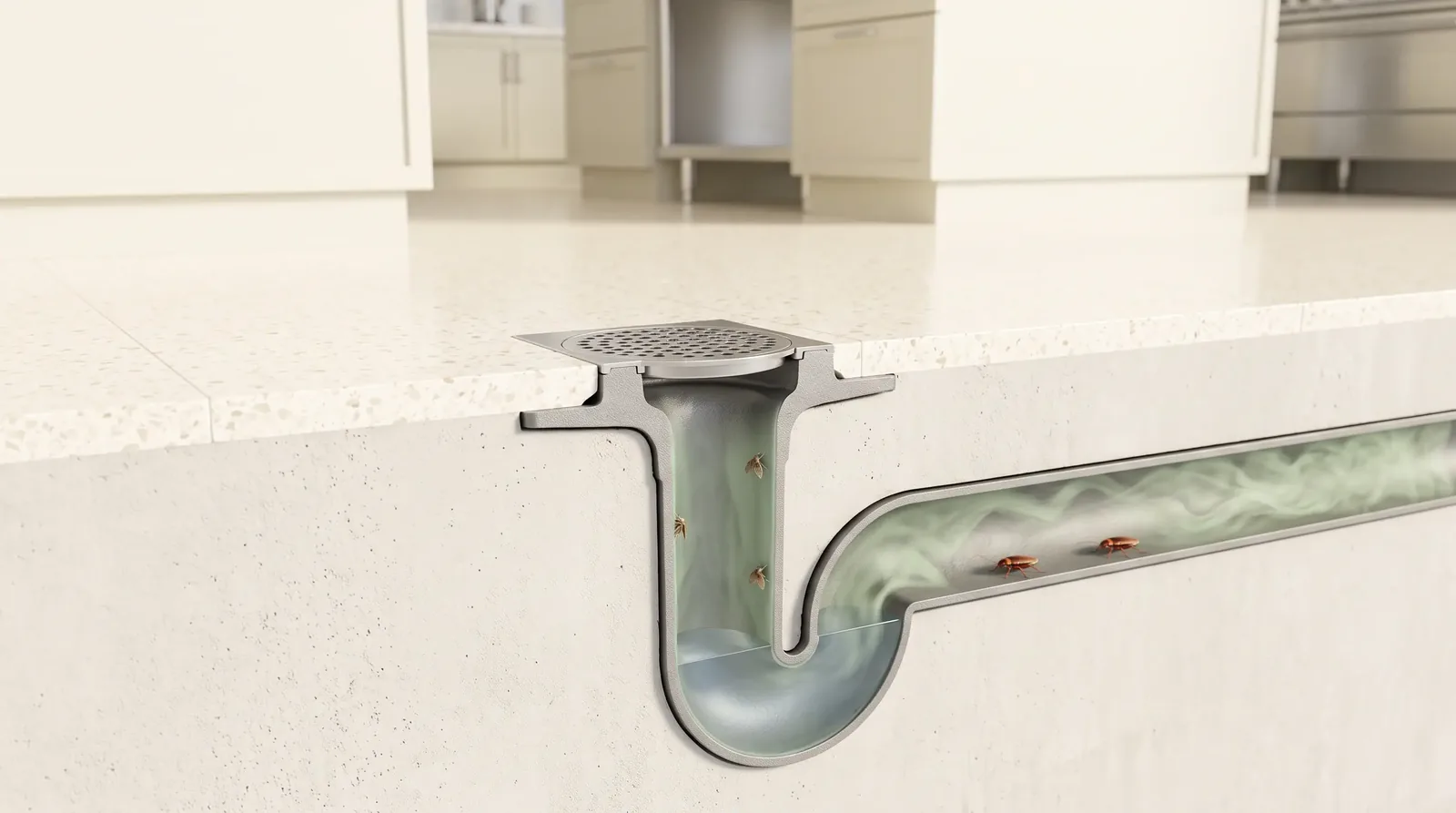
That biofilm sits on the pipe wall above the water in the trap, on the room side of the seal. A trap full of water stops what comes up from the sewer, but it does not keep in the flies that breed above it. More on that in how a P-trap works.
How to confirm it's drain fly larvae, and which drain
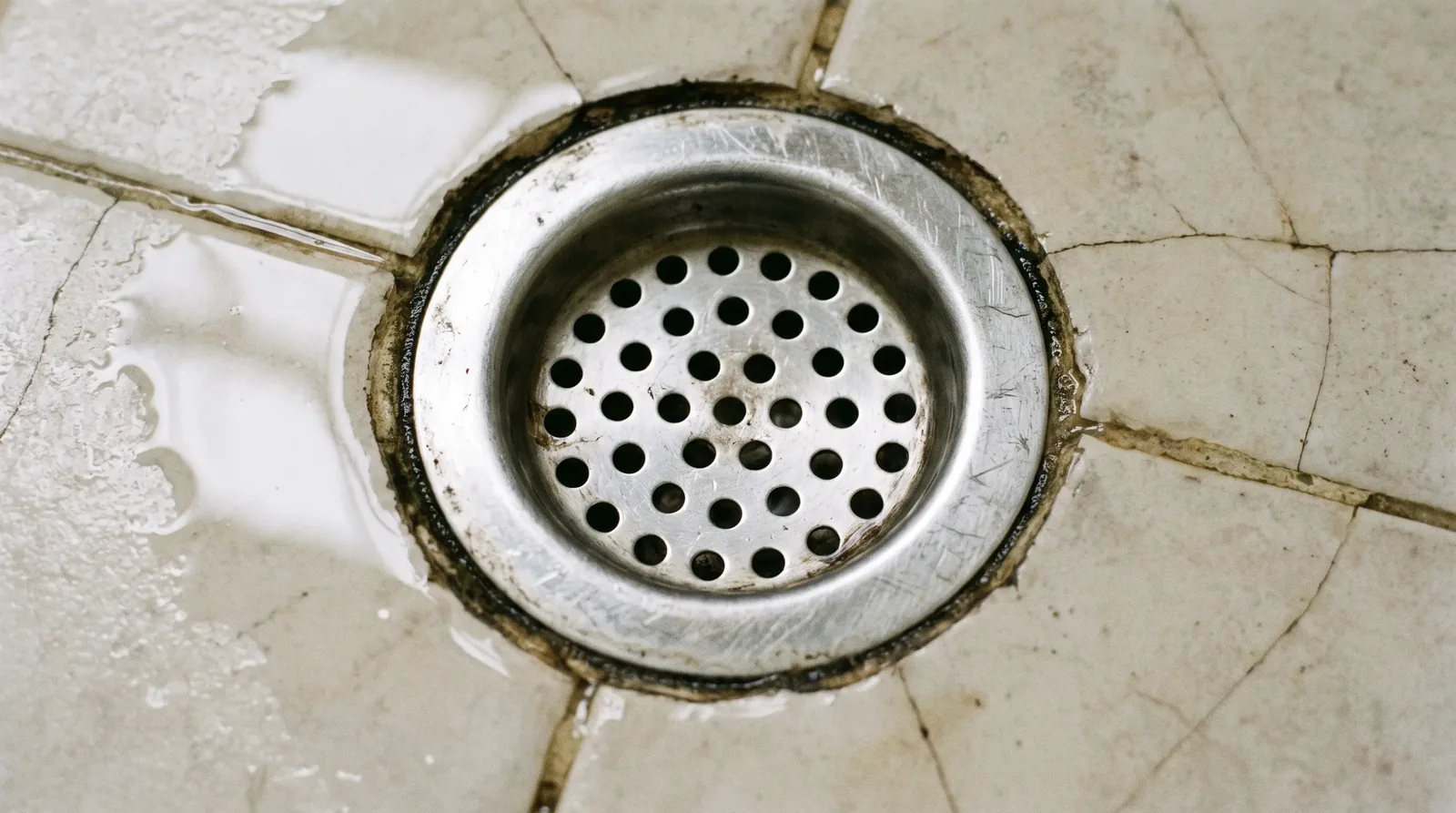
- Look in the slime. Lift the drain cover or strainer and scrape the wall of the drain with a dull knife or a stiff brush. Look in what you collect for small, pale worms with a dark head.
- Nothing there? They may be breeding deeper in the pipe, out of reach of a knife.
- Find the source drain. Cover the drain overnight with clear tape, or set a cup lightly coated with petroleum jelly or vegetable oil upside down over it. Adults coming up get stuck, which tells you that drain is breeding them.
- Check the drains nearby. When one drain in an area is breeding flies, the ones around it often are too.
How long drain fly larvae live
The larval stage is the longest part of a drain fly's life: about 9 to 15 days at 70°F (21°C), and as few as 8 days in warmer conditions around 85°F (29.5°C). The larvae then pupate in the biofilm and emerge as adults, and the whole cycle from egg to adult takes 8 to 24 days depending on temperature. For each stage in detail, see the drain fly life cycle.
What kills drain fly larvae, and what doesn't
Bleach and boiling water on their own
Pouring bleach or boiling water down the drain is the most common fix, and on its own it rarely works. Neither removes the biofilm the larvae live in, so at best they give short-term control. The larvae left in the biofilm keep developing, and new adults appear within days.
Scrub the biofilm out
What works is removing the biofilm itself. Lift the cover and scrub the drain walls with a stiff or metal pipe brush, as far down as you can reach, then flush with boiling water to carry away what the brush loosened. If the drain is slow or blocked, clear it first.
Keep it from building back
Biofilm builds back with every use of the drain. Regular use of an enzymatic drain cleaner may help keep that organic buildup from returning.
Sprays and larvicides
Chemical sprays are generally unnecessary for drain flies and are discouraged in homes. Sprays reach the adults in the room, not the larvae in the drain. One option does target the larvae: in a study cited by the University of Florida, the biological larvicide Bti (Bacillus thuringiensis israelensis) cut the number of adults emerging by 79%.
Then close the way out
Cleaning removes the breeding site you can reach, but some of the biofilm always sits further down than a brush can go, and it grows back. The lasting fix is to close the opening the adults come up through.
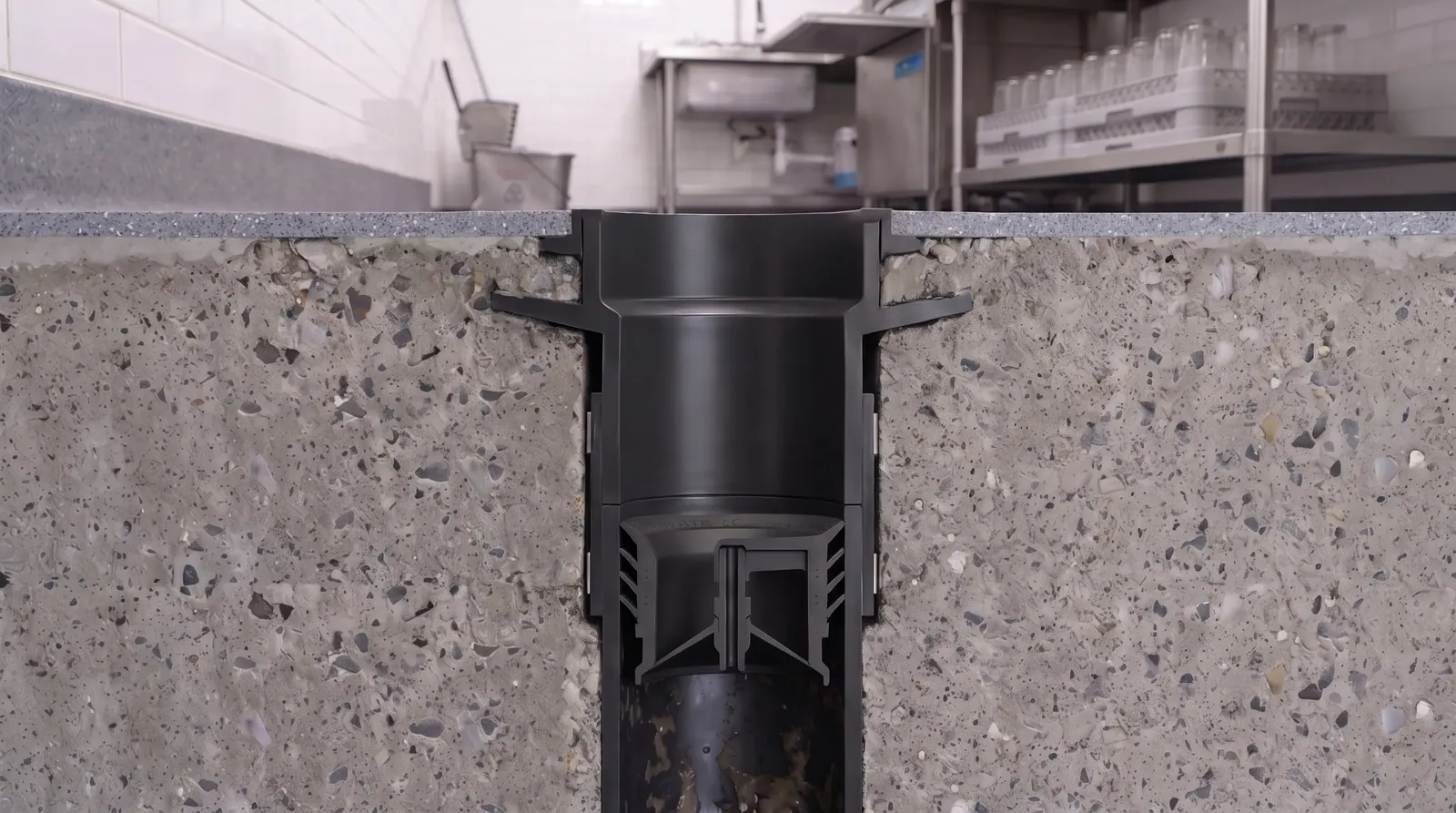
Green Drain drops into the drain opening, above the trap. Water flexes its silicone skirt open and passes through; when the flow stops, the skirt closes again on its own. Adults that hatch below meet a closed skirt instead of an open way into the room. It works with the P-trap, not instead of it.
To pick a size, lift the grate or strainer and measure the round pipe opening below it, inside wall to inside wall; the size chart matches that reading to a model. Shower and sink drains are measured the same way. Then shop Green Drain.
Are drain fly larvae harmful?
Drain fly larvae do not bite, and neither do the adults. The concern is hygiene: adults can carry microbes from the slime they grow up in onto surfaces, and in large infestations dead flies break down into particles that can act as allergens. For more on the health side, see are drain flies dangerous.
Frequently asked questions
Does bleach kill drain fly larvae?
Not reliably. Bleach does not remove the biofilm the larvae live in, so it gives short-term control at best, and the larvae left in the biofilm keep developing. Scrub the biofilm out of the drain with a stiff brush, then seal the drain opening so the next adults cannot come up.
How long do drain fly larvae live?
About 9 to 15 days at 70°F (21°C), and as few as 8 days when it is warmer, around 85°F (29.5°C). The larval stage is the longest part of the drain fly's life. The larvae then pupate in the biofilm and emerge as adults.
Are drain worms, sewer fly larvae and drain fly larvae the same thing?
Usually, yes. Small pale worms in the slime of a sink, shower or floor drain are most often drain fly larvae, which people also call sewer fly larvae, drain moth larvae or drain worms. Other small flies, such as fruit flies and phorid flies, can also breed in drains, so if what you find does not match the description here, a university extension office or a pest professional can identify it.
Can drain fly larvae live in water?
They are semi-aquatic. They live in the biofilm at the water's edge and breathe air through a short siphon at the tail, so they stay near the surface rather than down in the trap water. They can also trap a small air bubble to get through short spells with little oxygen.
Sources
- University of Florida IFAS Extension, Drain Fly, Psychoda spp. (EDIS IN1226)
- UC Statewide IPM Program, Pest Notes: Moth or Drain Flies